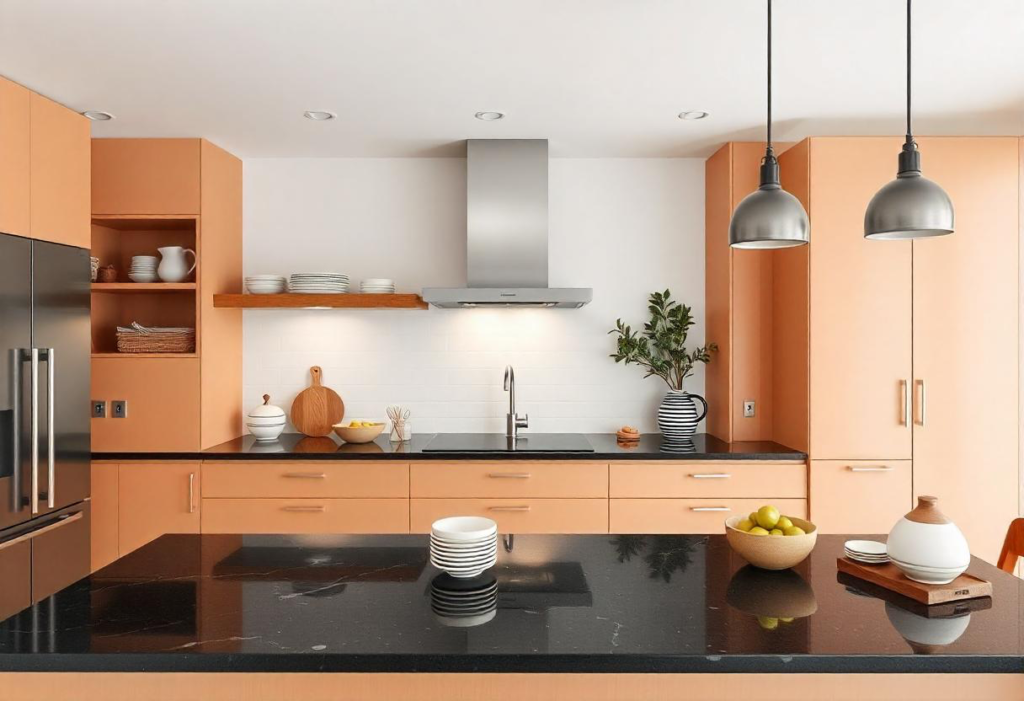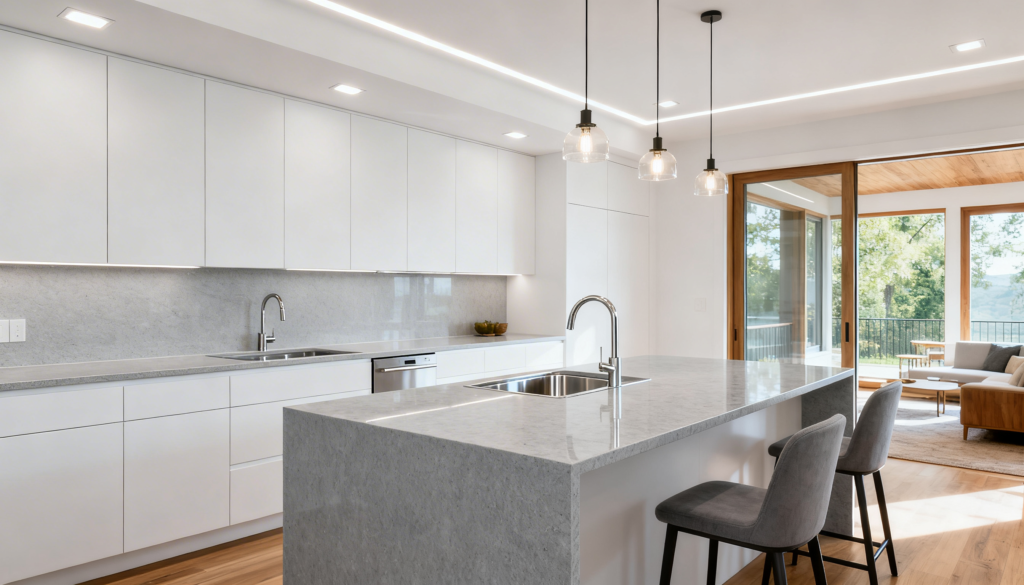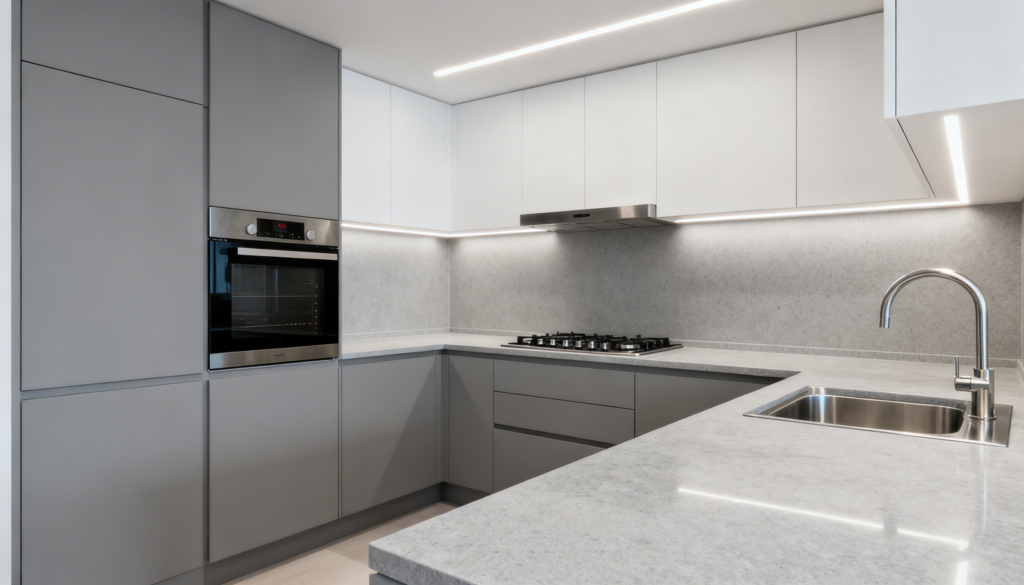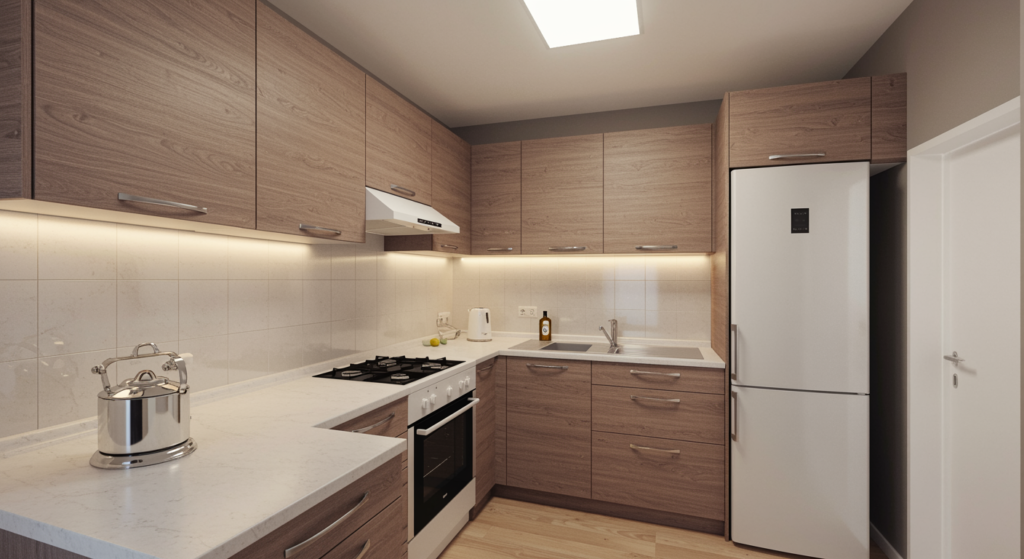
Major countertop red flags usually show themselves long before a complete replacement is required, pointing to premature aging that would impair both aesthetics and utility. Cracks, chronic stains, or fading indicate the substance is fighting against daily wear and wrong upkeep. Neglecting these early warning indicators might result in expensive repairs, thus quick attention is imperative to maintain the worth and attractiveness of your kitchen.
Major Countertop Red Flags 1: Visible Surface Wear Too Soon
One of the most evident warning indicators a countertop is prematurely aging is visible surface wear showing up much too early. Little scars on a well-picked countertop should appear slowly over several years, enhancing rather than being clearly decaying.
But when scratches, scuff marks, dull patches, or uneven textures begin to appear within the first few months or years, it usually points either bad material quality or an unacceptable surface finish. Daily kitchen tasks like chopping, sliding cookware, or setting small appliances should not instantly damage the appearance of the countertop. Premature surface wear could point to a low scratch resistance, poor protective coatings, or a surface not meant for daily kitchen use.
Over time, these worn spots have a tendency to spread, giving the countertop a patchy and forever aged appearance even if the rest of the kitchen is still fresh. In other situations, too much wear suggests poor material choice, whereby a countertop more suitable for modest decorative usage is set in a cooking area with heavy traffic. In busy homes, where continuous use hastens the degradation of softer or poorly completed surfaces, this problem is particularly obvious.
uVisible surface damage can impact cleanliness beyond appearance as scratches and damaged regions can trap food particles, moisture, and dirt. Restoration possibilities usually are few once a countertop gets to this point, therefore homeowners must either accept a worn look or think about early replacement. Too fast visible surface wear is ultimately a warning sign that the countertop lacks the durability needed for long-term performance, therefore costing and frustrating investment error.
Major Countertop Red Flags 2: Heat and Impact Damage
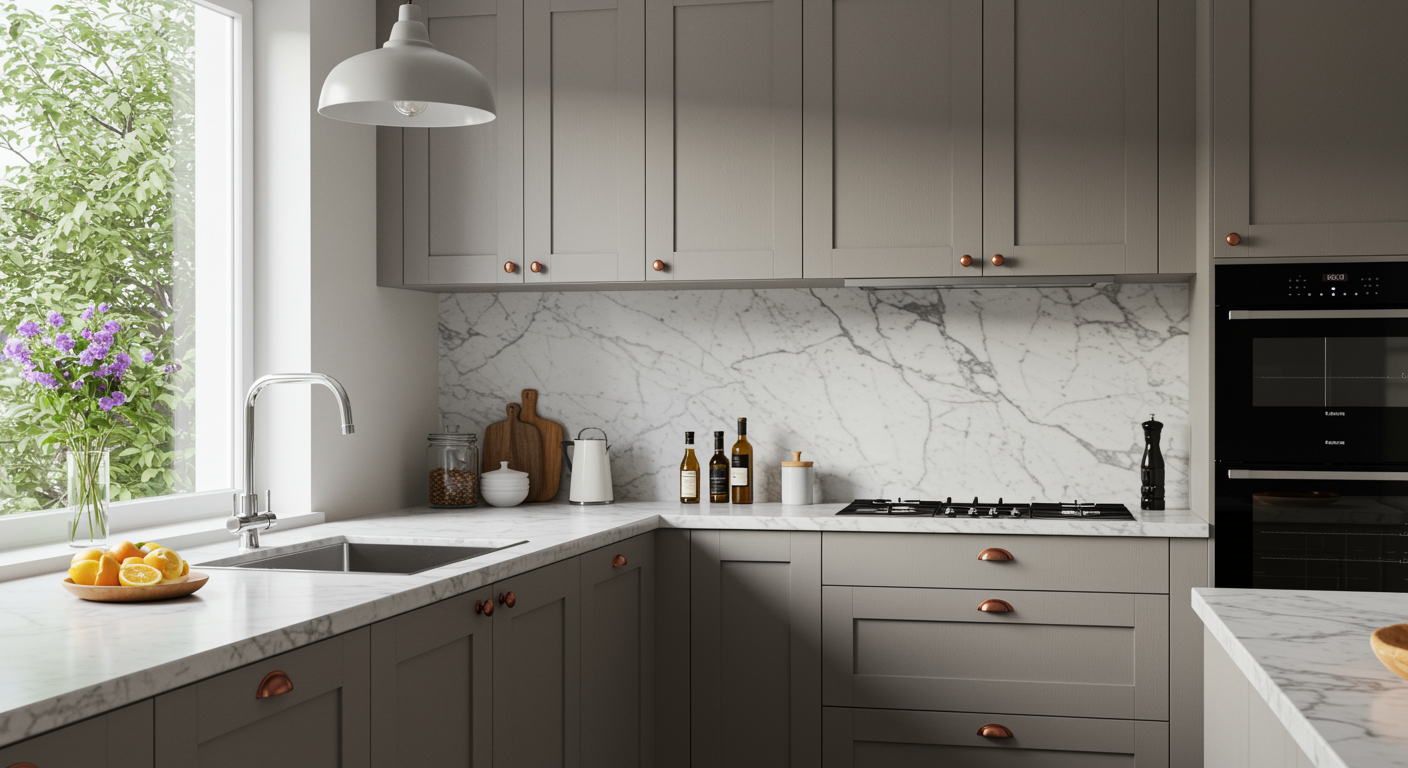
Among the most obvious indications that a countertop is aging prematurely are heat and impact damage, which sometimes shows that the material was never meant for actual kitchen use. Poor heat resistance and insufficient material engineering are indicated by burn marks, discolouration rings, blistering, or surface cracks on a countertop after brief touch with hot pots or appliances.
Counter tops should endure brief exposure to heat in everyday cooking settings without enduring harm; failing to do so suggests a limited lifespan going ahead. Further emphasising structural flaws under the surface, impact-related problems like chipped corners, fractures at the edges, or hairline cracks from fallen cutlery or pots and pans. These damages can jeopardise cleanliness since cracks and chips permit water, oil, and bacteria to infiltrate the substance; they also impact aesthetics.
Repeated thermal stress and little impacts can exacerbate these faults over time, warping the countertop, delaminating it, or weakening it internally. In warm countries where kitchens may already be at more elevated ambient temperatures, poor counters exposed to temperature swings degrade much more quickly.
Though homeowners frequently misinterpret these problems as typical wear and tear, early heat and impact damage usually indicate cost-cutting in manufacturing or material selection. A clear warning sign that a countertop that cannot handle daily cooking requirements without obvious damage will need early repairs or replacement, therefore costing much in the long run.
Major Countertop Red Flags 3: Poor Edge and Joint Integrity
Among the most obvious warning signs a counter is aging prematurely is poor edge and joint integrity as these regions often show any underlying installation or quality problems first. Usually it indicates that the core material has been exposed to water intrusion or impact damage when boundaries grow, chip, or peel.
Daily exposure of kitchen edges through contact, spills, and cleaning means a well-built counter should preserve its form without obvious harm. Weak joint integrity as seen in separating seams, uneven joints, or clearly visible adhesive lines also indicates poor manufacturing or incorrect installation techniques.
Once joints open, water and dirt can get into the cavities, therefore accelerating internal deterioration and encouraging mould growth, warping, or delamination beneath the surface. Along with its visual appeal, these little imperfections eventually compromise the structural stability of the countertop. In tropical countries like Johor, where humidity levels are always high, poor edge sealing is increasingly problematic as long exposure to moisture aggravates joint failure and swelling.
Early in its lifetime, a counter showing joint movement or edge deterioration usually calls for frequent maintenance, patching repairs, or even total replacement considerably earlier than predicted. Damage to joints and borders finally indicates that the countertop was not created, constructed, or installed to meet daily culinary needs, hence accelerating early aging and endangering long-term life.
Major Countertop Red Flags 4: High Maintenance Requirements
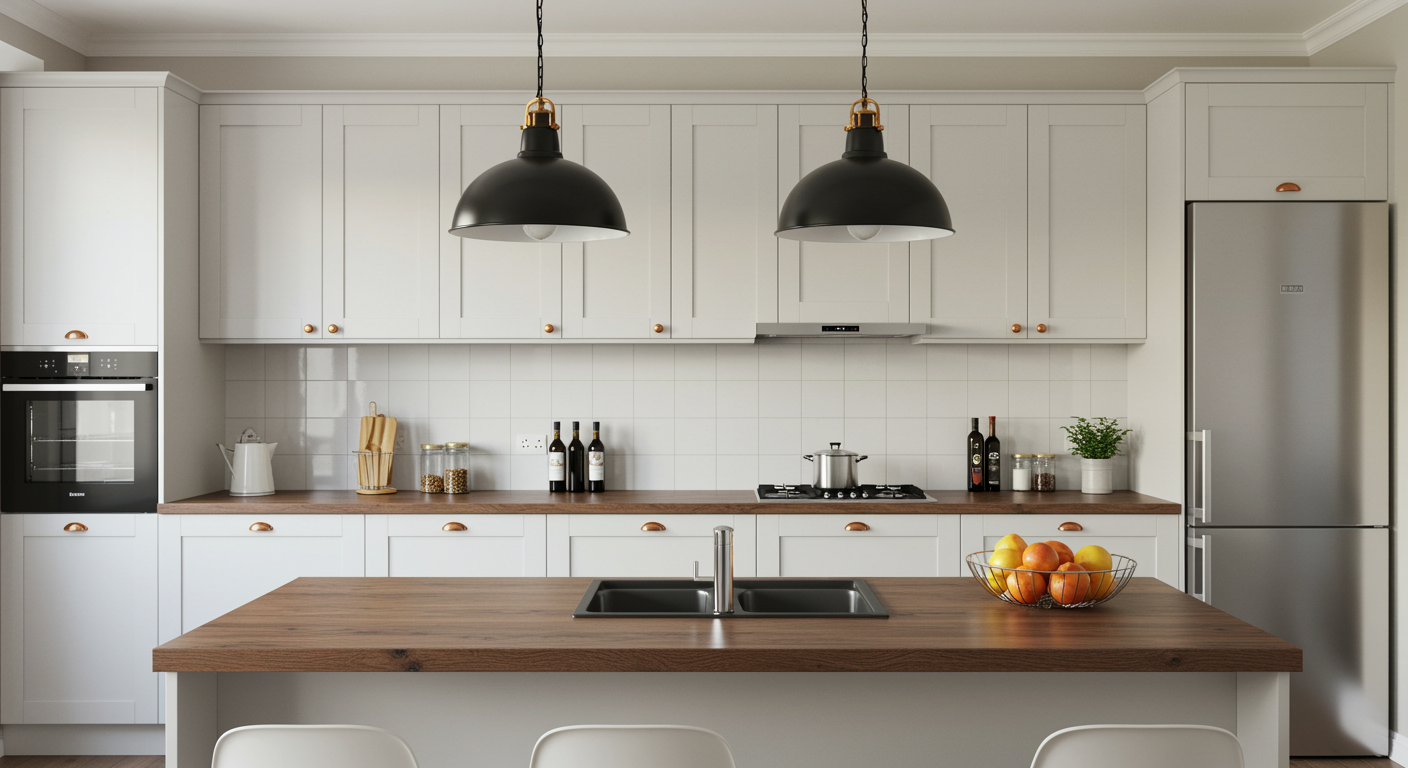
Among the most apparent signs that a countertop is getting too old are its high maintenance needs. Countertops requiring frequent sealing, unique cleaners, or cautious treatment often reveal an underlying durability problem, even though all countertops call some degree of attention.
For homeowners, particularly in active kitchens where daily cooking and spills are inevitable, a countertop that demands such meticulous attention can soon become more of a hassle from a practical surface. In addition to being unpleasant, high maintenance quickens the noticeable indicators of wear. Materials that require repeated sealing, for instance are prone to absorbing liquids and stains in between operations, therefore fading and producing a dull, worn look.
Likewise, countertops susceptible to acidic materials, oils, or heat can show etching, staining, or burns even under careful use, hence necessitating ongoing care to preserve their original look. These regular maintenance routines do little over time to halt aging even if they increase the chance of errors such using the wrong cleaner or missing a sealing cycle that aggravate the surface. Beyond the first installation cost, constant maintenance increases costs in terms of both time and materials, therefore decreasing its economic feasibility throughout the years in practical terms.
A counter with high maintenance demands therefore also affects long-run expenditures. For homeowners in Johor, where high humidity and regular cuisine are common, selecting a low-maintenance, robust surface is absolutely necessary. Countertops needing routine upkeep are a red flag warning that the material could already be on a fast path toward early aging, not just inconvenient.
Major Countertop Red Flags 5: Fading or UV Damage
Among the most subdued but revealing signs that a countertop is deteriorating prematurely are fading or UV damage — a condition often unnoticed until it becomes plain. Counters are built for durability, but prolonged exposure to direct sunshine can gradually alter their colour, giving them a washed-out appearance or uneven spots.
Particularly susceptible in this regard are houses with large windows or open kitchen designs which are rather popular in Johor’s tropical environment where sunshine is brilliant and steady throughout which are Especially vulnerable are UV-resistant materials like certain laminates or low-grade composites; over time even a once-vibrant surface can seem dull and dead, therefore detracting the general appeal of the kitchen.
Fading might also make scratches, stains, or surface defects more visible, therefore complicating maintenance. Not just by means of colour, UV damage can also weaken the structural integrity of some surfaces, rendering them fragile or more brittle. Usually resistant to these changes are countertops made of high-end, UV-stable materials like sintered stone or well-treated quartz, hence preserving their hue and finish for decades.
Owners should therefore see unexpected fading or inconsistent colour changes as a serious warning that suggests the worktop might not meet the demands of a hectic, bright kitchen. Early discovery of UV damage helps homeowners put preventative efforts into action whether by shielding treatments, strategic arrangement, or material improvements, thereby guaranteeing their countertop would be beautiful and useful for years.