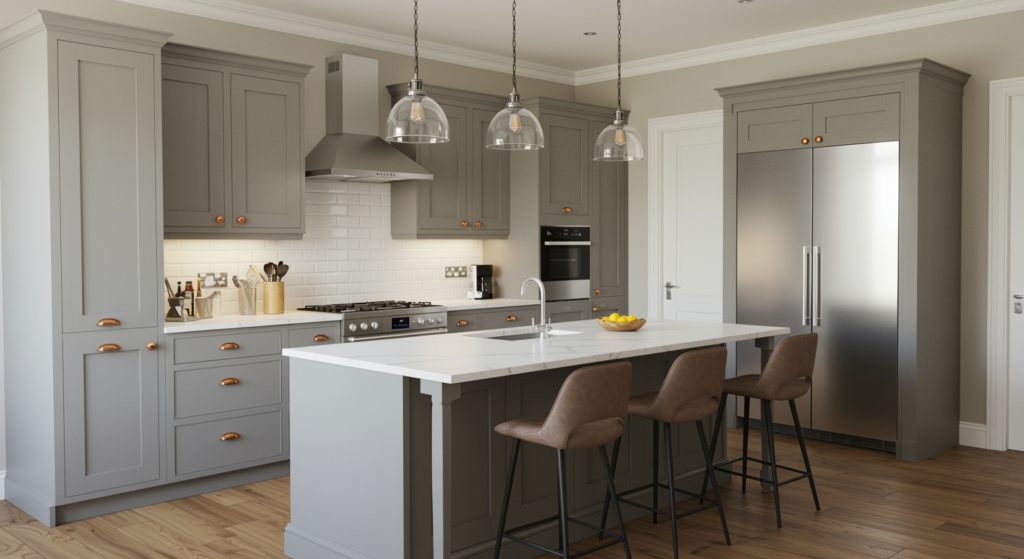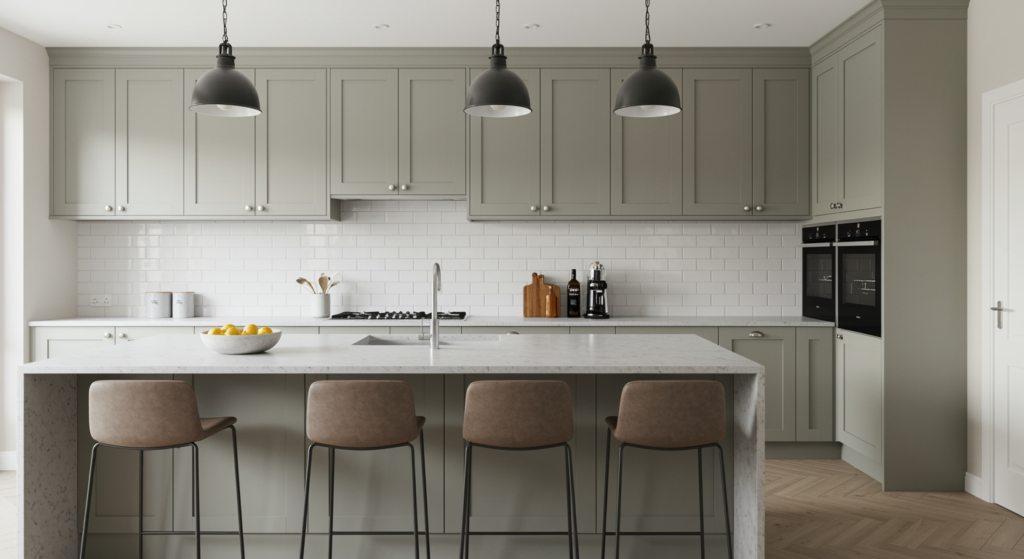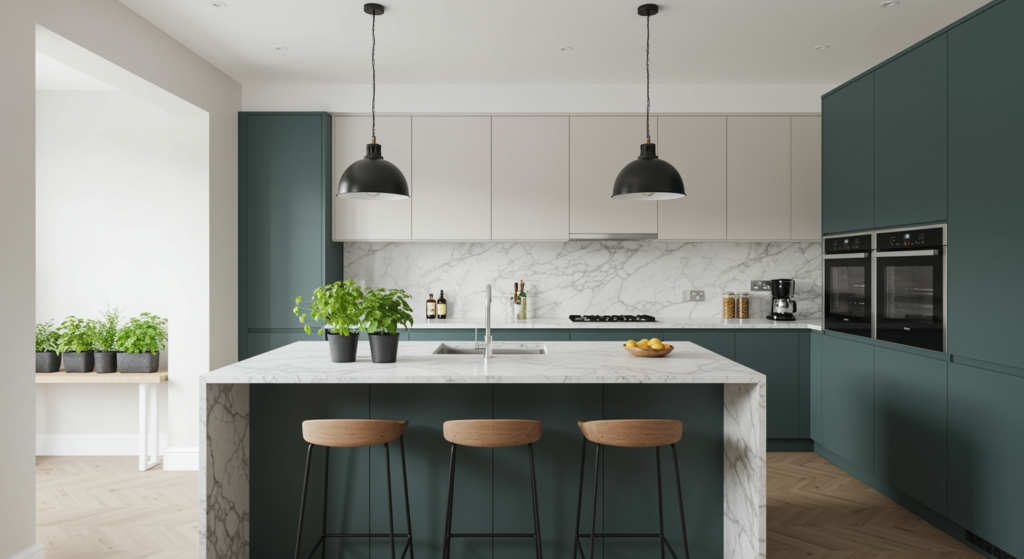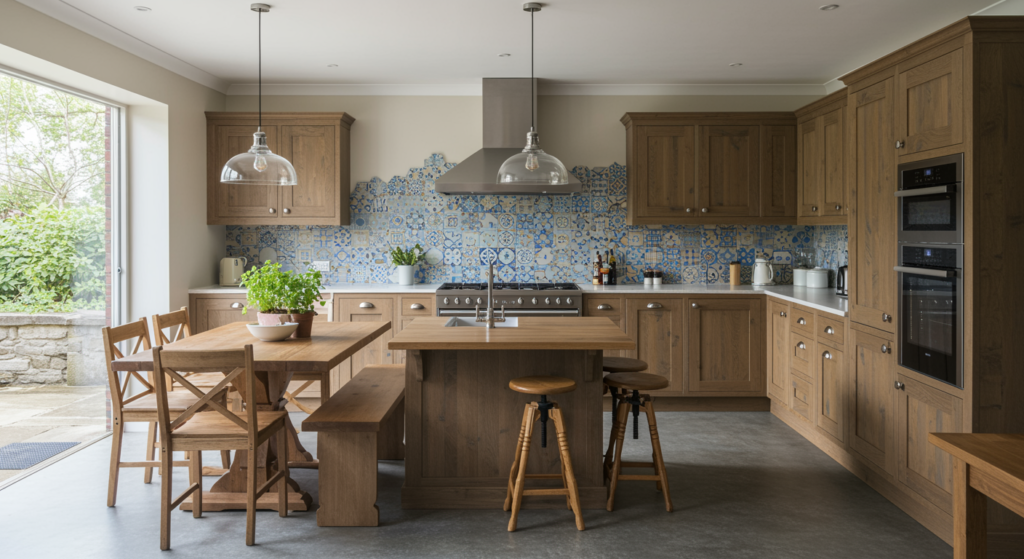
Kitchen triangle traps show themselves when you find yourself repeatedly searching for supplies kept far from your true demands. Bad cabinet placement can compel needless steps, transforming easy chores such cleaning or cooking into a tiring exercise. Reframing your design with task-based zones rather than just relying on the triangle can save time, energy, and exasperation.
Kitchen Triangle Trap 1: Cabinets That Interrupt Workflow
One of the most ignored elements of the kitchen triangle trap is how cabinets themselves can disrupt workflow, therefore transforming easy cooking activities into pointless cardio sessions. Poorly situated cabinets might create constant detours even if your sink, cooker, and fridge adhere to the conventional triangle.
Tall pantry cabinets placed between the refrigerator and prep area, for instance, may obstruct a straight line and cause you to circle them several times only to gather ingredients. Often praised for maximising storage, corner cabinets can actually slow you down if they are difficult to reach or demand twisting and bending to access goods. Placing open shelves or drawers far from their point of usage — for example, pots stored on the other side of the stove adds steps every meal preparation by means of repeated back-and-forth walks.
When regularly used cutlery, cutting boards, or mixing bowls are kept in cabinets tucked behind less-used objects, the issue is worsened as chefs have to negotiate a labyrinth of doors and shelves. Should the design give beauty over practical flow, even elegant, contemporary cabinets can worsen this problem. Fundamentally, any cabinet that forces a detour, more curvature, or repetitive movement disrupts the regular kitchen triangle.
The outcome is a kitchen that looks well-organised on paper but silently raises the number of steps per task, therefore sapping energy and making cooking a sluggish, exhausting activity. Rethinking cabinet arrangement, giving point-of-use storage first priority, and eliminating barriers in main traffic areas will help to bring back efficiency and cut down unneeded walking.
Kitchen Triangle Trap 2: Outdated for Modern Cooking
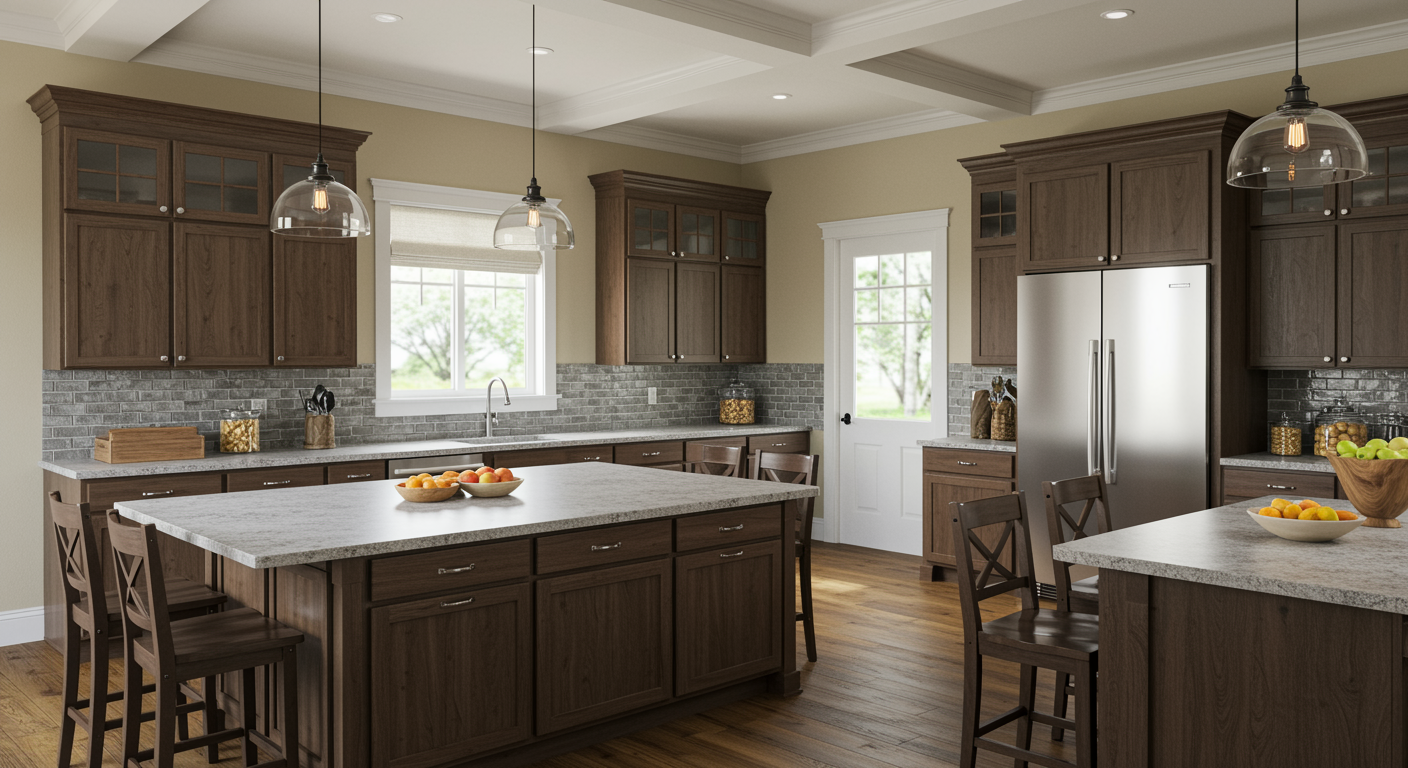
The classic kitchen triangle linking the refrigerator, sink, and stove was developed decades ago for a single cook negotiating a small kitchen. Though it made sense back then, contemporary kitchen configurations are far more complex; relying on this ancient rule might really worsen pointless wandering.
Since contemporary kitchens frequently have many cooks, built-in appliances, and specialised storage, a stiff triangle will not help to maximise efficiency. Built-in ovens, coffee stations, dishwashers, and pantries, for instance, frequently sit outside the typical triangle, hence need several detours that transform simple food preparation into a string of irritating sprints.
The distance between triangle points can be problematic as well: huge designs make cooks travel more than they need, while bad cabinet or corner units lead to awkward detours. Furthermore, the strict triangle does not represent the multitasking and concurrent procedures often seen in modern cuisine. Goods like silverware, pans, and cutting boards could be kept far from where they are used, therefore leading to useless steps and consumed energy. The triangle really diminishes rather than enhances a kitchen’s utility since it rests on a one-size-fits-all approach.
Today’s kitchen design must focus on task-based areas, point-of-use storage, and workflow efficiency rather than adhere to antiquated geometrical concepts. Stepping away from the kitchen triangle, homeowners may cut needless steps, simplify meal preparation, and arrange a layout that really supports present cooking practices rather than slowing them down.
Kitchen Triangle Trap 3: Oversized Triangles = Unnecessary Steps
Among the most neglected dangers in kitchen planning is a large kitchen triangle, where the spacing between the stove, refrigerator, and sink is just too great. Although the traditional triangle idea was intended to limit motion and enable an effective workflow, it does exactly the reverse when the triangle spans too far.
Homeowners sometimes pace back and forth throughout the kitchen only to accomplish basic duties such washing vegetables, slicing food, or carrying pots from stove to counter. The greater the triangle, the more time and effort is squandered on procedures that might readily be reduced with better planning. Designers especially emphasise aesthetics or open space over functional proximity in open-plan kitchens or kitchens with long cabinet runs. Oversized triangles are thus quite frequent.
This additional walking adds tiredness especially for those cooking many dishes or handling family meals as well as delays meal preparation. Another small issue develops when often used goods such cutting boards, silverware, or spices are kept away from their matching zone inside the triangle. Though the triangle itself seems ideally proportioned on paper, bad arrangement of cabinets and storage increases the impact of unwanted steps. A big triangle fundamentally turns what should be a natural process into a little obstacle course.
Rather than adhering strictly to the ancient triangle rule, modern kitchens benefit from careful task-based zoning that is, placing prep, cooking, and cleaning stations within easy, reasonable reach. Reducing large triangles helps you to recover energy and efficiency, therefore turning the kitchen into a room that works for you rather than against you.
Kitchen Triangle Trap 4: Small Kitchens Suffer the Most
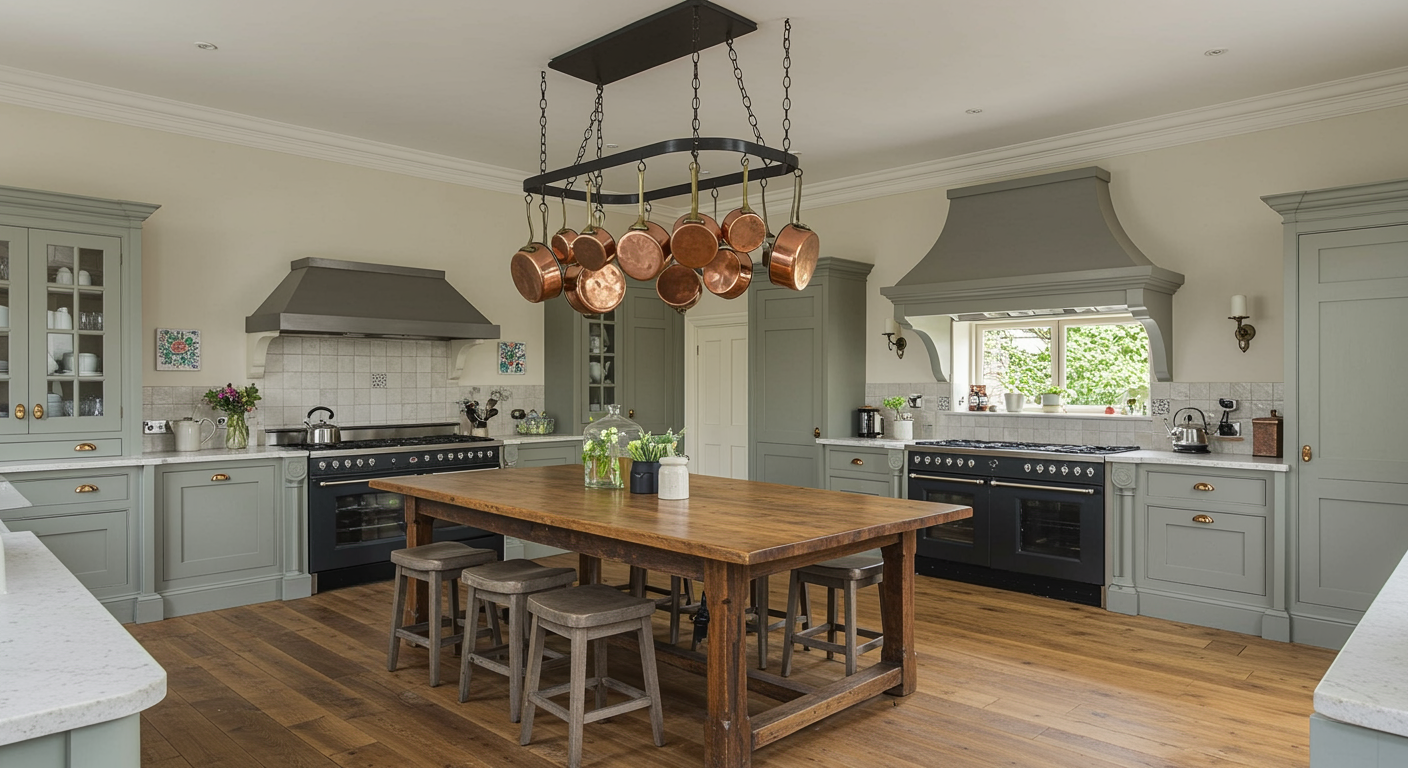
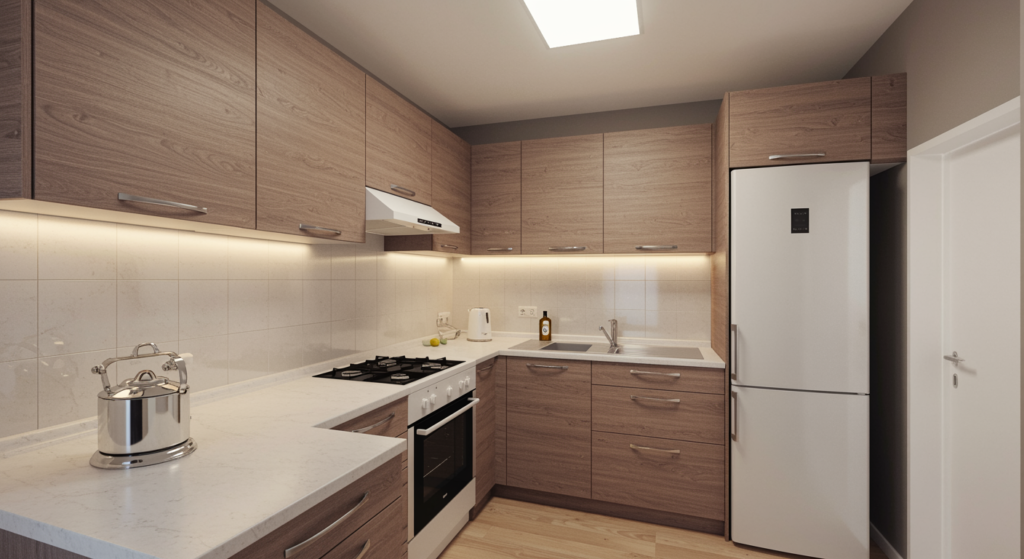
In tiny kitchens, the kitchen triangle trap causes the most suffering, so transforming what should be a delightful culinary experience into a vexing exercise in futile mobility. Every cabinet, appliance, and counter in restricted areas becomes a potential impediment; hence, a badly thought-out design might quickly increase the amount of steps needed even for basic chores.
Though technically adhering to the conventional triangular law by situating the refrigerator at one end, the sink in the middle, and the oven at the other corner, may lead to continuous zig-zagging and repeating walking in a small kitchen. Though meant to maximise storage, corner cabinets can sometimes confound things by being difficult to reach or needing twisting and folding, so worsening weariness.
Counters on peninsulas or islands seen often in contemporary kitchen designs can inadvertently impede the triangle flow, hence chefs must constantly negotiate over them. Moreover, limited storage in little kitchens sometimes results in several back-and-forth trips since pots, pans, and tools might be stowed far from their actual use.
Common appliances like microwaves or dishwashers can disrupt motion if their position does not correspond with work zones. Little room to absorb more steps, little kitchens finally worsen every triangle plan inefficiency. Designers advise concentrating on task-based layouts, point-of-use storage, and work zones to counter this and enable chefs to move less and spend more time enjoying the process instead of circles.
Kitchen Triangle Trap 5: The “One-Zone-Fits-All” Mistake
Among the most common planning mistakes in kitchens is the one-zone-fits-all strategy that is, the arrangement assumes one triangular work will effectively handle every task. Designed initially to limit movement, the classic kitchen triangle, linking the sink, stove, and refrigerator — ignores the complexity of contemporary cooking techniques or the range of items we use and store daily.
Actually, kitchens work best divided into defined work zones ideal for a particular need: a prep area for cutting and blending; a cooking zone for stovetop and oven use; a cleaning zone around the sink and dishwasher; and a storage area for ingredients, equipment, and small appliances. Ignoring these areas means continual back-and-forth movement, exposes numerous cabinets in many different nooks, and demands significantly more walking merely to complete one dish.
Chefs have to zig-zag across the kitchen many times searching for pans stored in one place while cooking in one place or bringing food from a pantry far from the stove. This inefficiency not only tires the cook but also disrupts the work flow, transforming meal preparation an unwanted little marathon. Today’s contemporary kitchen design helps task-based layouts wherein appliances and storage are set based on how goods are utilised, hence minimising movement and producing a more natural cooking experience.
By letting go of the one-zone mentality and selecting zones suitable for real cooking tasks, homeowners can create a warm yet useful environment, hence turning cooking from a sequence of processes into a rewarding, basic skill.