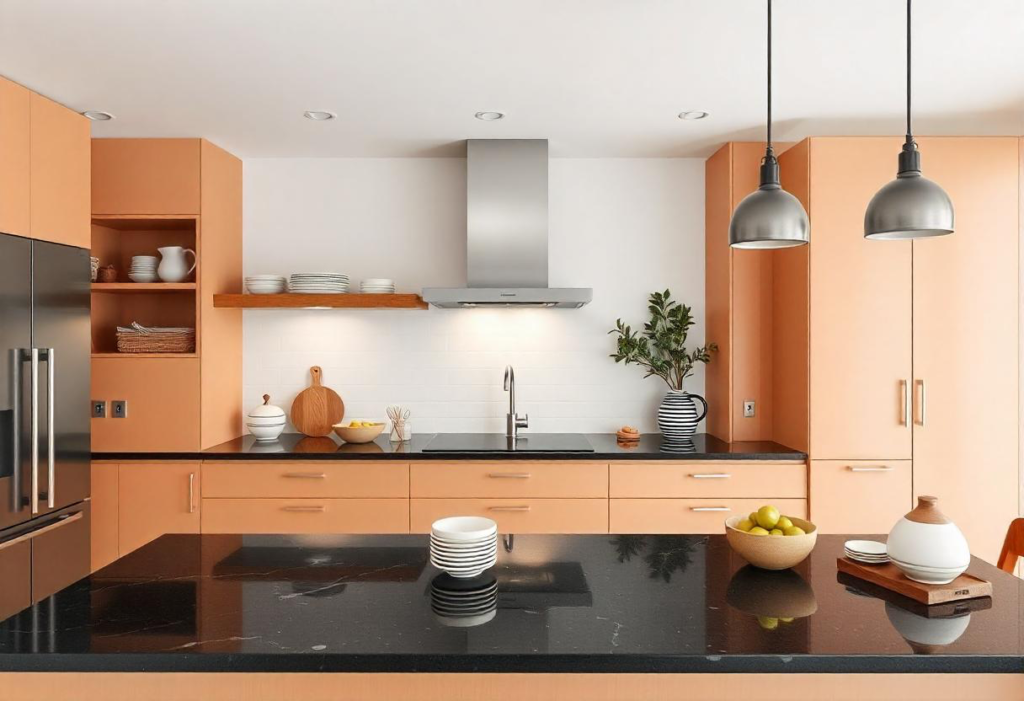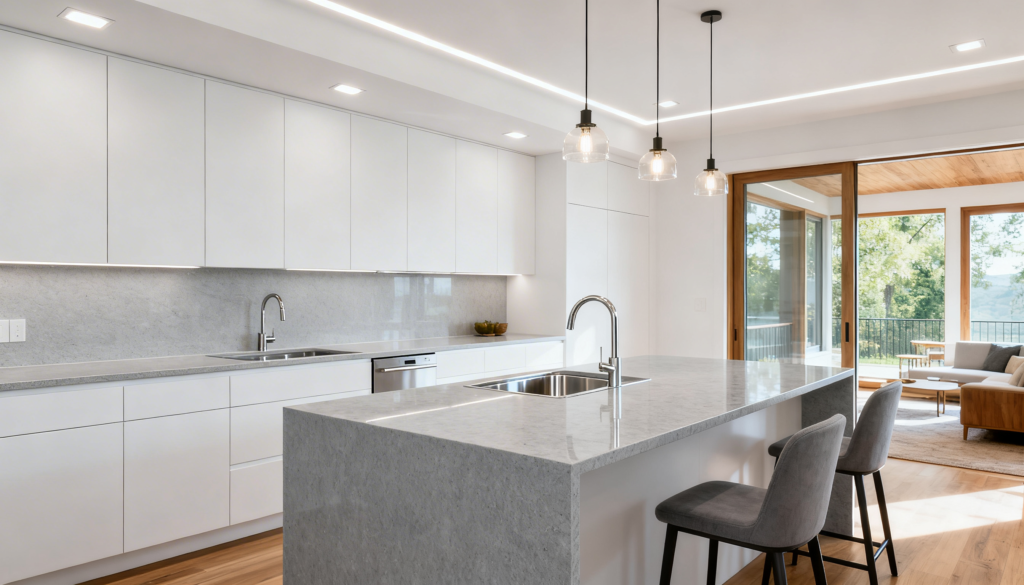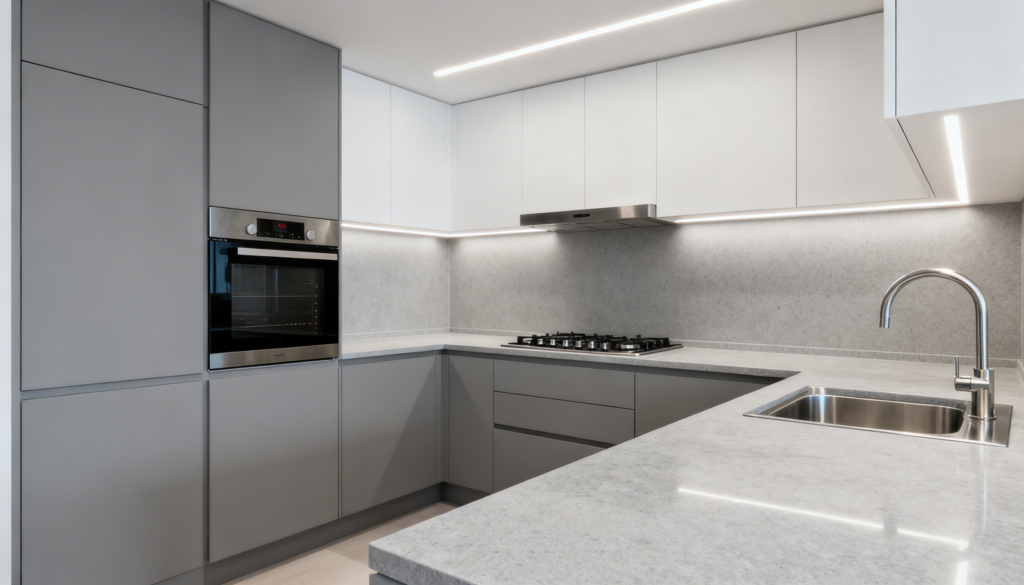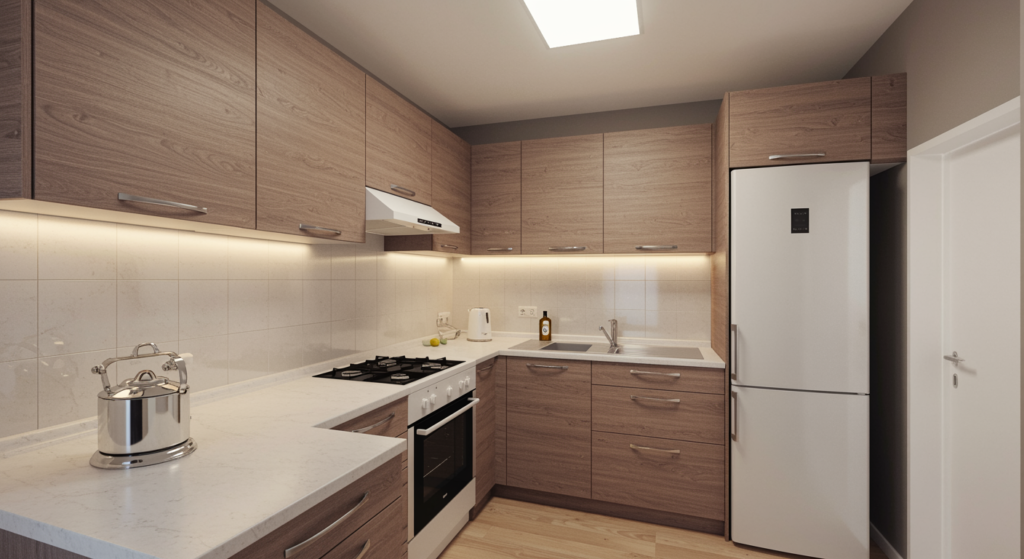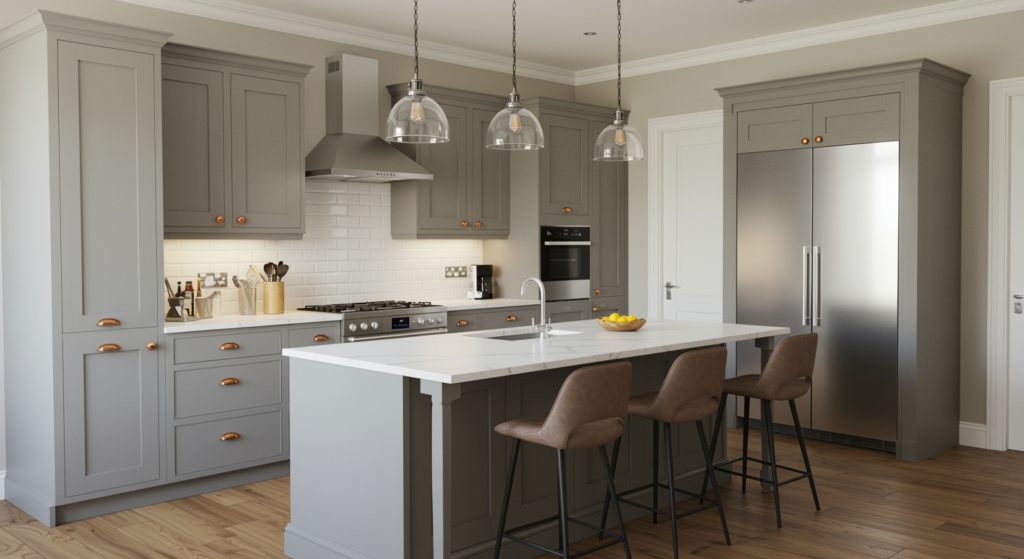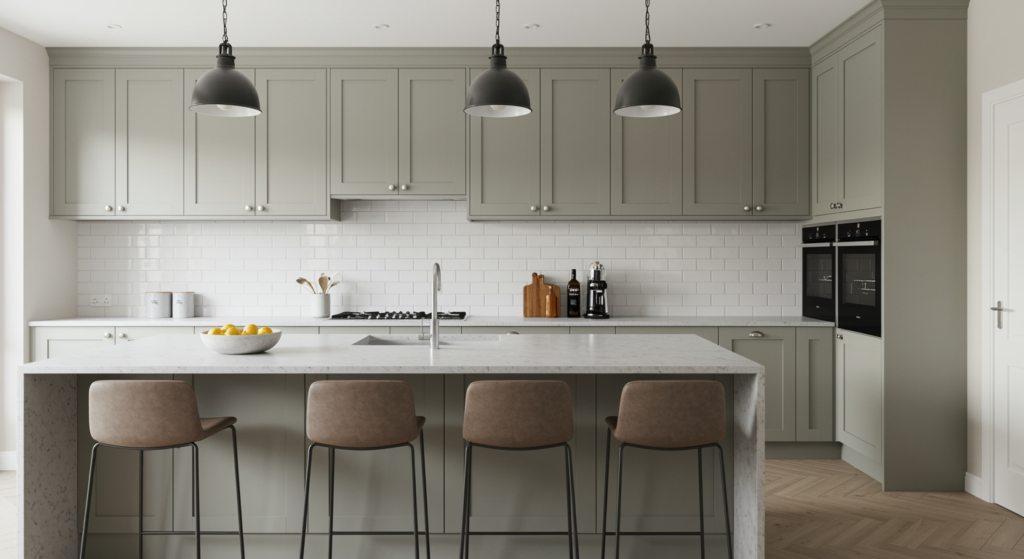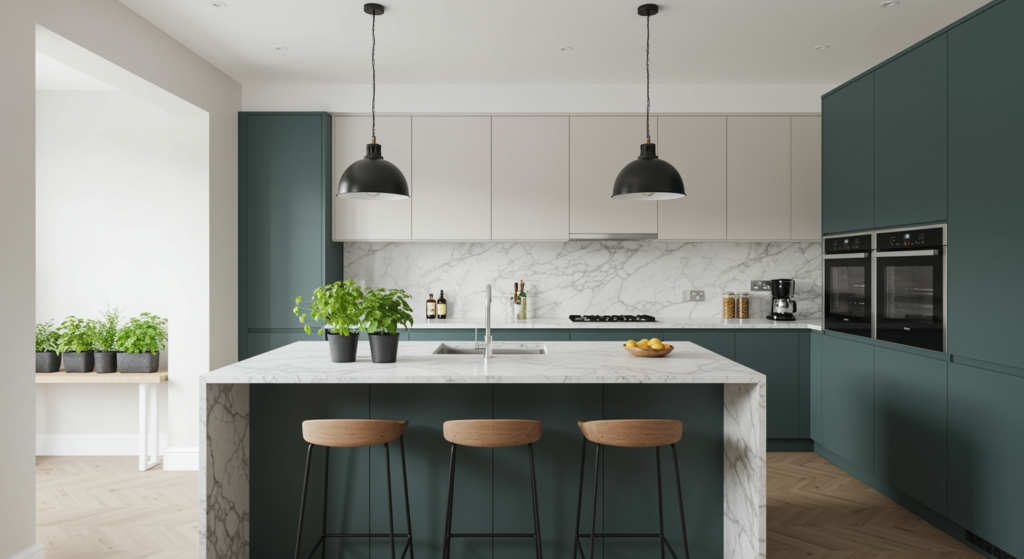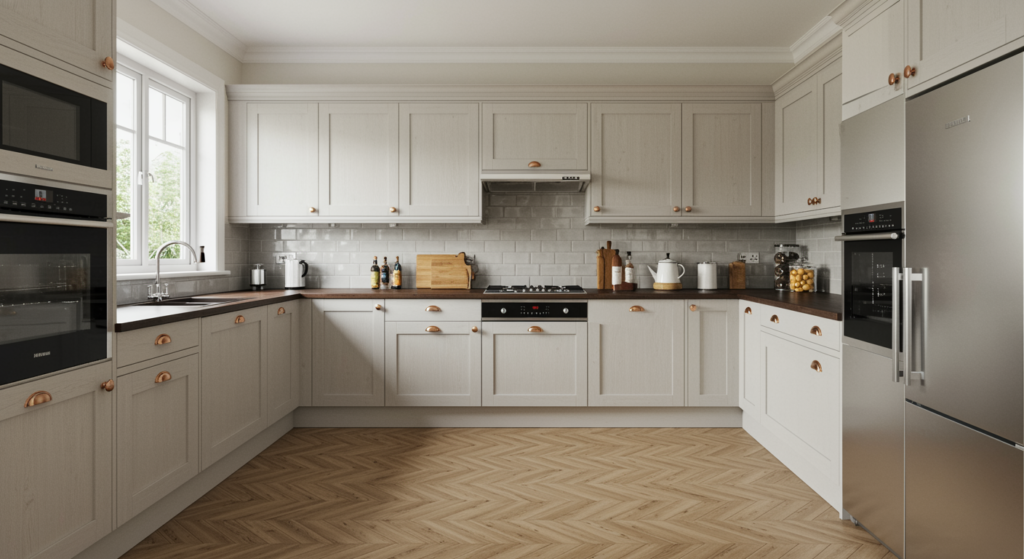
The heartbeat of the home is where daily rituals, family ties, and innovation meet, not just a kitchen. Every activity is simple and every get-together appealing in a beautiful kitchen, which combines style and practicality. The area turns into a real centre of warmth, efficiency, and togetherness when design and utility collaborate.
Heartbeat Of The Home 1: Flow & Movement
Understanding why the kitchen really serves as the hub of the home depends on flow and movement. A well-harmonised kitchen lets people move easily among major activity areas — food preparation, cooking, cleaning, and storage without congestion or disturbance.
Daily routines seem natural rather than forced when these areas are carefully arranged, therefore minimising needless footsteps and providing a more pleasurable cooking experience. Good circulation also aids multitasking, which simplifies shared use of the area without getting in each other’s way whether guests are mingling while dinner is prepared or a hectic family prepares food together. Beyond pure efficiency, great flow improves both comfort and safety.
Clear paths reduce the likelihood of mishaps, especially in busy homes with youngsters or elder relatives around. Proper spacing between appliances, islands, and countertops guarantees doors open freely and activities may be carried out free of strain. This sensation of comfort transforms the kitchen from a purely utilitarian environment into one where people naturally gather, directly influencing how friendly it seems. Kitchen flow goes beyond its limits in open-plan houses to link smoothly with living and dining spaces.
This continuity supports the kitchen’s function as a social anchor and promotes engagement. The kitchen encourages significant daily experiences in addition to effective meal preparation when movement seems natural and unhindered, therefore enhancing its function as the actual heartbeat maintaining house rhythm.
Heartbeat Of The Home 2: Visual Balance
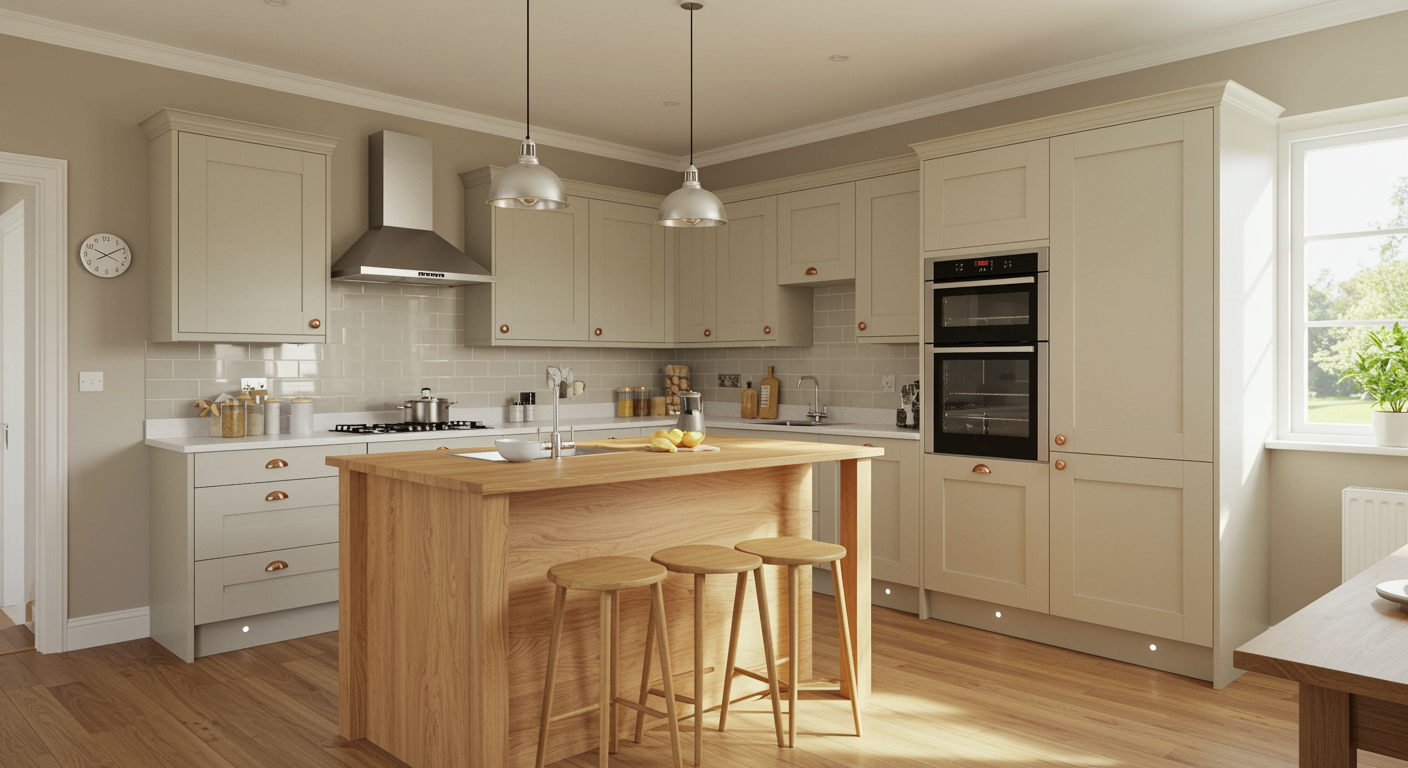
Visual equilibrium is essential for kitchen harmony; therefore, stressing the idea that the heart of the home is the kitchen. A well-balanced kitchen blends colours, textures, dimensions, and materials to produce a warm, calm, and organised space.
Prevent visual overload so that the eye can easily move around the room by using uniform cabinet finishes, coordinated countertops, and carefully chosen backsplashes. Proportion helps to balance the room using cabinet heights, appliance positioning, open versus closed storage so that no one component drowns the others.
Particularly dependent on this sense of organisation are open-plan houses, where the kitchen has to fit with other living spaces. Emphasising important areas and softening shadows also helps to provide visual equilibrium and ensures the room seems welcoming rather than rough. Little touches like handle designs, shelf symmetry, and material repeating improve the general harmony of a room. Paying great attention to visual harmony changes the kitchen from just a useful workspace into a peaceful setting that inspires daily activities and social interaction.
Defining a consistent design and minimising visual clutter transforms a balanced kitchen into a place where families naturally gather, interact, and feel at home by fostering comfort, concentration, and emotional relaxation thereby improving it.
Heartbeat Of The Home 3: Functional Zoning
Functional zoning guarantees that every activity from socialising, cooking, cleaning, and meal preparation flows naturally without need of disruption, hence forming one of the pillars of kitchen harmony. Correct space allocation lets a kitchen host many consumers, therefore eliminating bottlenecks and hence reducing stress all across hectic days.
A well-designed kitchen, for instance, has strategically placed storage cabinets for easy tool, ingredient, and cooking utensil accessibility as well as the oven, stovetop, and prep surfaces close. To preserve efficiency and cleanliness, ideally among other things, cleaning of areas like sinks, dishwashers, and trash cans should be avoided from food preparation surfaces. Good zoning enhances the social dynamics of a kitchen in addition to utility.
Turning the kitchen into a versatile centre supporting daily schedules and unplanned events depends on developing particular zones for coffee brewing, casual eating, or homework stations. These locations can be aided by visual cues like varied floor textures, opposing countertops, or faint lighting changes, therefore automatically guiding movement and reducing covert behaviour. Functional zoning in open-plan layouts therefore promotes order and harmony by aligning the kitchen with nearby living or eating rooms without sacrificing operating efficiency.
At last, with appropriate zoning, the kitchen turns into the warm centre of the home where connection, comfort, and productivity abound naturally. Apart from streamlining procedures, this deliberate design generates a tranquil environment that lets the kitchen serve as both a comfortable meeting place and a practical workplace.
Heartbeat Of The Home 4: Emotional Comfort
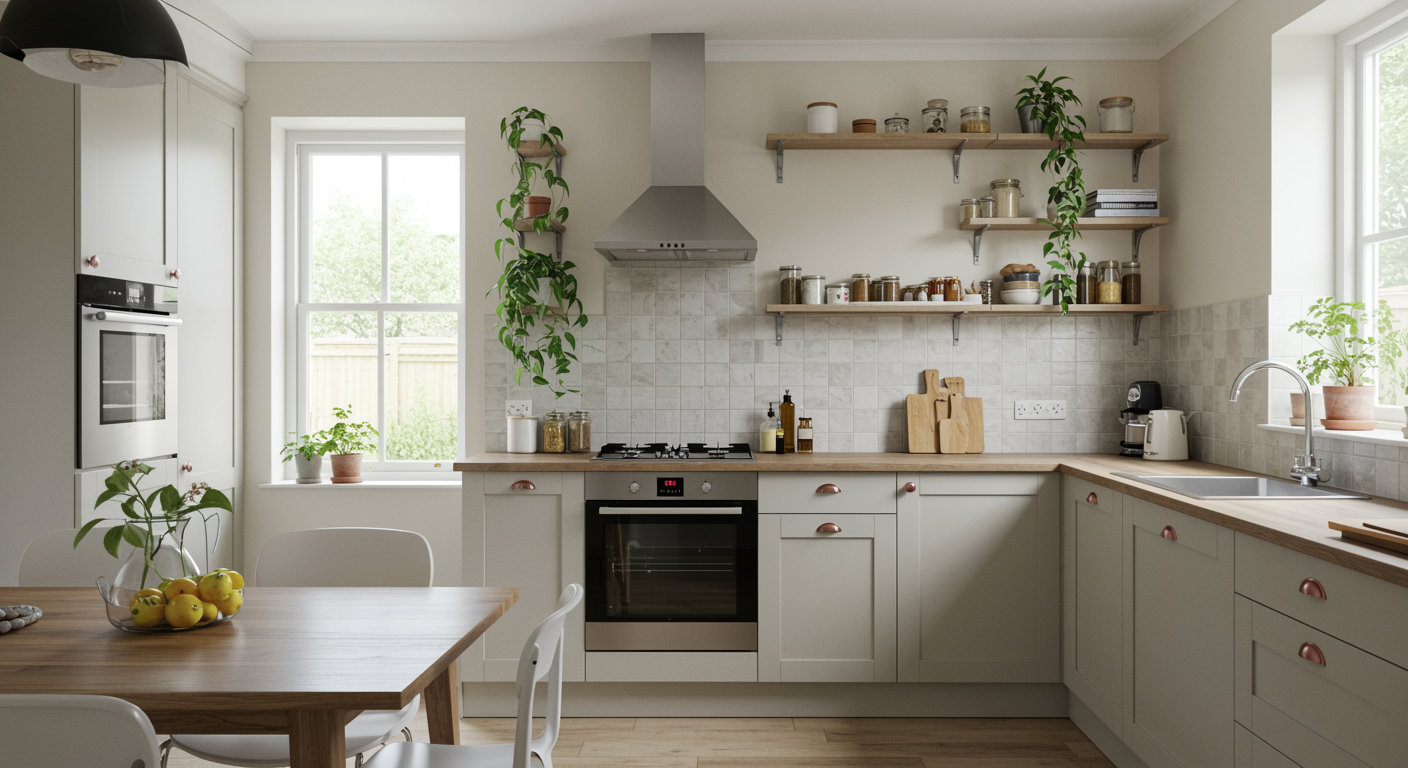
Emotional comfort turns the room from simply a utilitarian space into the centre of the house where harmony, innovation, and relationships interact, hence becoming one of the basic construction components of kitchen harmony.
A kitchen’s first concern is emotional comfort; thus, it looks at not only the physical arrangement but also the sensory and psychological experience of its users. Warm, variable light aids in creating a welcoming environment that promotes either solitary time or family discussions, therefore lighting is rather important. Likewise, colour palettes affect attitude; soft, neutral tones can promote calm whereas flashes of vivid hues could energise and inspire culinary imagination.
Furthermore enhancing overall comfort by using textures and materials; tactile surfaces enticing to touch. Beyond aesthetics, the order and accessibility of kitchen tools and storage have a straight influence on emotional well-being. A goodly created setting promotes order and control by lowering irritation and enabling events to go on naturally. Seating and social areas encourage the kitchen to be a place for impromptu discussions, school, or coffee breaks, therefore developing relationships between visitors and family members and hence increasing comfort.
Through herb gardens, indoor plants, or views of the outside, nature integration can even improve mood and provide a calm backdrop for daily life. By combining these components, a kitchen transforms from a basic workstation into a caring environment meeting both functional demands and emotional delight, thus mirroring its role as the heart of the house.
Heartbeat Of The Home 5: Balance Between Style & Practicality
Harm in a kitchen results from striking usefulness with appeal; this renders it very useful for everyday life rather than simply cosmetically pleasing. Though a kitchen depending much on aesthetics might expose gorgeous finishes, plain cabinets, or spectacular lighting, it risks sacrificing functionality if storage is limited or work surface placement is subpar.
On the other hand, a very practical, highly functional kitchen could look sterile, uninspired, and out of keeping with the mood of the house. Actual kitchen harmony results from the combination of these elements so that every design decision satisfies a need and elevates the overall attitude. High-quality quartz counters or laminates provide beauty and strength as they can tolerate constant use without losing their visual attractiveness.
Intelligent cabinet and drawer arrangements provide quick access to demands, supplies, and tools without sacrificing the visual flow by hiding garbage while retaining a clean look. Good lighting has two goals: while you are cooking, task and ambient lighting will highlight design aspects while guaranteeing safety and productivity.
Furthermore, encouraging harmony — the selection of textures, hues, and finishes changes a space to be warm yet appropriate for family events, food, and entertainment. Homemakers artfully combine form and function to produce a kitchen that suits their own tastes; this evolves into the focus of daily life, therefore meeting both practical needs and the emotional well-being of all gathered there.