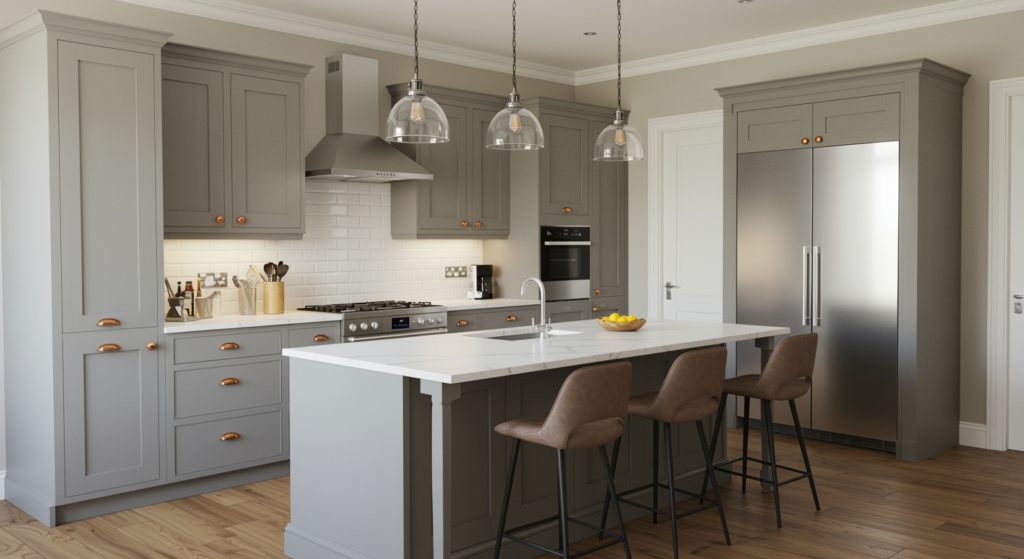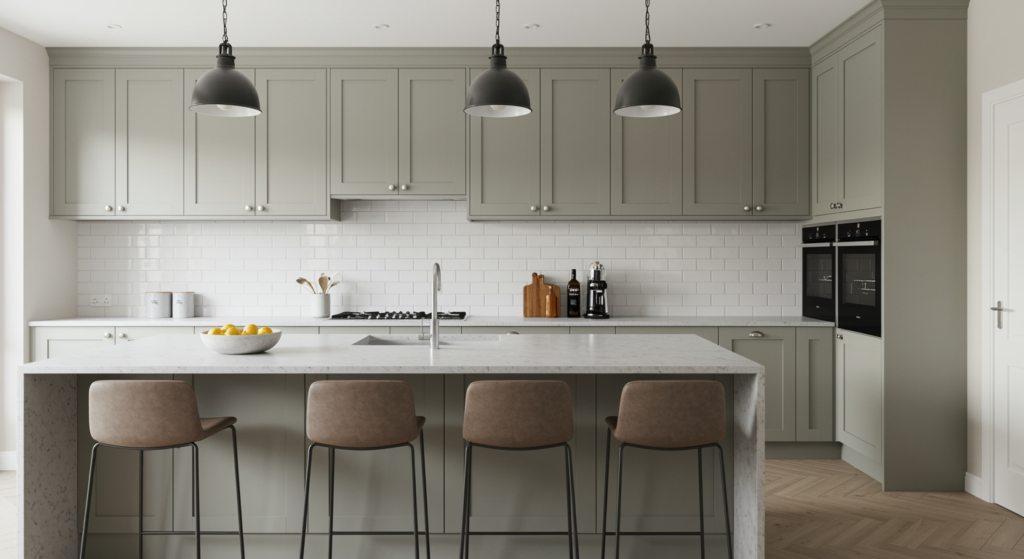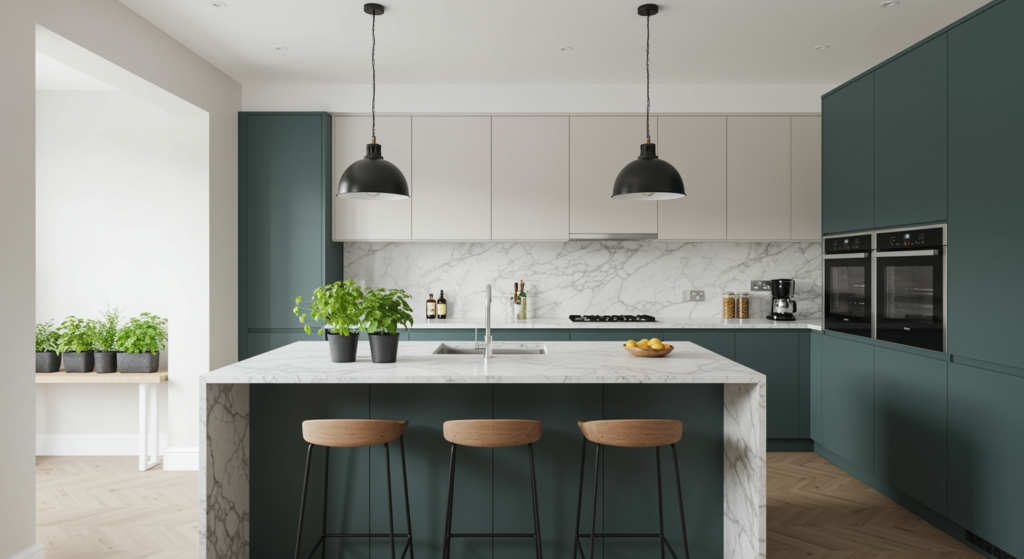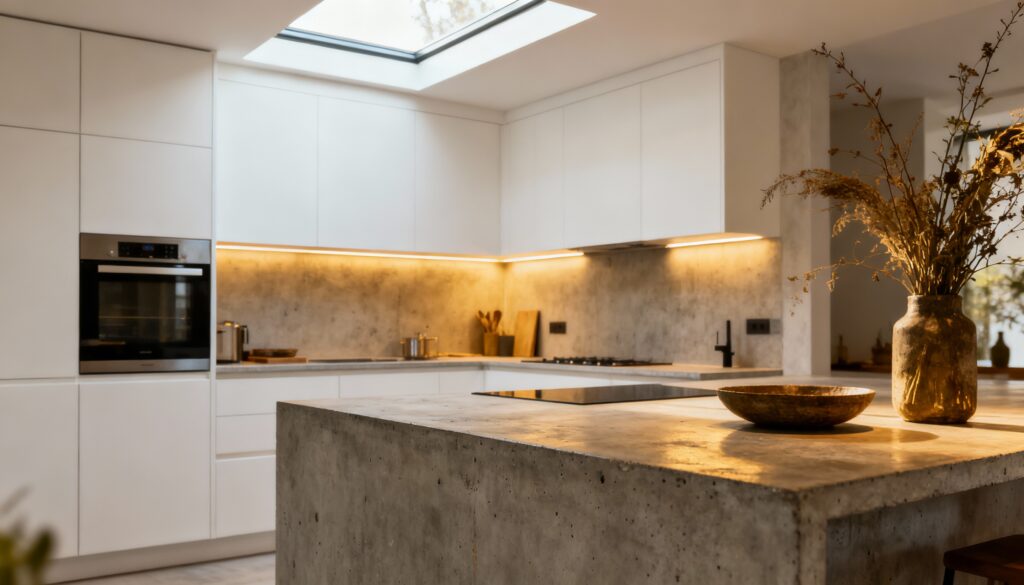
The cohesive kitchen starts by mixing colours, materials, and arrangement tat generates an artistically pleasing area. By including storage choices, equipment and work surfaces, it streamlines daily duties and increases productivity. Apart from cooking meals and gathering in a calm and inviting setting, this harmonic improves usability.
The Cohesive Kitchen 1: Consistent Materials and Finishes
Consistent kitchens start with wise material and finishing selections. Besides making the room seem more elegant, having consistent feel and appearance across appliances, cabinets, and work surfaces also improves their operation.
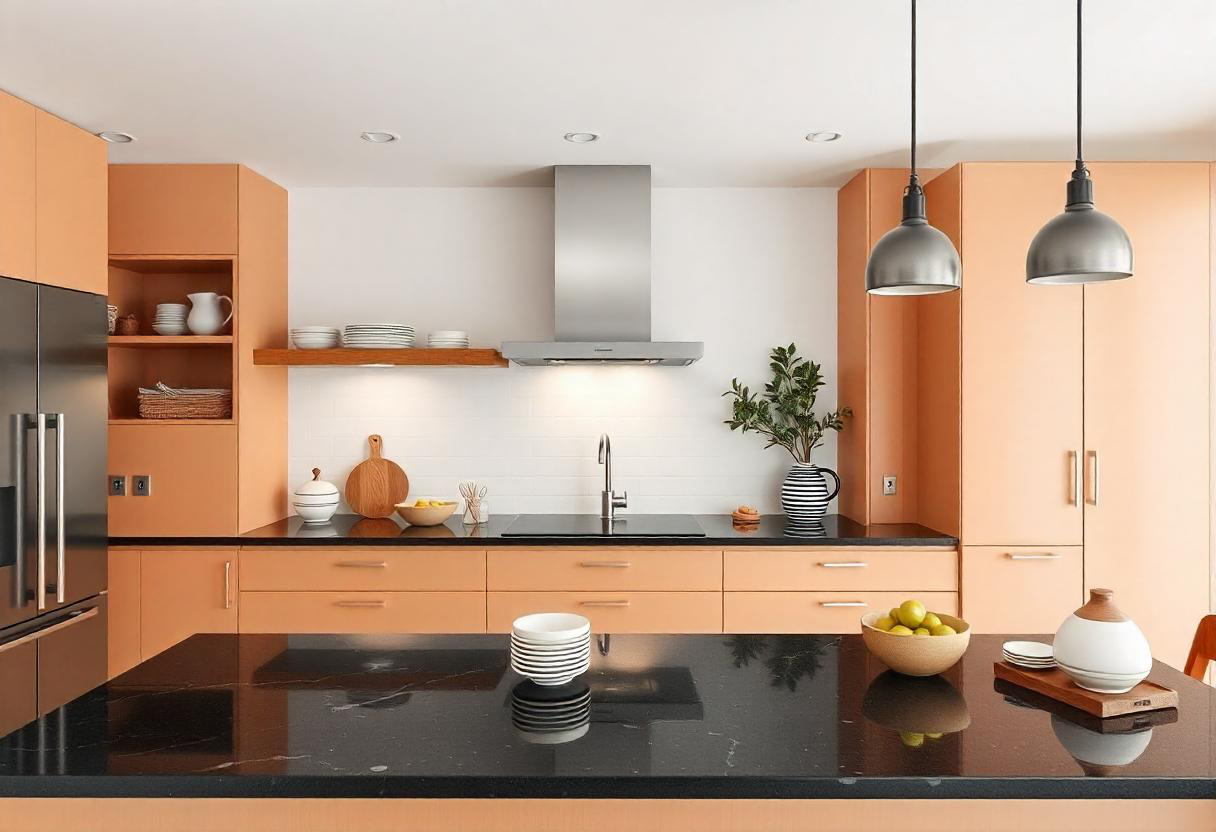
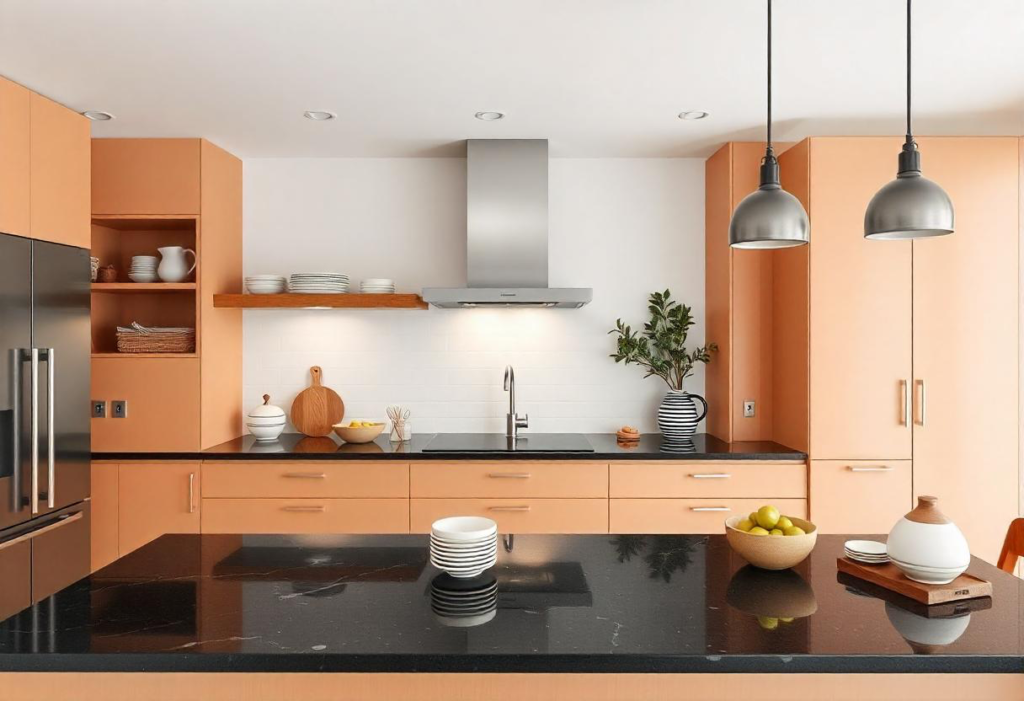
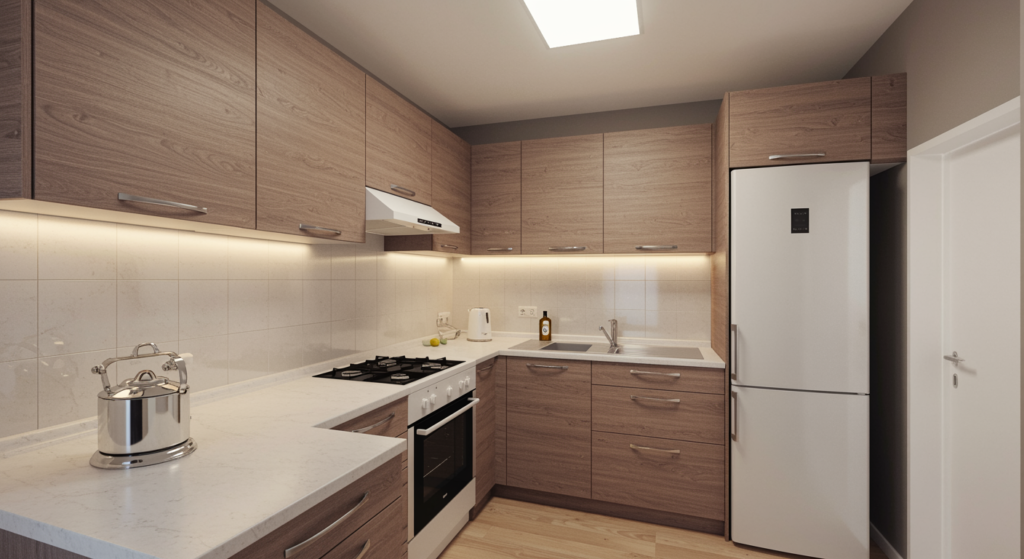
For instance, selecting one cabinet finish — matte white, light oak, or walnut creates a visual flow that naturally grabs the attention and increases transparency. Adding quartz or Silestone — a complementary surface material guarantees balance between horizontal and vertical elements.
Regularity in supplies increases not only durability but also ease of upkeep. Choosing the same surface material for backsplashes and counters or aligning cabinet laminates lowers obvious deterioration over time and simplifies cleaning. Uniform flooring lowers visual distractions by running smoothly into next rooms, therefore preserving consistent motion as well.
Hardware and fixings should follow this same rule. Coordinating metal finishes such as brushed nickel, matte black, or brass across faucets, cabinet pulls, and light fixtures unifies every element of the design. The outcome is a coherent design that not only pleases the eye but also speeds workflow as every component links flawlessly in usability as well as visually.
The Cohesive Kitchen 2: Seamless Cabinetry and Integrated Appliances
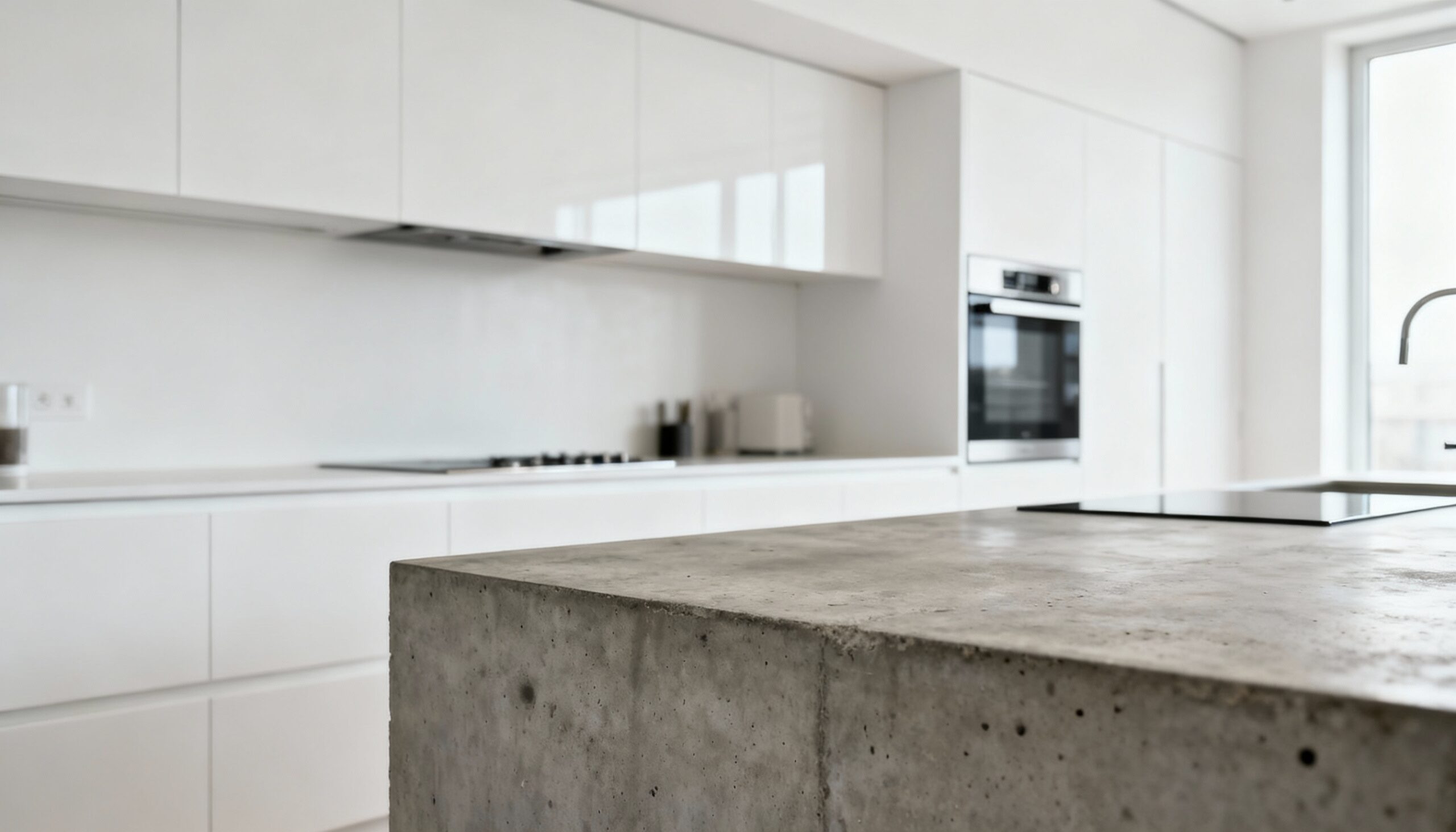
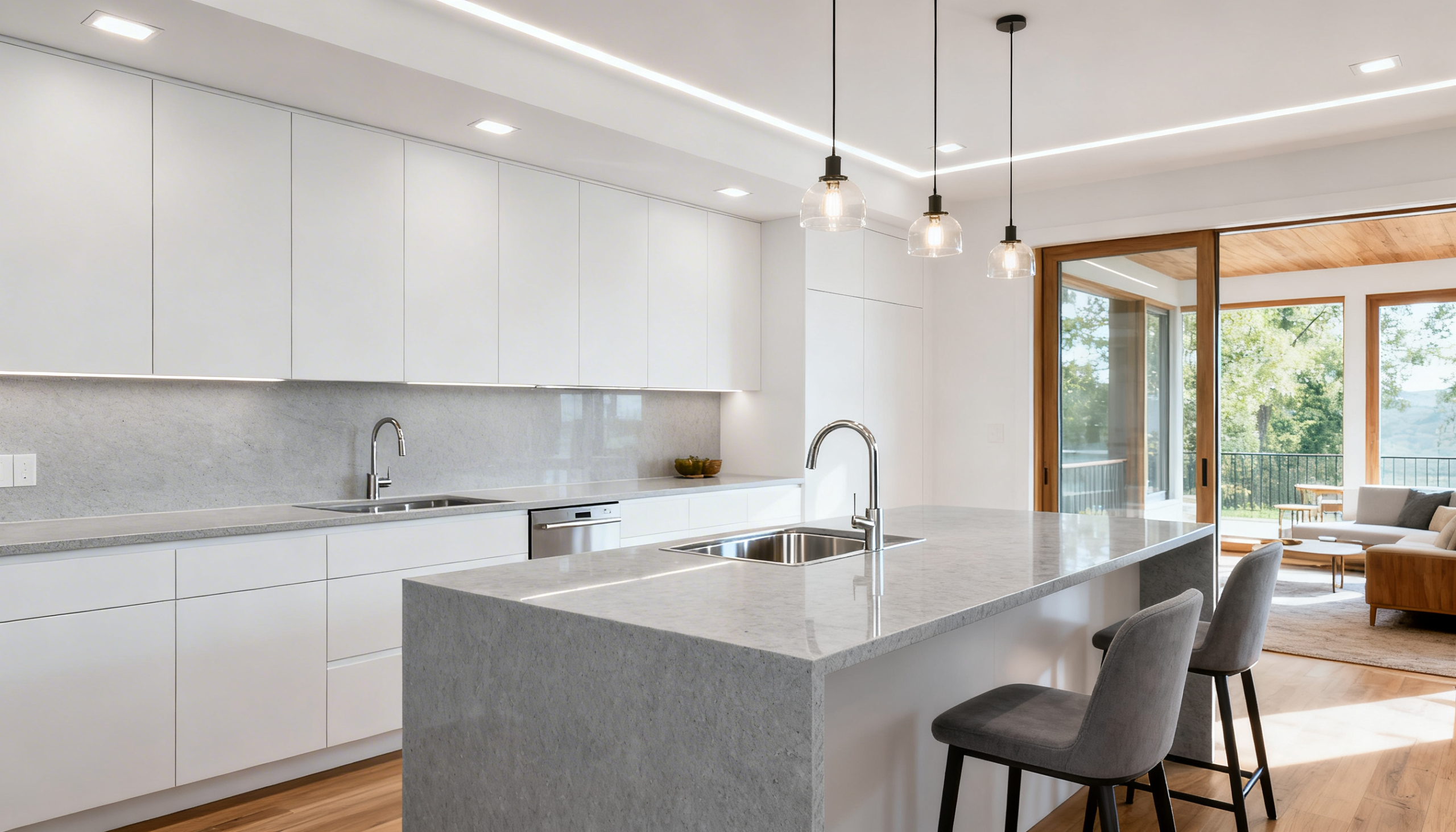
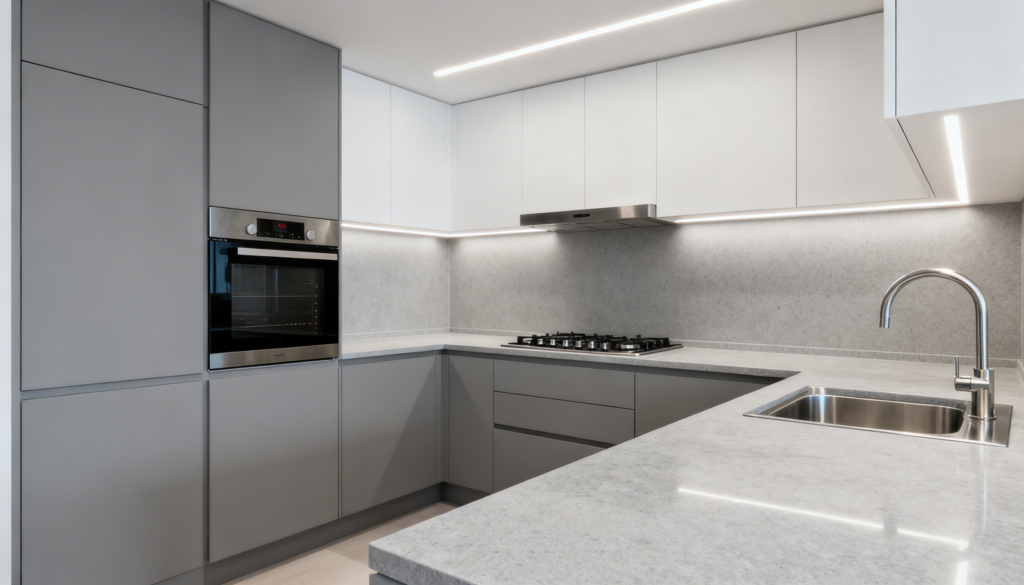
Beginning with spotless cabinets and installed appliances that is vital for both appearance and practicality and helps to produce a cohesive kitchen that somehow increases accessibility and flow. Modern and tidy kitchens are produced by removing visual distractions, simple cabinetry which has handleless doors, flat fronts, or concealed hinges.
Reducing distractions not only helps the cook to quickly focus on tasks but also helps to make the environment more spacious and neat. Matching appliances such built-in ovens, refrigerators, and dishwashers with cabinets further enhances this feeling of harmony. Adding appliances in the design helps to keep the kitchen’s sleek visual flow and avoids jarring or heavy equipment from upsetting the balance.
These design choices go beyond looks to improve efficiency: ergonomically arranged cabinets and drawers allow easy access to appliances, tools, and supplies; well positioned gadgets inside work areas help to allow for more seamless transitions between cooking, food preparation, and cleaning. The outcome is a gorgeous, extremely functional kitchen in which motion appears natural and simple.
Smooth cabinets with integrated appliances help to maximise storage and keep counters free, therefore ensuring every inch supports efficiency even in small quarters. Eventually, this marriage of continuous design and smart positioning converts the kitchen from a gathering of disparate components into a cohesive, flowing work environment in which design harmony improves and so raises the cooking experience.
The Cohesive Kitchen 3: Thoughtful Hardware and Fixture Choices
Consistent kitchens need good hardware and fixtures since they assist to unite the space and boost functionality. While counters, cabinets, and flooring often influence the design debate, it’s hard to overestimate the modest influence of daily hardware — handles, knobs, faucets, and light fixtures.
Complementary finishes for these features whether brushed nickel, matte black, or polished brass link several parts of the kitchen through visual harmony. Apart from their physical characteristics, these decisions influence process. Streamlining everyday chores, soft-close hinges, ergonomic handles, and pull-out cabinets both raise output and reduce stress.
Extendable spouts or touch less controls on equipment streamline installation and cleaning duties, therefore encouraging a more natural flow throughout work environments. Matching or harmonising fixture finishes across cabinets, appliances, and lighting also lessens visual clutter and reinforces order and calm. Small details like the consistency of pendant lighting above an island or the alignment of drawer handles help to improve design perception, therefore expert curation of the kitchen.
Hardware and fittings are, in fact, the delicate fibres linking the functional and creative aspects of the kitchen into a consistent whole. Builders of homes who give great consideration to these features may create a room that is not just sophisticated and balanced but also encourages a smooth, neat, highly effective cooking and cleaning regimen, therefore improving both beauty and use equally.
The Cohesive Kitchen 4: Harmonised Layout and Flow
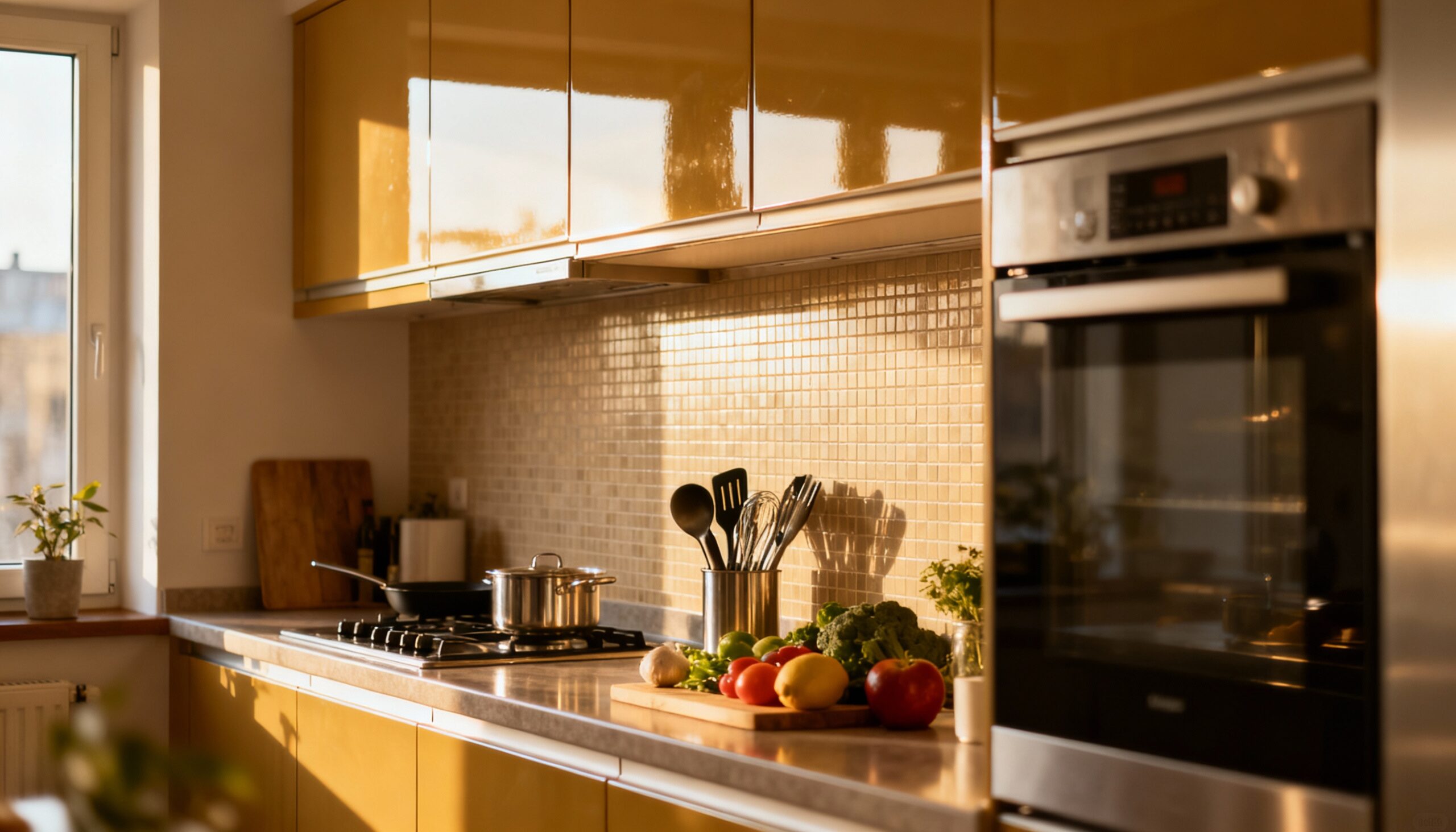
Building a cohesive kitchen that elegantly marries aesthetics with practicality depends on a harmonic layout and flow. From appliances and work surfaces to cupboards and countertops, every element in a carefully designed kitchen is set to promote natural movement and successful job completion.
One of the most effective strategies is the concept of work zones, by means of which rooms for cooking, preparation, cleaning, and storage are strategically placed to lower pointless travel and relieve congestion. For example, positioning the sink, refrigerator, and stove in a well-considered triangle guarantees simple transitions across cooking, preparing, and cleaning. Beyond function, a harmonic design considers visual flow by placing cabinets, counters, and islands to create consistency and order.
Aside from increasing safety and accessibility — every frequently used object is within reach and pathways remain open — this also contributes to the aesthetic attractiveness of the area. Multi-functional islands or peninsula designs may help to further improve coherence by serving as a central point for meals, casual dining, and storage while yet allowing clear movement.
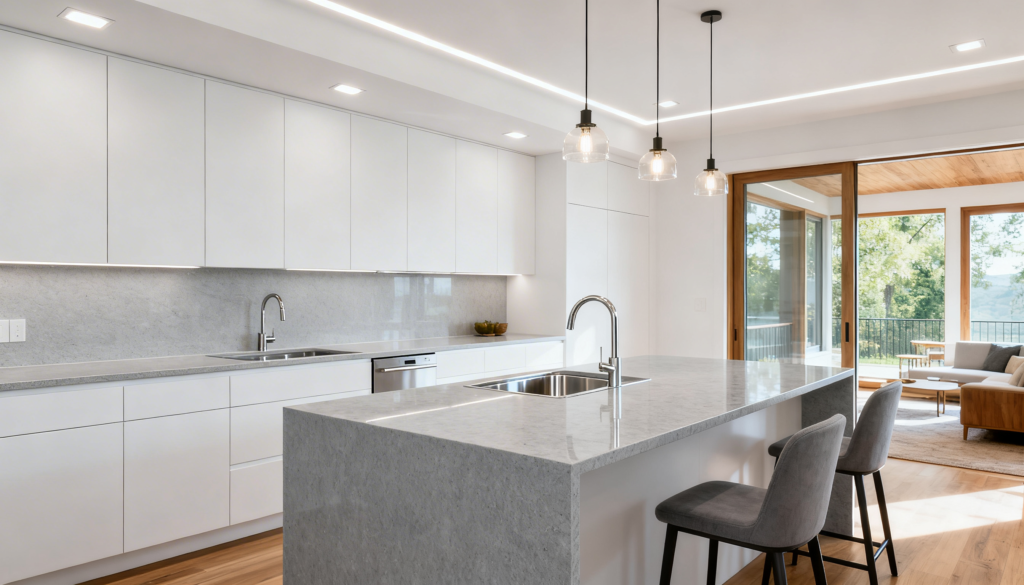
Even in open-concept homes, a consistent kitchen design improves continuity by linking smoothly with adjacent living or dining rooms through matching materials, consistent lines, and contrasting heights. Reducing friction in daily routines, a harmonious design and flow ultimately improve the cooking experience by ensuring the area is welcoming and well planned — reflecting the perfect form-to-function balance and cooking and cleaning become natural.
The Cohesive Kitchen 5: Connection to Adjacent Spaces
Beyond the actual food, a regular kitchen therefore connects consciously to close zones and generates a sensation of continuity that enhances aesthetic appeal as well as practical value. When kitchens open to eating rooms, living spaces, or even outside patios, flawless changes in flooring, colours, and materials assist to balance the whole home.
For instance, running the same hardwood or tile flooring from the kitchen into the dining area not only visually enlarges the room but also steers natural movement, therefore streamlining a natural flow throughout the house. Similarly, coordinating cabinet finishes, countertop materials, or accent colours with nearby furniture or architectural features elevates the visual interaction between spaces, hence creating a peaceful environment.
Furthermore simplifying daily activities for more enjoyment and efficiency, this oneness allows cooks and hosts to readily negotiate between food preparation, serving, and entertainment with minimum interruption. Smart lighting, which matches the kitchen and nearby areas, further strengthens this relationship and helps to create open and inviting spaces rather than isolated ones.
Deliberately selected sight lines help to enhance cohesiveness by enabling items from one space to mirror into another — a kitchen island matches a console in the living room or a backsplash adds to the seating area.