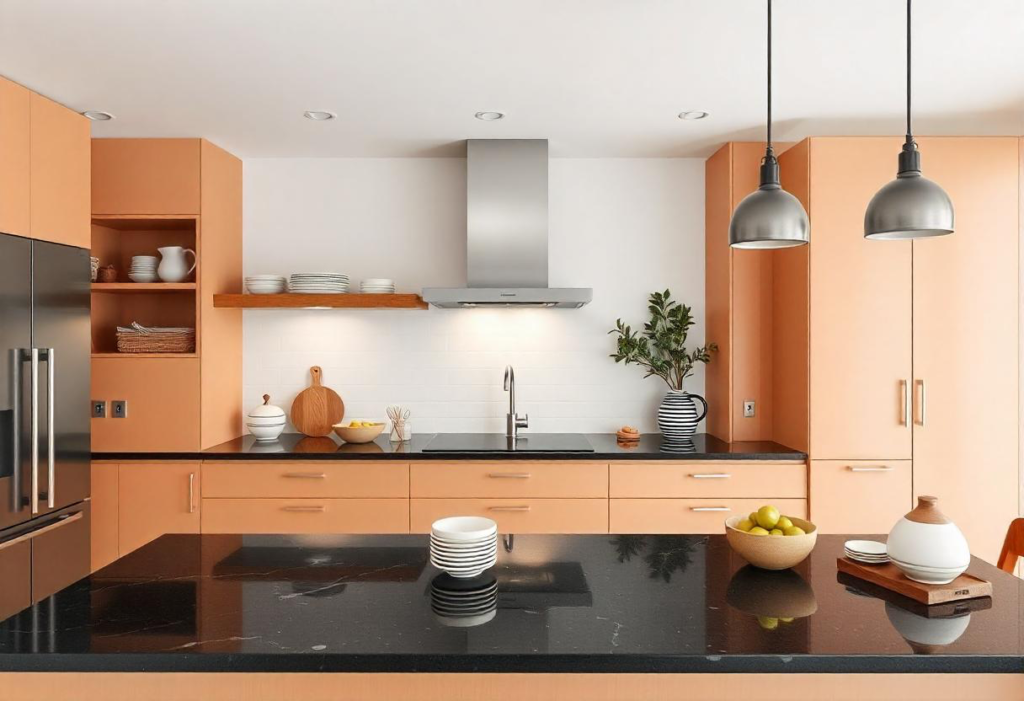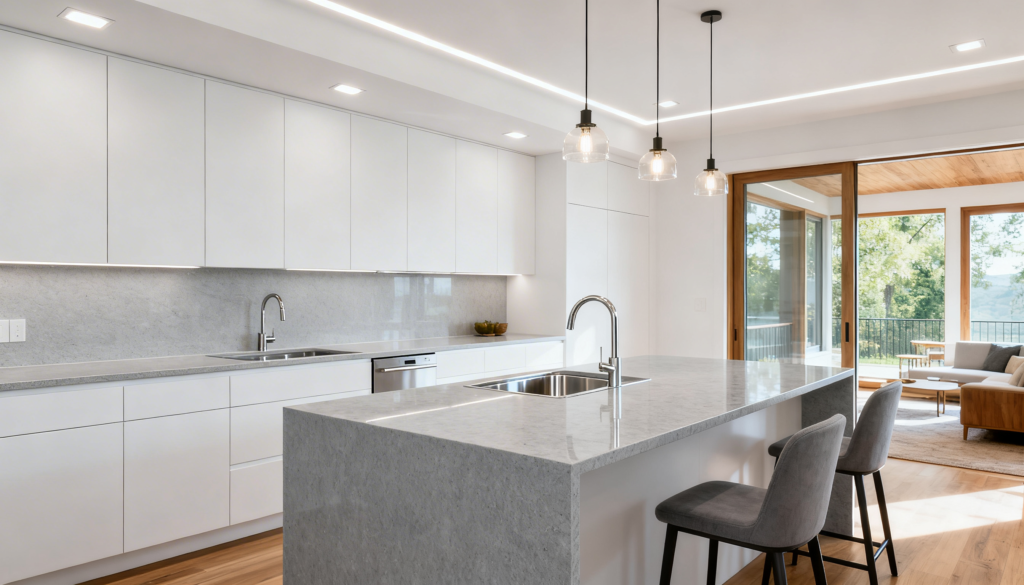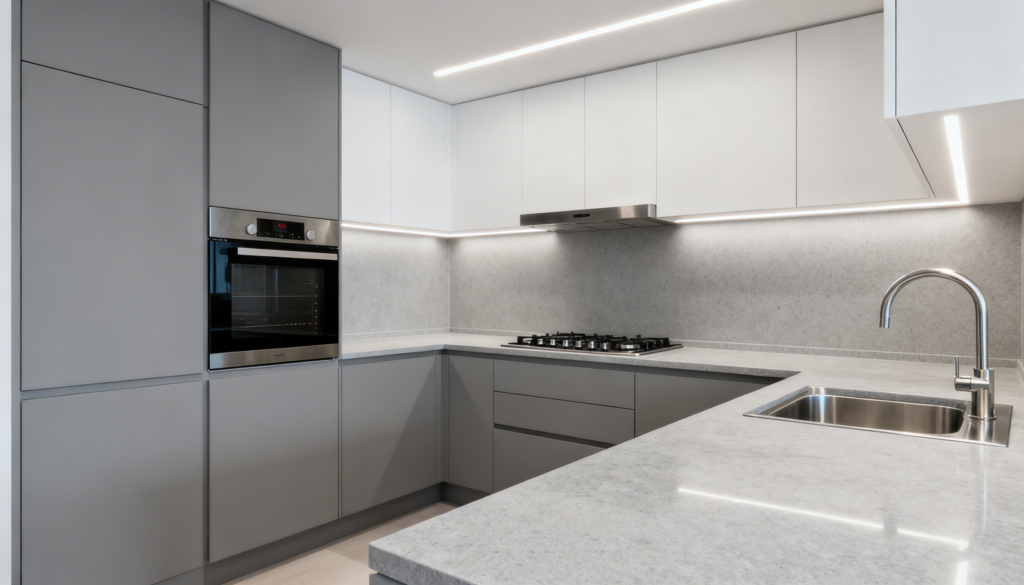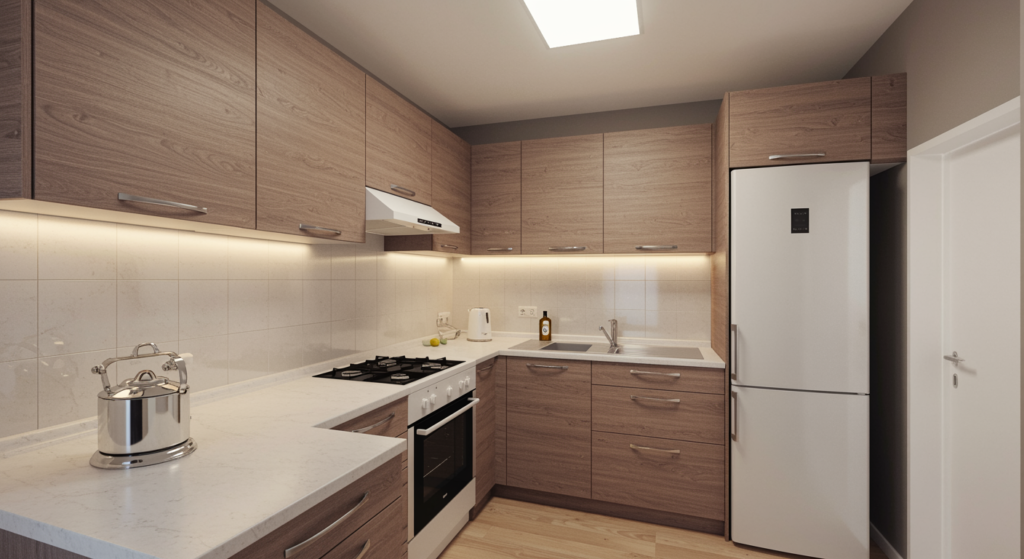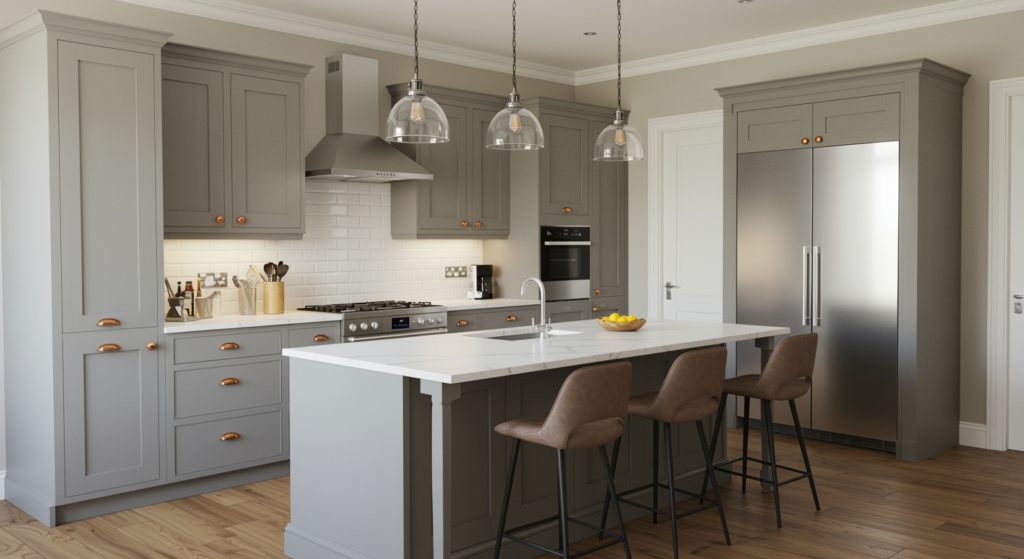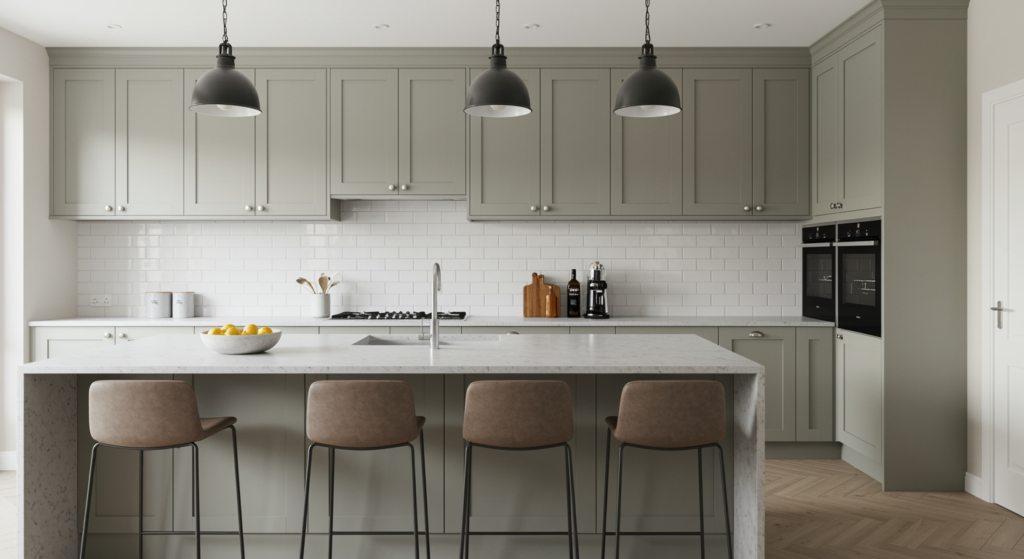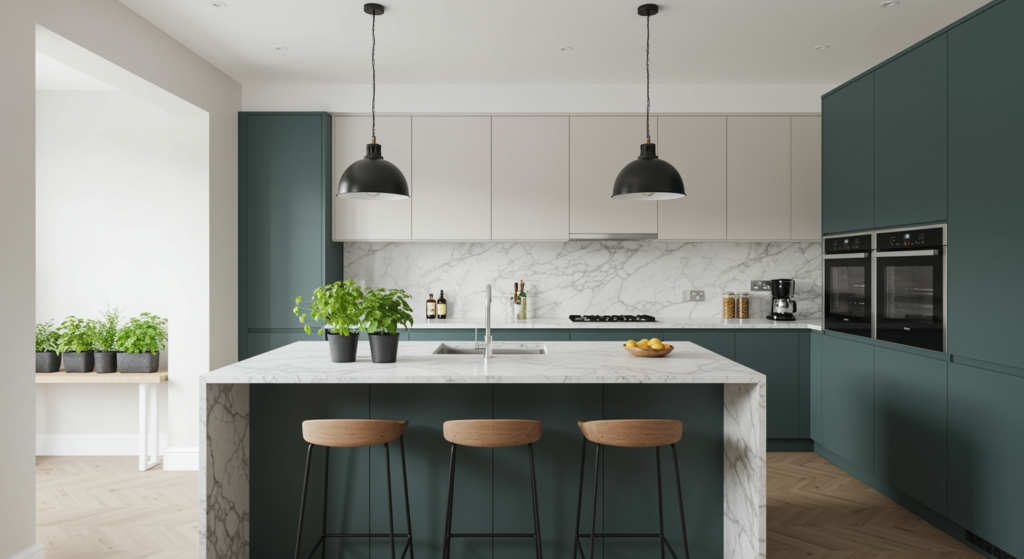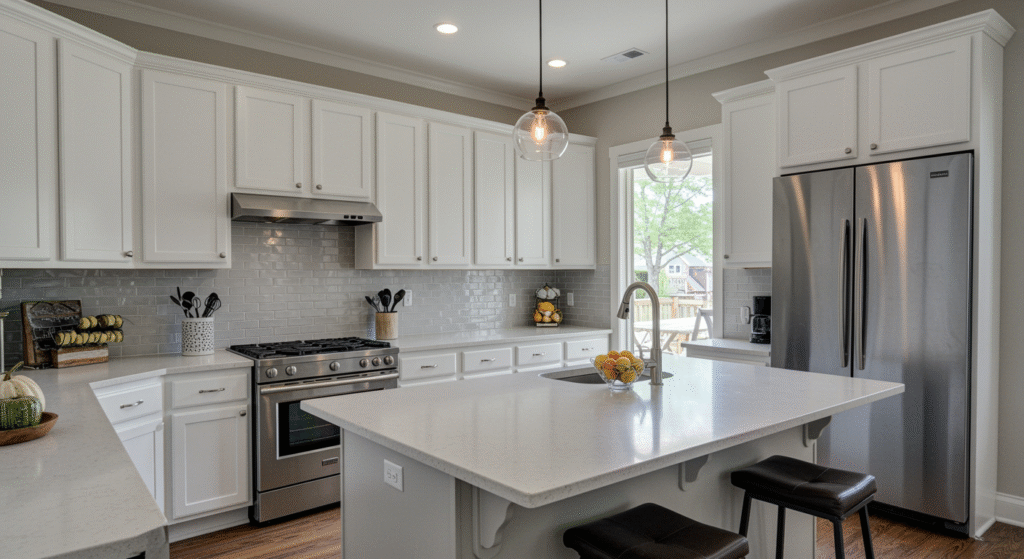
Kitchen cohesion test starts by analysing your modern kitchen in relation with the general style of your house. Guaranteed alignment of cabinets, counters, and nearby living areas avoids visual conflict and produces a smooth flow. Like matching hardware or complementary lighting, deliberate design decisions transform the kitchen from a separate room to a component of your home’s narrative.
Kitchen Cohesion Test 1: Material Harmony Across Spaces
Material harmony throughout your house depends on ensuring your modern kitchen seems naturally connected rather than as a design aberration. Among the most important factors are choosing materials that go well with or speak with already established surfaces.
Choosing open or cabinet shelves in the same wood tone, for example, maintains a consistent visual flow if your living room has warm oak flooring. Coordinating or matching metallic finishes such brushed nickel, matte black, or brass across door handles, taps, lighting fixtures, and furniture legs also produces subtle consistency that appears purposeful rather than haphazard. Also important is texture: should your home lean toward soft, matte finishes, incorporating glossy, ultra-reflective cabinets might clash unless very balanced with other matte elements.
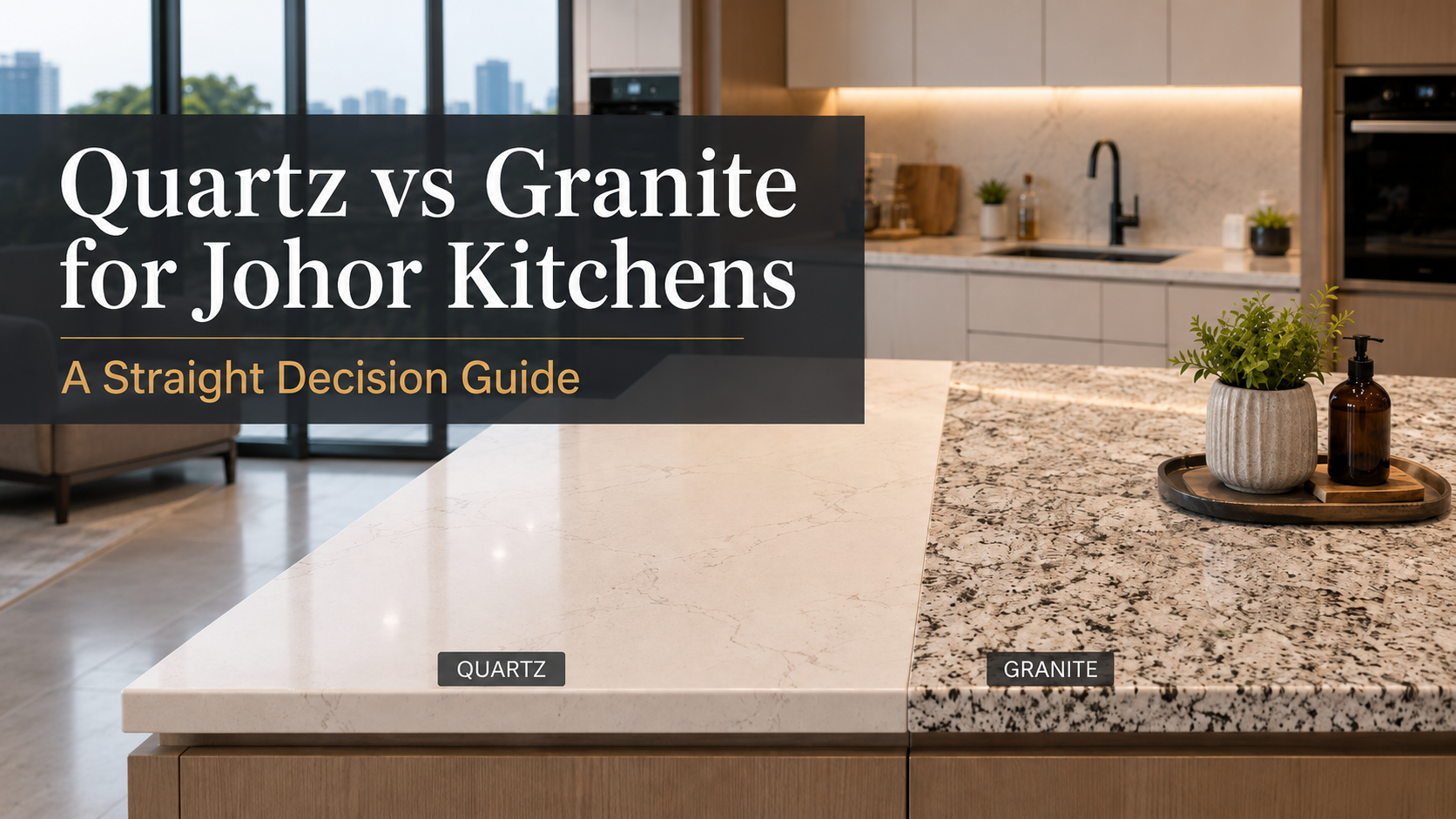
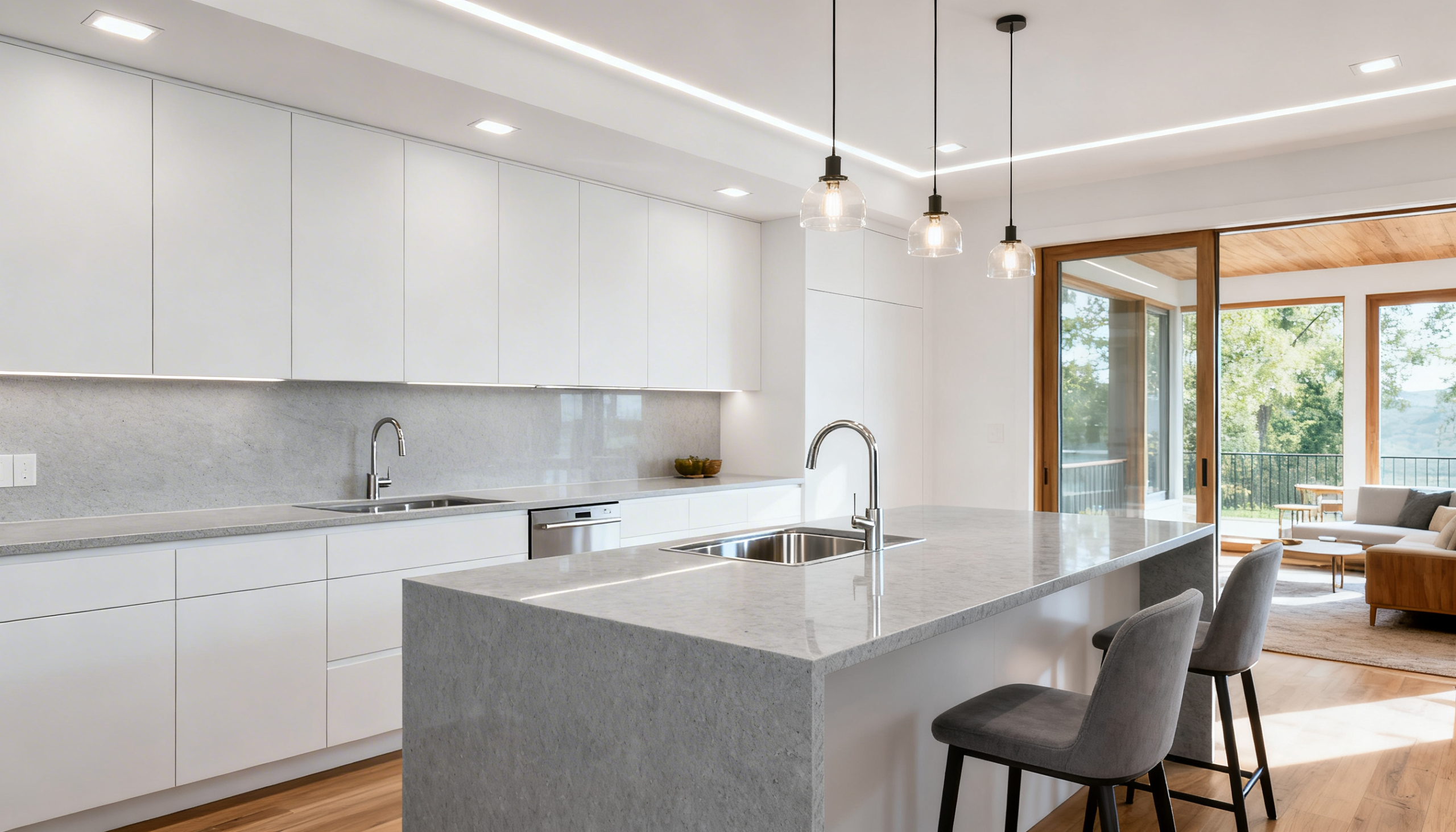
The vibe of adjacent places should match with counter and stone materials as well. While a marble counter with delicate veining would seem odd in a house with plain, uncluttered surfaces, a streamlined quartz fits right in into contemporary or Scandinavian-inspired designs. Little aspects such as backsplash tiles ought to tie into patterns, colours, or forms found elsewhere throughout the home.
Aside from looks, material grade and durability should be equal; pairing a high-end kitchen with poor finishes in adjacent spaces could result in an uneasy feeling. Material harmony ultimately comes from creating a consistent design language that moves easily from one room to another, therefore your kitchen doesn’t clash with the mood of your home.
Kitchen Cohesion Test 2: Functional Flow and Layout Logic
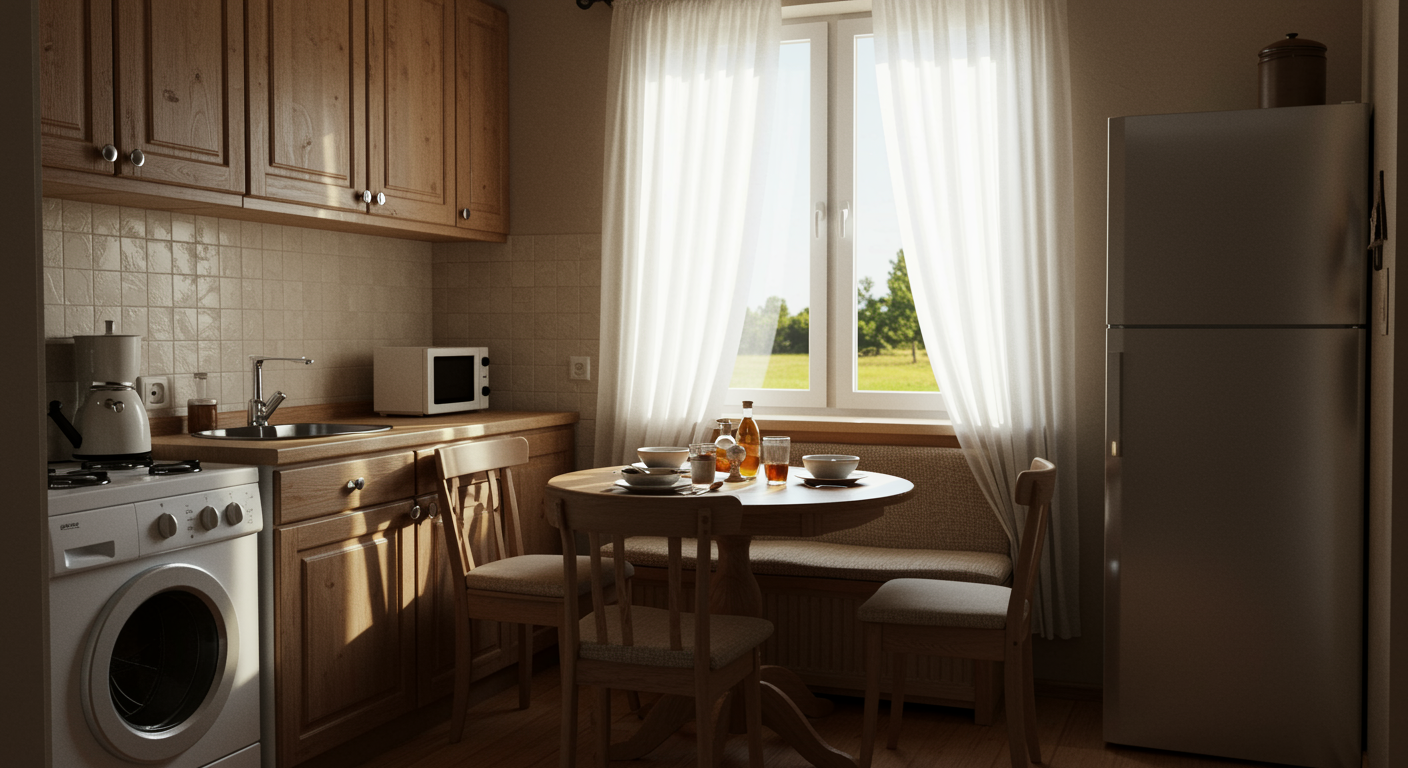
Functional flow and layout logic are vital in the kitchen cohesion test since even the most artistically built kitchen can feel inappropriate if it breaks the natural rhythm of your house. Both within the area and between nearby rooms like the dining room, living room, or outdoor porch, a coherent modern kitchen should allow for intuitive movement.
This starts with determining whether the arrangement of the kitchen adheres to the already present architectural logic of the house; open-concept rooms ought to keep strong sight lines; more classic floor plans could demand deliberate transitions through arches or doorways. The positioning of important areas — cooking, cleaning, prepping, and storage should correspond with your daily movement throughout your house, therefore avoiding uncomfortable bottlenecks or visual divides.
An island, for instance, ought not obstruct a natural route leading to the living space; high-traffic areas should remain open in order to maintain harmony between areas. Functional cohesion also means your kitchen’s workflow should complement how you use surrounding rooms; if your dining space is used often, the serving path should be direct and clutter-free.
Furthermore, think about if your kitchen cabinets, appliance positioning, and lighting arrangement encourage sensible usability without departing from the organisational flow observed in other rooms. An impression of unity is reinforced when the kitchen design feels simple and fits flawlessly with the framework and daily habits of the remainder of your house, hence guaranteeing that your modern kitchen improves rather than interrupts your general living experience.
Kitchen Cohesion Test 3: Technology and Appliance Integration
Technology and appliance integration, guaranteeing your modern kitchen matches perfectly with the rest of your house is among the major elements of every kitchen cohesion test. More than only useful tools, appliances are cosmetic anchors in current design settings; they could either improve or detract from your overall design.
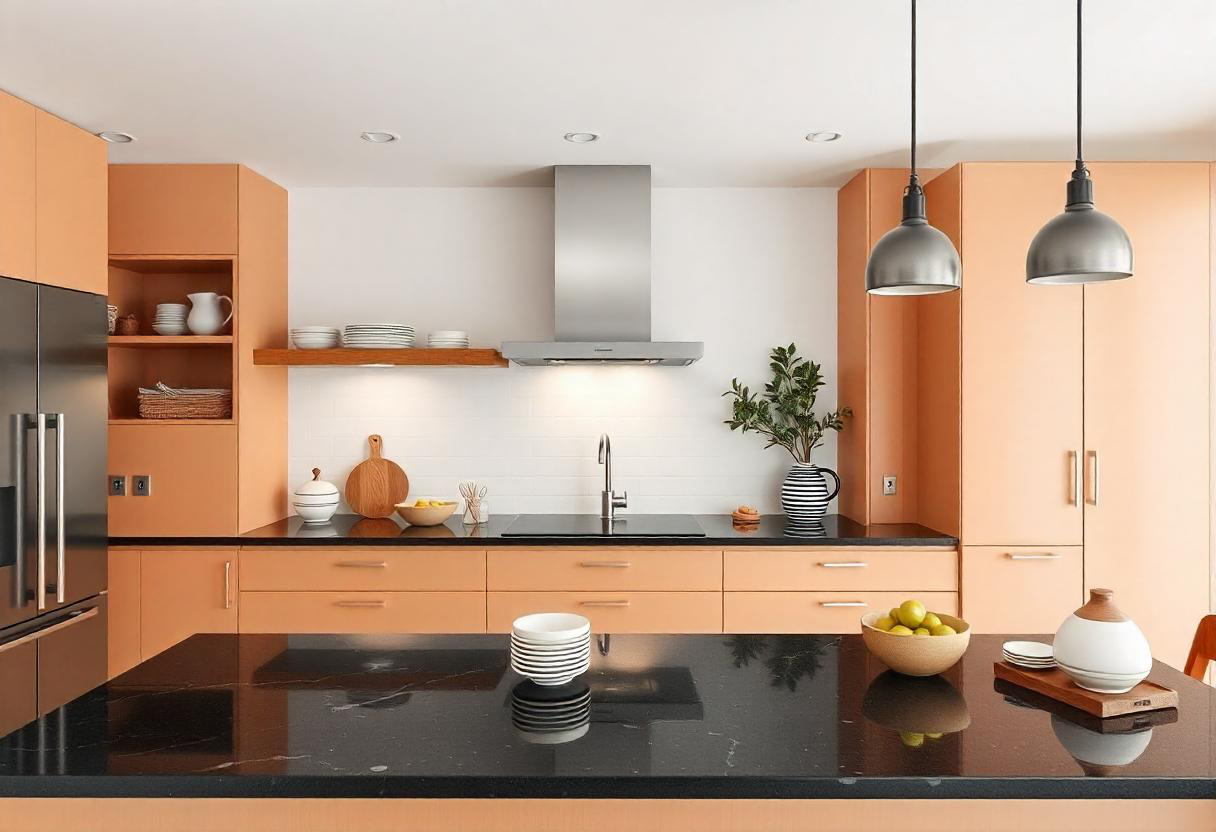
Choosing appliance finishes whether brushed nickel, matte black, or warm brass that complement the metals and materials employed throughout your house opens a well-coordinated kitchen. Smart home integration is yet another significant effect; a kitchen equipped with touch-less taps, app-controlled lighting, or smart ovens should link into the more technological environment already existing in your living room or bedrooms, hence providing a consistent experience instead of a abrupt technological incongruity.
From microwave to fridge, built-in appliances also enhance cohesiveness by reducing visual noise and allowing the kitchen to appear to be a more natural continuation of next rooms. Subtle design of ventilation systems, lighting controls, and charging stations will help them not to interfere with sight-lines especially in open-concept designs. Modern interiors benefit from slick, handleless designs; retro-inspired appliances fit better in eclectic or vintage-styled residences; even the design of appliances counts.
At last, the uniformity in brand design, digital interfaces, and exhibit lighting makes your kitchen’s devices and technology look relevant rather than cobbled together. By combining function, form, and smart connectivity instead of as separate contemporary features, technology and appliances can improve the general design integrity of your home.
Kitchen Cohesion Test 4: Style Theme Continuity
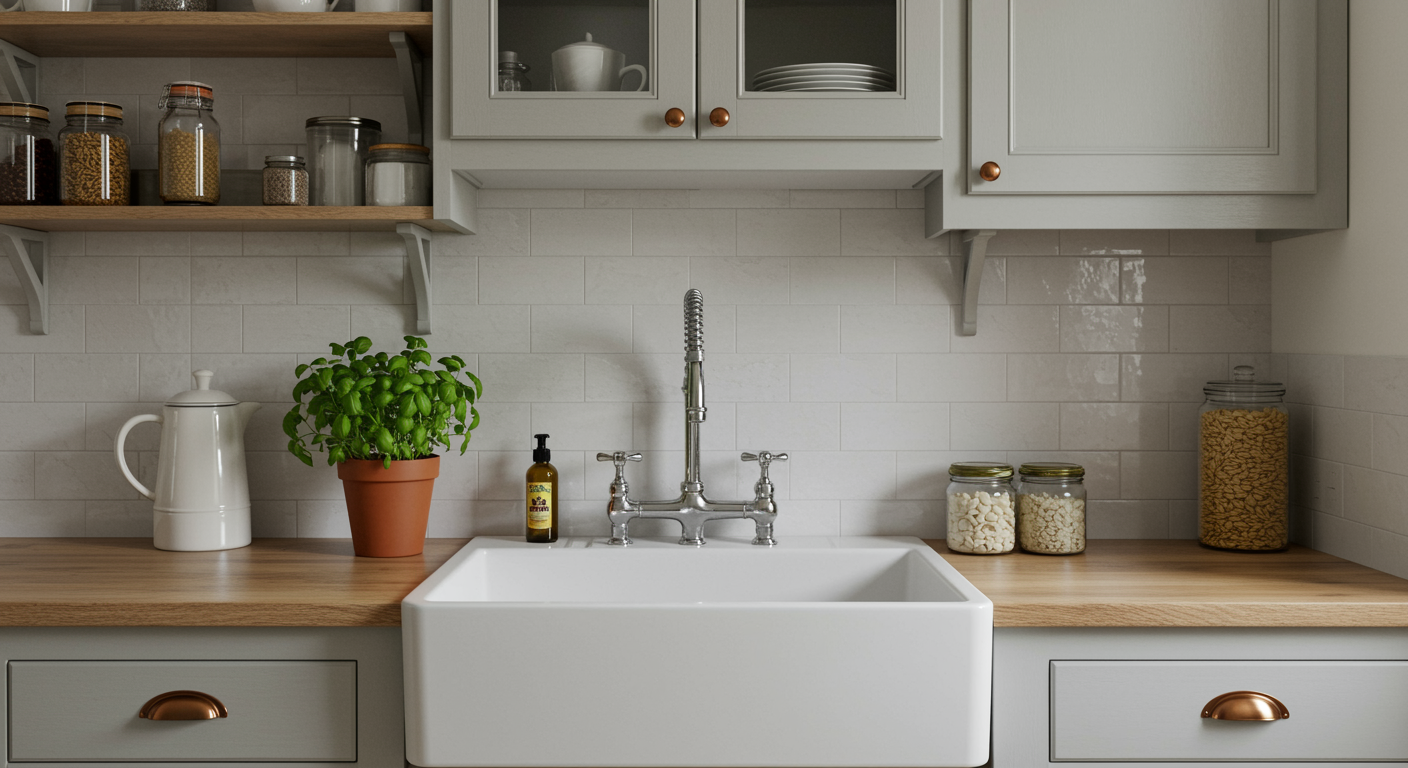
One of the cornerstones of a quiet home, style theme continuity is nowhere more important than in the kitchen, which frequently acts as the visual and practical centre of the home. Keeping a uniform design guarantees that the kitchen will naturally fit the rest of the house rather than acting as a single island.
Deciding your home’s general design first be it Scandinavian minimalism, current luxury, rural charm, or industrial modern and letting that style guide every important element of your kitchen will assist you. Whether by means of material selection, colour scheme, or shape, cabinets, counters, flooring, and fittings should reflect the mood of the home. While a wealthy contemporary home might feature marble countertops, metallic accents, and gleaming surfaces, a Scandinavian-inspired house benefits from minimalist, handleless cabinets, light wood accents, and soft hues.
Style consistency should pervade the small details — lighting fixtures, hardware, backsplash designs, even kitchen stools to reflect the existing design language outside of the expensive features. By avoiding visual resistance, keeping this balance ensures that even an open-concept design appears intended and linked. Frequent styling improves both appearance and use by encouraging order and balance.
Deliberately matching your kitchen with the house’s general style will allow you to create a room that appears integrated, deliberate, and visually appealing, therefore demonstrating that sophisticated cohesiveness results from as much deliberate choice as it does from subtle copying of important design components.
Kitchen Cohesion Test 5: Furniture and Decor Synergy
Perfect furnishings and décor placement are necessary for a modern kitchen that matches the rest of the home. Though kitchens could feature upscale appliances and basic counters, the general design could feel shattered if the furniture and accessories seem out of sync with the other rooms.
Choosing items that complement the design, colour palette, and materials used elsewhere initiates harmony. For example, by complement the tone, texture, or shape of nearby dining chairs, bar stools at a kitchen island may gently support consistency. Emphasised living or dining areas can be connected throughout the house by ornamental elements like paintings, vases, or lighting fixtures.
While small decorations in a big, open-concept design seem irrelevant, large ones in a little kitchen may appear excessive; scale also somewhat counts. Repeating elements like metal surfaces, wood grains, or geometric tiles help to connect spaces exactly by way of textures and patterns. Selecting conventional, adaptable design also guarantees that kitchen appearance will not be influenced by variations in any one area for creative or seasonal trends.
Small elements like matching drawer pulls, counter storage, or pendant lights generate a coherent visual language. Through deliberate furniture and accessory selection, the kitchen transforms from a separate, functional room to an integrated, welcoming one that enhances the general appearance and flow of the home.