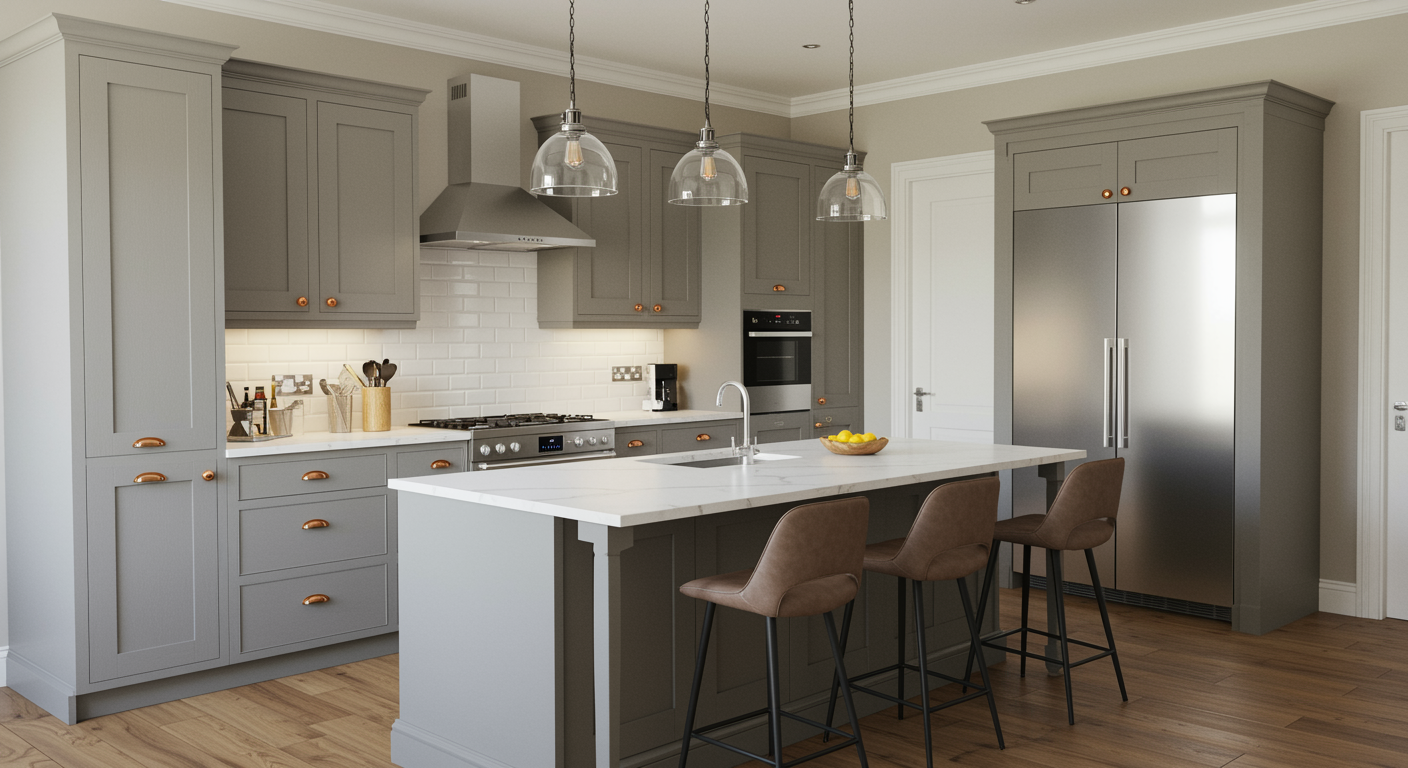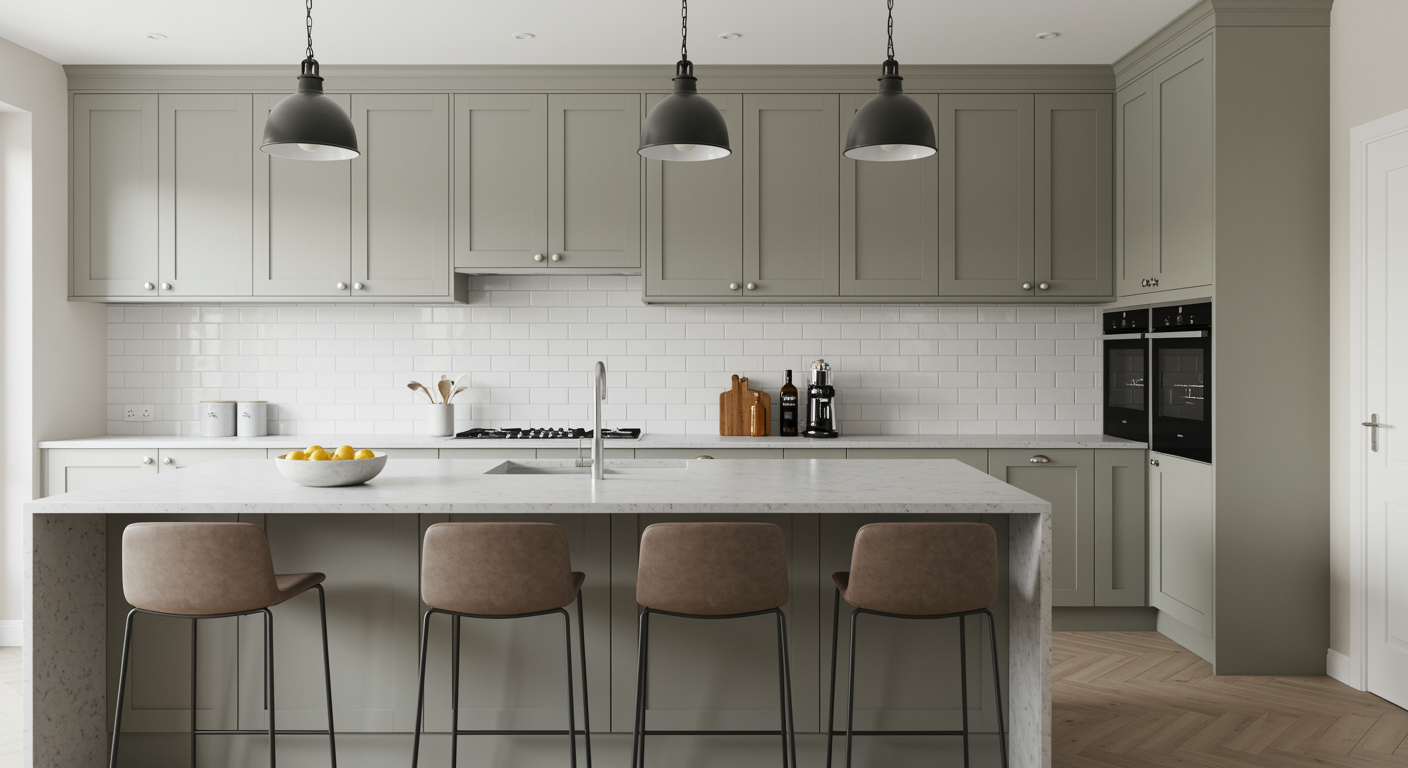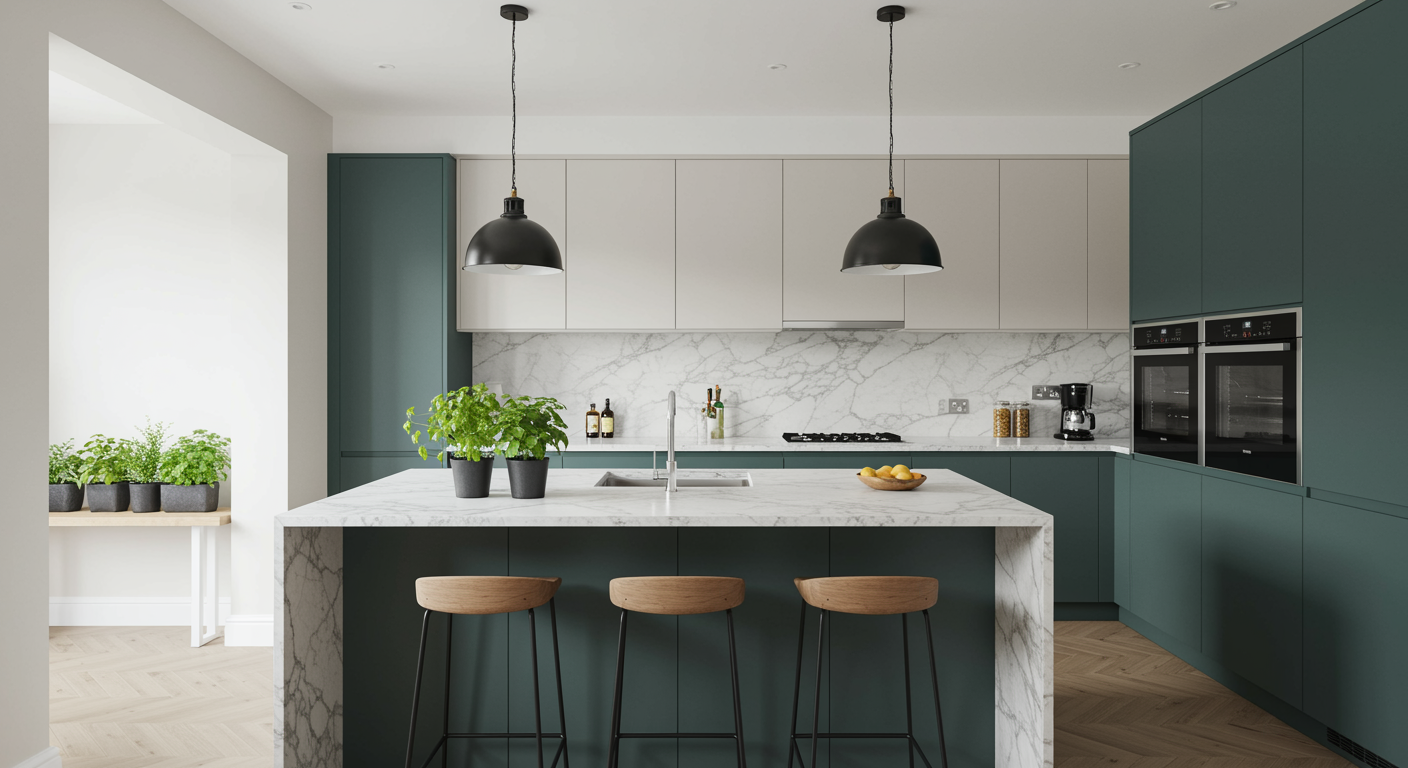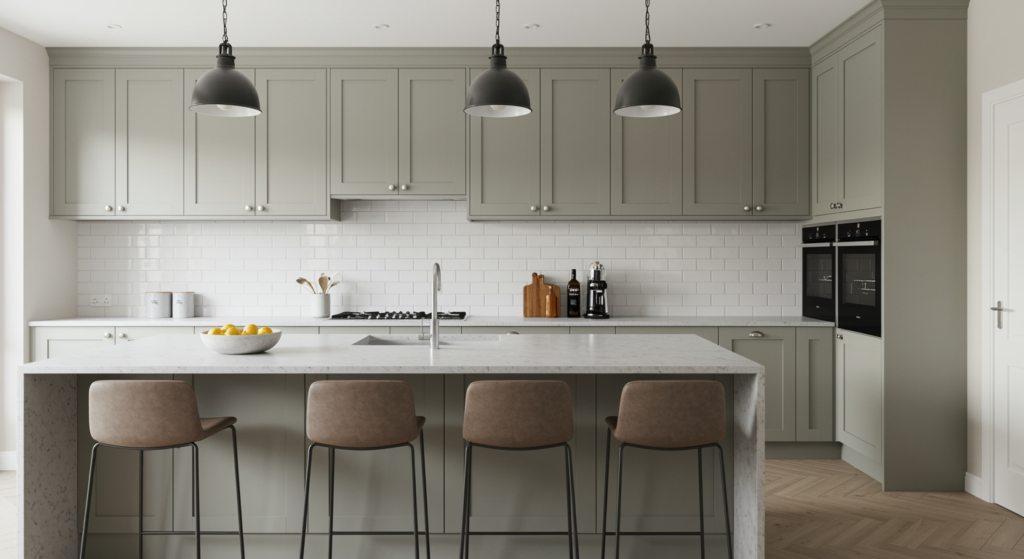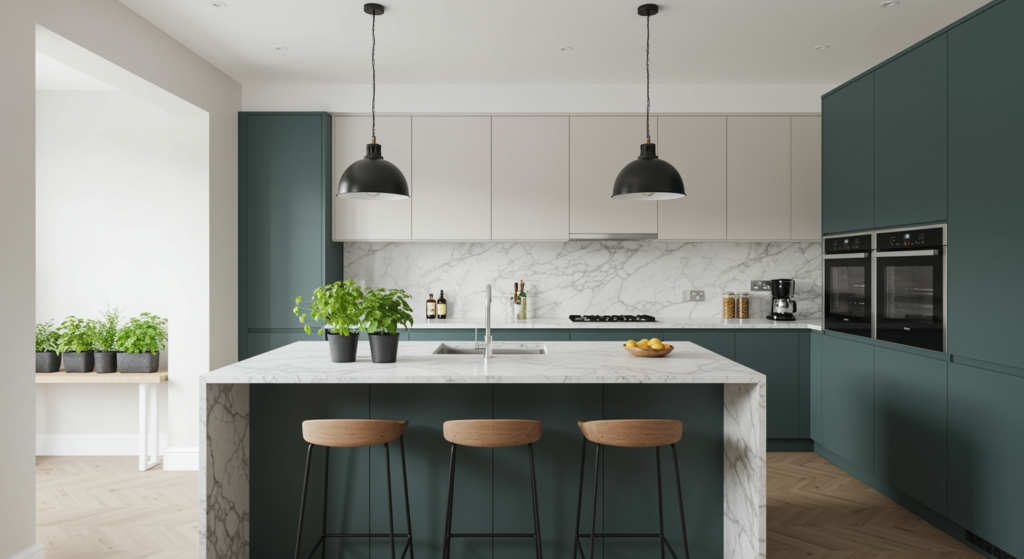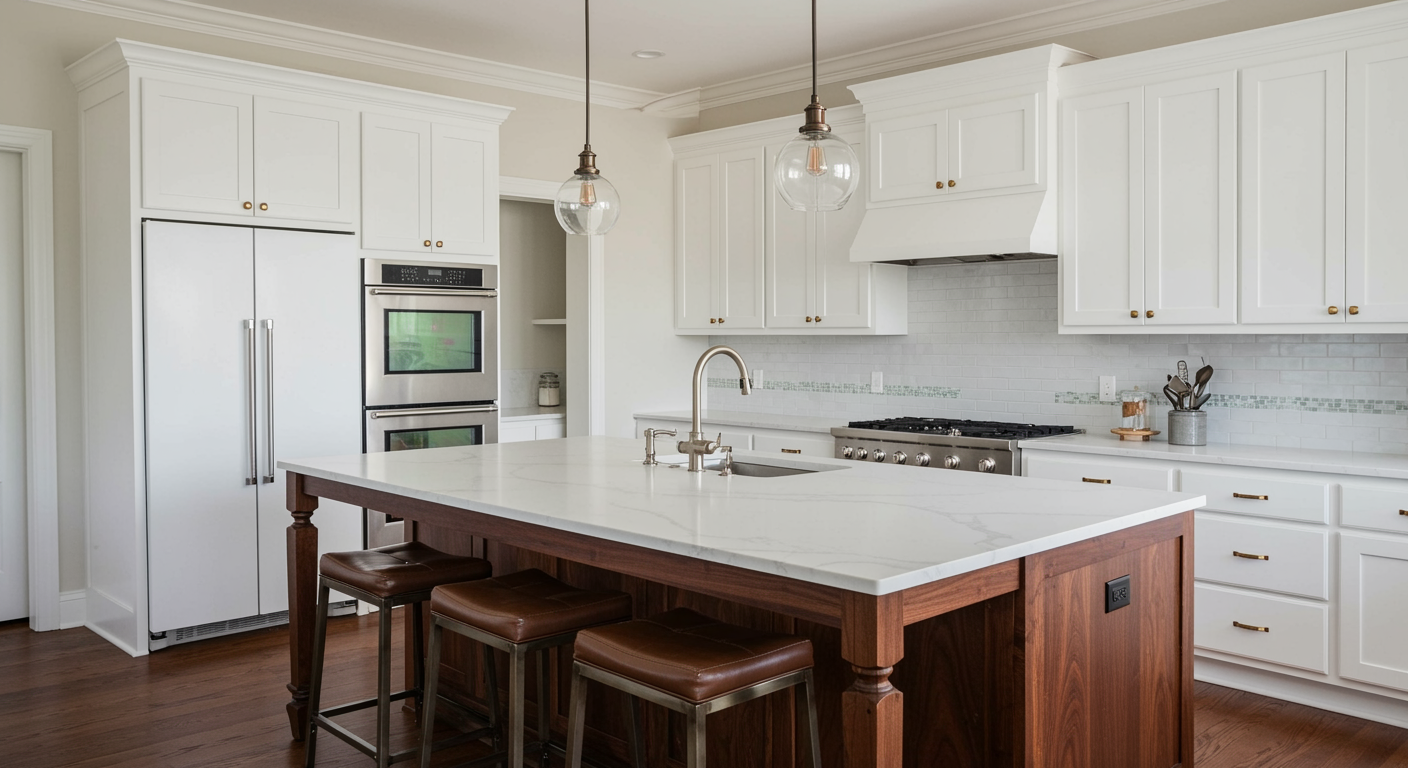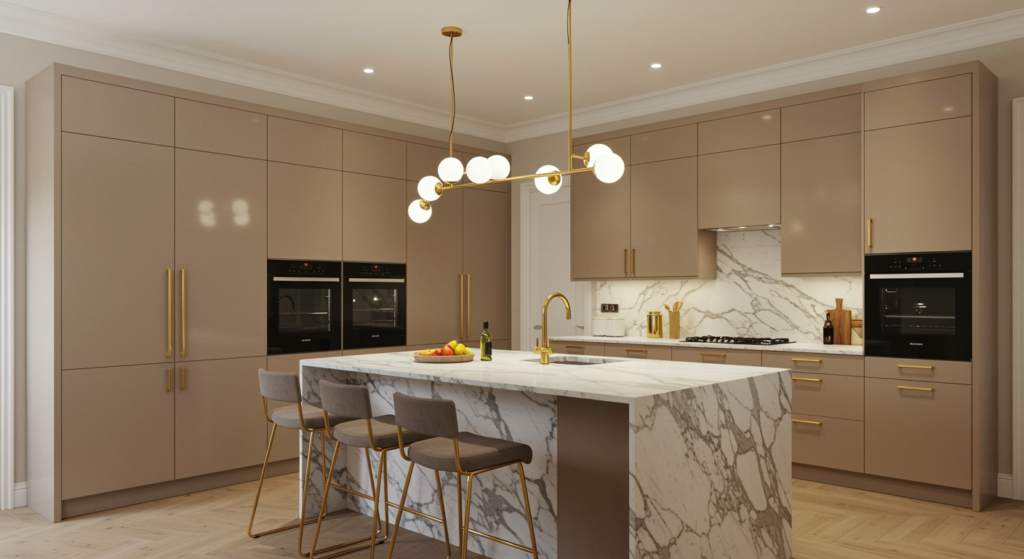
Kitchen workflow revolution starts with an appreciation of how a customised environment is about creating a kitchen that naturally fits your life rather than only about aesthetics. Movement is easy and production naturally rises when every tool, device, and surface is arranged with intention. This harmony of layout and lifestyle turns daily cooking from a task into a seamless, effective event.
Kitchen Workflow Revolution 1: Smart Storage & Organisation
Smart storage and organisation form the foundation of the kitchen workflow transformation since it transforms a normally untidy room into a well tuned, customised productivity system. Every item has a purpose and a place, so when storage is adapted to fit your cooking, cleaning, and movement, hence reducing clutter, reducing tension, and speed your chores.
From floor-to-ceiling pantries to corner carousels avoiding dead area, customised cabinetry enables homeowners to make every inch count. Pull-out drawers, spice organisers, vertical dividers, and tray slots give often used instruments easy access, therefore reducing the time wasted searching over crowded closets. Personalised storage also mirrors your food preferences: home cooks value knife pull-outs and spice drawers next to the stove, but bakers need deep drawers for mixers and flours.
Modular systems and adjustable shelves enable the kitchen to grow with your lifestyle whether you are changing your cooking schedule or bringing in new devices. Smart organisation goes beyond cabinets; it also comprises specific zonal storage, hence ensuring motions remain deliberate by storing cooking instruments in the prep area and cleaning supplies near to the sink.
Your rhythm helps to organise everything, hence reducing unnecessary steps and facilitating a flowing cooking experience by making the kitchen more intuitive. Ultimately, customised smart storage allows the kitchen to operate as a streamlined, high-performance workstation supporting your unique lifestyle by replacing everyday small irritations with efficiency, comfort, and clarity.
Kitchen Workflow Revolution 2: Scalability & Adaptability
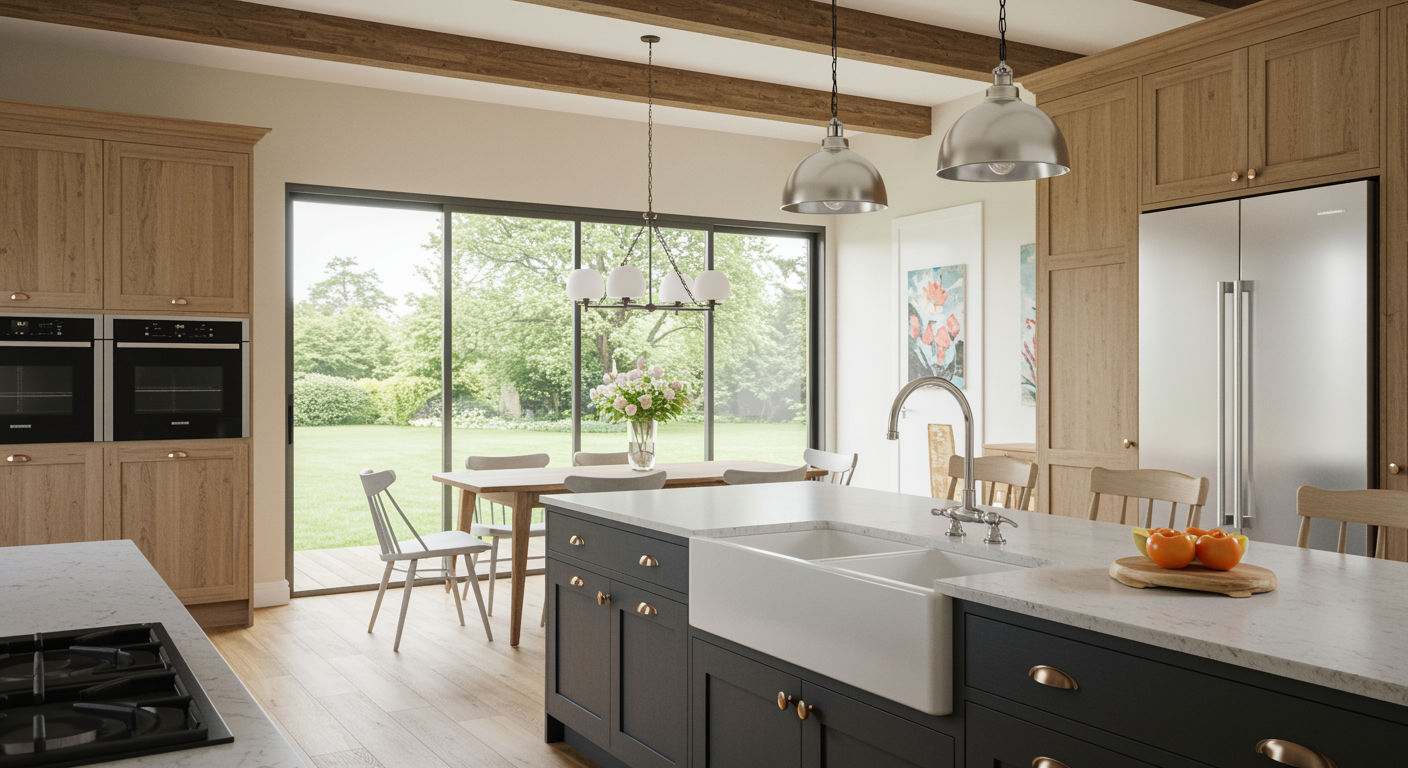
One of its most intriguing characteristics, the capacity to create and personalise a house kitchen transforms the room into a long-run productivity machine. Unlike traditional kitchens with set layouts, a well matched design grows together with the user’s changing tastes, family size, and culinary objectives.
Thanks modular cabinets, adjustable shelves, and flexible workstations, homeowners can modify their space for different cooking events — baking, food preparation, or guest entertainment without major rebuilding. Appliances can be purposefully positioned from smart refrigerators to expensive ovens to enable quick integration of next innovations or upgrades into the office.
This flexibility also helps to solve ergonomic concerns; height-adjustable counters, pull-out shelves, and customised storage guarantee comfort and productivity for consumers of many sizes or capabilities, hence minimising strain throughout time and facilitating inclusive kitchen design. Moreover, a scalable design allows smart devices including voice-activated ones, automated illumination, or artificial intelligence-assisted cooking appliances to be included, therefore improving efficiency without disrupting current construction.
Putting flexibility first turns a kitchen into a dynamic environment that grows alongside its user rather than only a functional workspace. Re-evaluating rooms and storage inside the customised framework also helps to satisfy lifestyle and social demands like those of growing children or those of increasing hospitality needs. Creating flexibility into the modern kitchen workflow ensures that the kitchen remains effective, pleasurable, and future- ready.
Kitchen Workflow Revolution 3: Productivity Through Human-Centred Design
Rather than just equipment or storage, contemporary kitchen efficiency is progressively based on human-centred design, in which every element meets the requirements, tastes, and ergonomics of the solo chef. Understanding that every user’s workflow is different, a bespoke kitchen transforms daily cooking chores into a seamless, almost natural operation.
Organising cabinets, appliances, and storage to fit natural movements reduces mental load and physical strain on a human-centred kitchen, therefore lowering superfluous steps. Placing regularly used ingredients, tools, and cutting surfaces close at hand, for example, spares the cook from having to reach or lean constantly and hence maintains preparation momentum via plating.
Furthermore, custom cabinets, adjustable shelves, and pull-out drawers fit the user’s height and range to minimise stress all around long cooking sessions and enhance comfort. Apart from efficiency, this approach increases creativity and concentration; fewer interruptions enable chefs to concentrate on timing, presentation, and experiment, thereby improving overall meal quality as well as productivity.
Human-centred kitchens therefore promote safety and hygiene by judiciously separating food preparation areas for raw ingredients from final meals, hence reducing cross-contamination risk and facilitating simple movement throughout the kitchen.
Kitchen Workflow Revolution 4: Value & Long-Term Investment
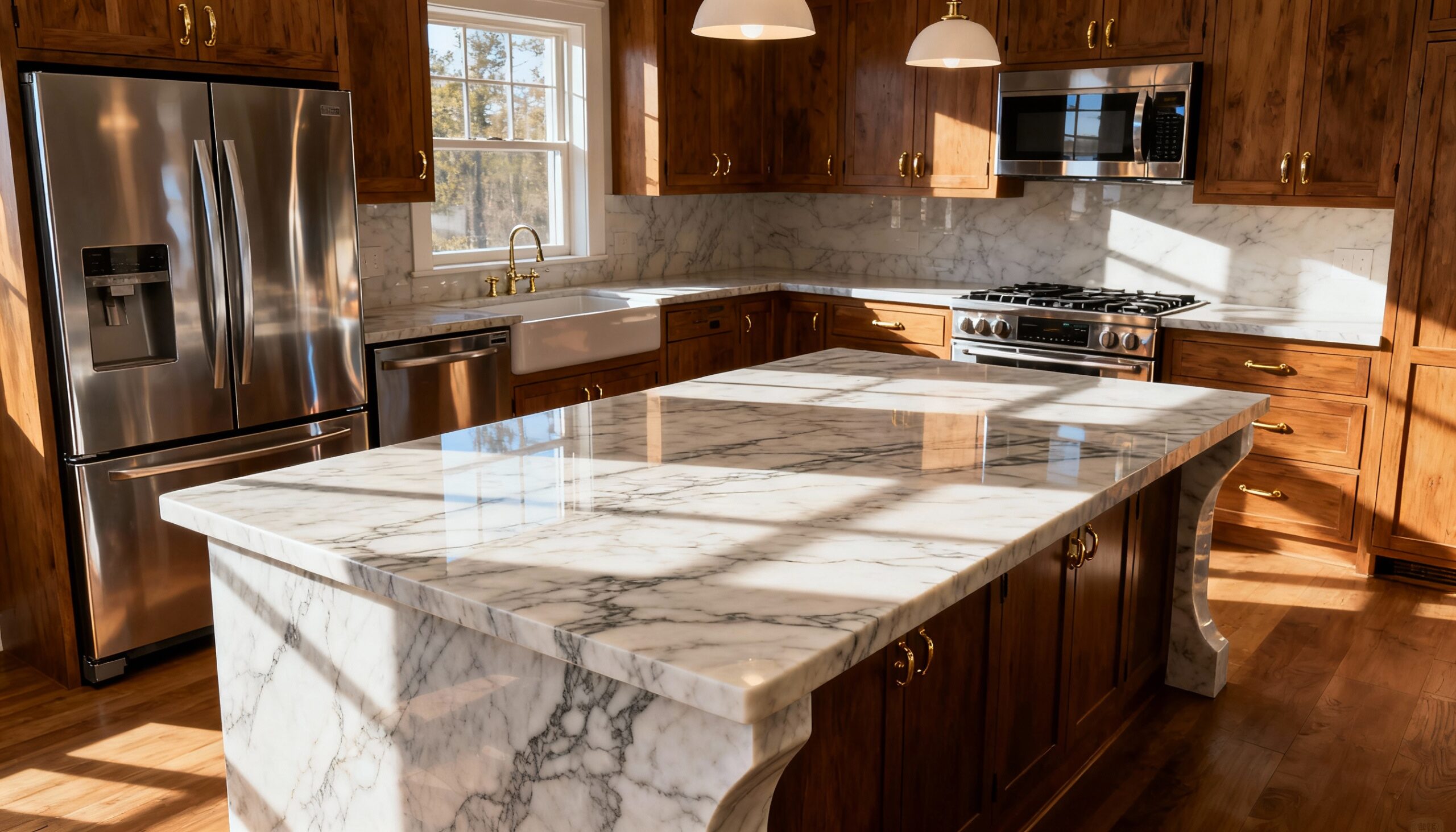
More than just a decorating decision, investing in a customised kitchen is a long-range productivity and economic plan that improves both daily living and property value. Designed to fit your work style, a kitchen guarantees that every feature from counter height to appliance location is optimised for efficiency, hence lowering wasted footsteps, time, and energy in your everyday routine.
By including smart storage options, pull-out cabinets, and modular shelving, a personalised kitchen maximises available space hence enabling for better organising and simpler access to necessary tools and supplies. Such degree of personalisation produces a better cooking experience, which inspires regular usage and promotes better habits, therefore increasing intangible value in your life.
A well-designed kitchen from a financial point of view is a major selling factor for any house as buyers more and more look for practical yet visually appealing areas that reflect careful thought and ergonomic consideration. A bespoke kitchen shows attention to detail, durability, and adaptability — all of which point to long-term investment potential in contrast to basic designs. Moreover, good workflow design helps to lower food waste and energy use, therefore helping to save expense over time.
Combining aesthetic appeal, practical perfection, and future-proof adaptability, a customised kitchen acts not only to simplify daily chores but also as a strategic asset increasing the market worth of your house as well as the quality of daily life. In essence, this method turns the kitchen from just a place to cook into a productivity-driven, value-generating focal point of the house.
Kitchen Workflow Revolution 5: Flow Innovation
Flow One of the most radical elements of the kitchen workflow revolution is innovation, which redefines how custom kitchen environment integrates movement, intent, and interaction. While a flow-oriented method rejects these expectations and lets the area naturally fit the chef’s tastes and customs, conventional kitchens typically rely on fixed right-angle layouts and uniform zones.
Curved counters, offset workstations, and well positioned equipment allow for a seamless pathway from preparation to cooking and cleaning, therefore reducing pointless steps and physical effort. This people-centred approach guarantees that every act, reaching for parts to move pots from one surface to another is deliberate and organic.
Flow innovation beyond merely physical efficiency promotes psychological comfort as a kitchen expecting your movements and offering intuitive access lessens cognitive burden, so freeing you to concentrate less on logistics and more on creativity. Personalised flow can also mix social and group aspects, thereby turning cooking from a lonely activity into a shared, joyful hobby with separate sight lines to living or dining areas. This adaptive design also ensures long-term utility by allowing for changing demands, adding new appliances and correcting for seasonal chores—through movement, access, and interaction over established symmetry.
By stressing these qualities, flow innovation turns the kitchen into a productivity centre where the cook harmonises with every aspect. Basically, a kitchen meant with flow turns into an extension of the user’s habits and behaviours, so maximising productivity and producing a space that seems effortless, inspirational, and naturally distinctive.