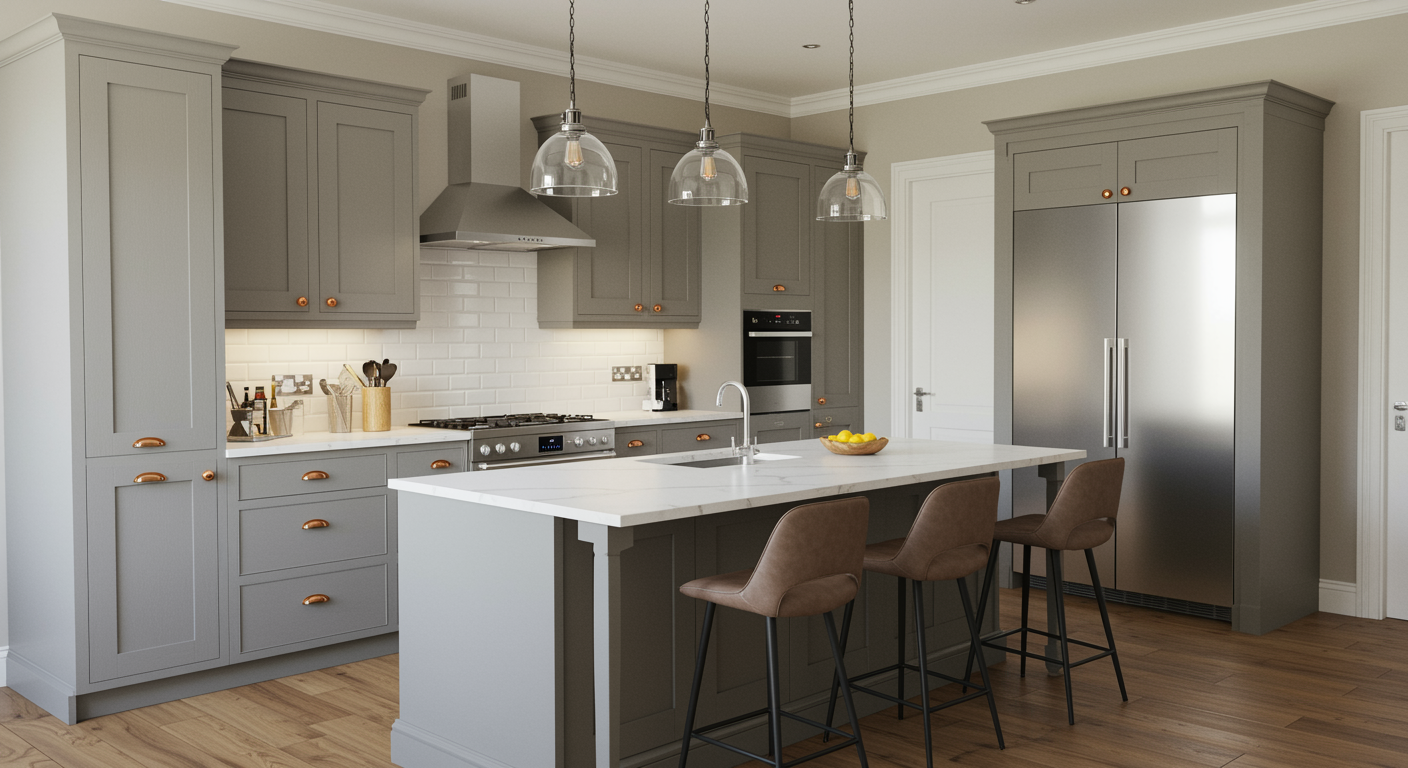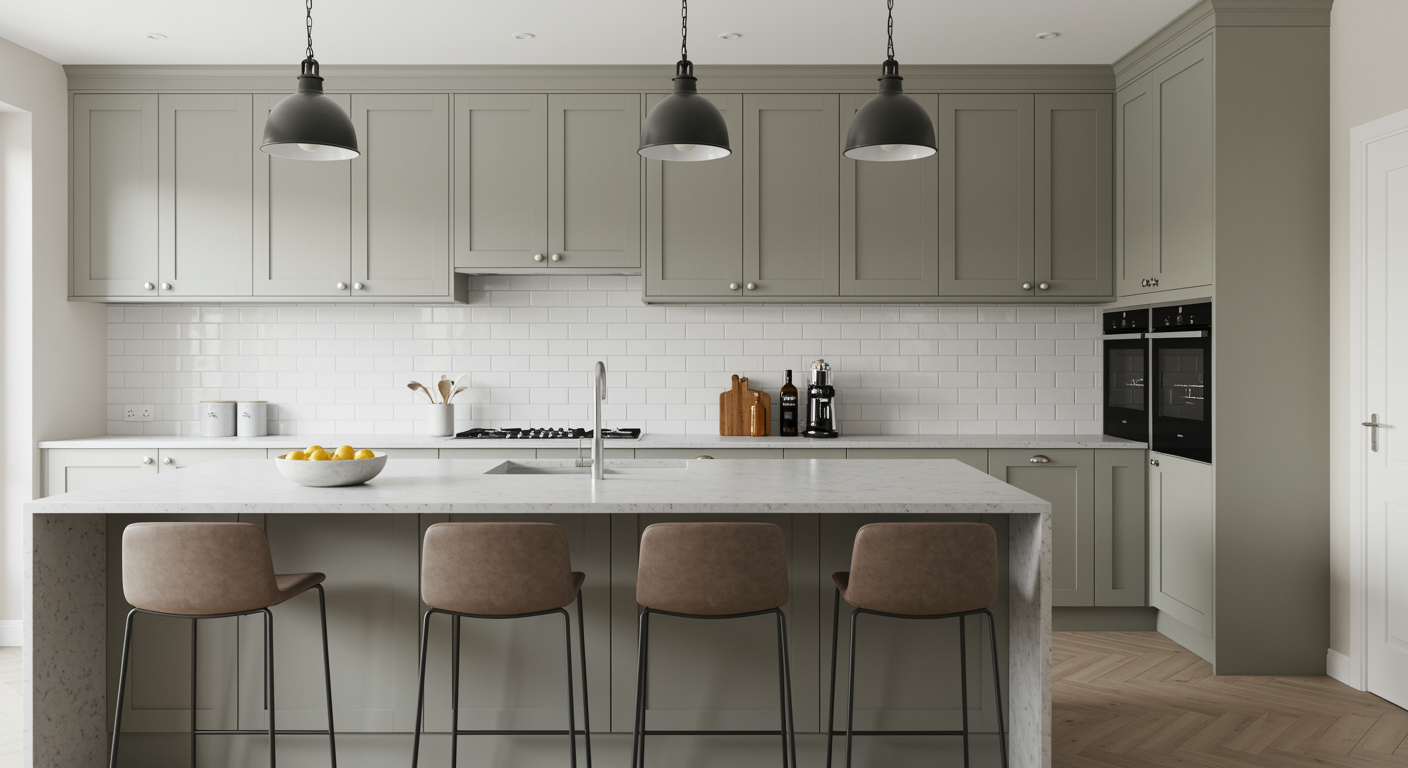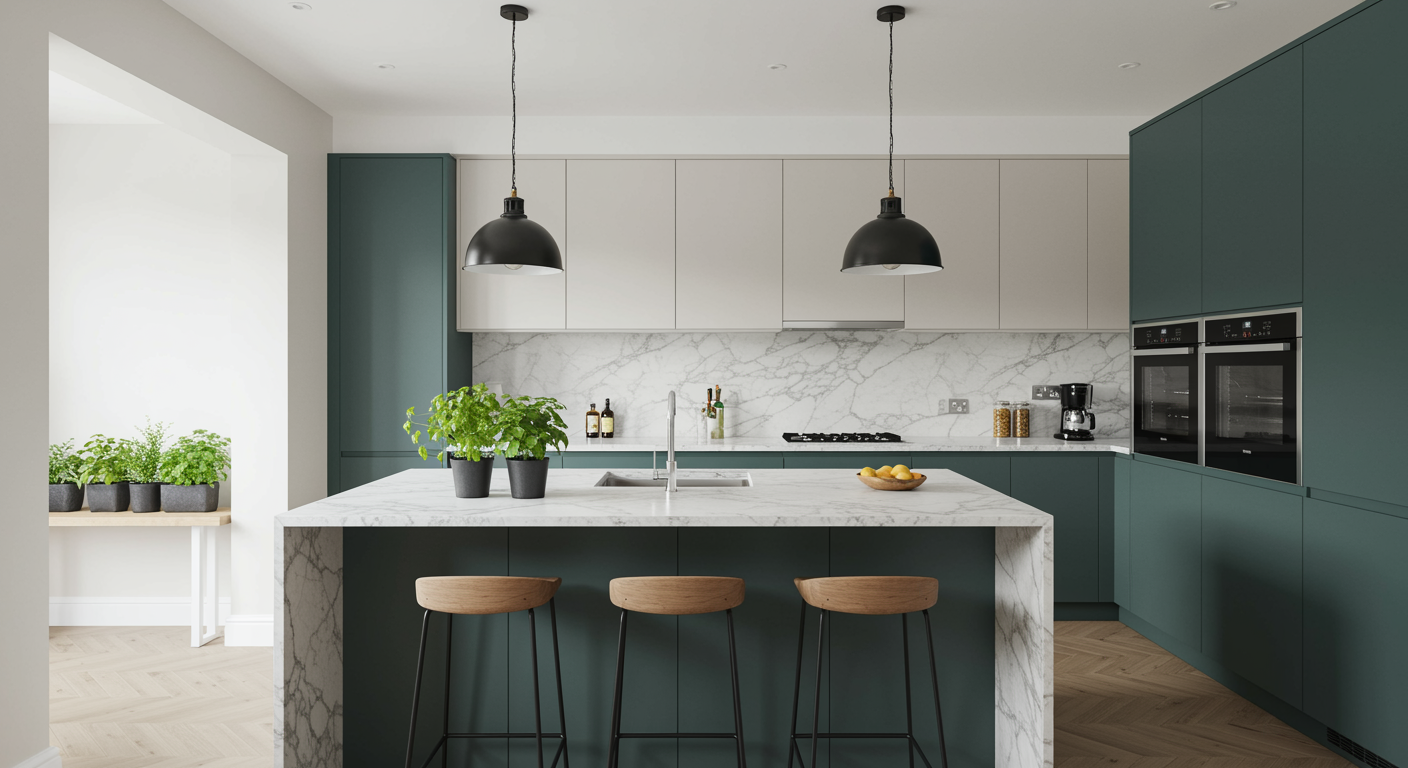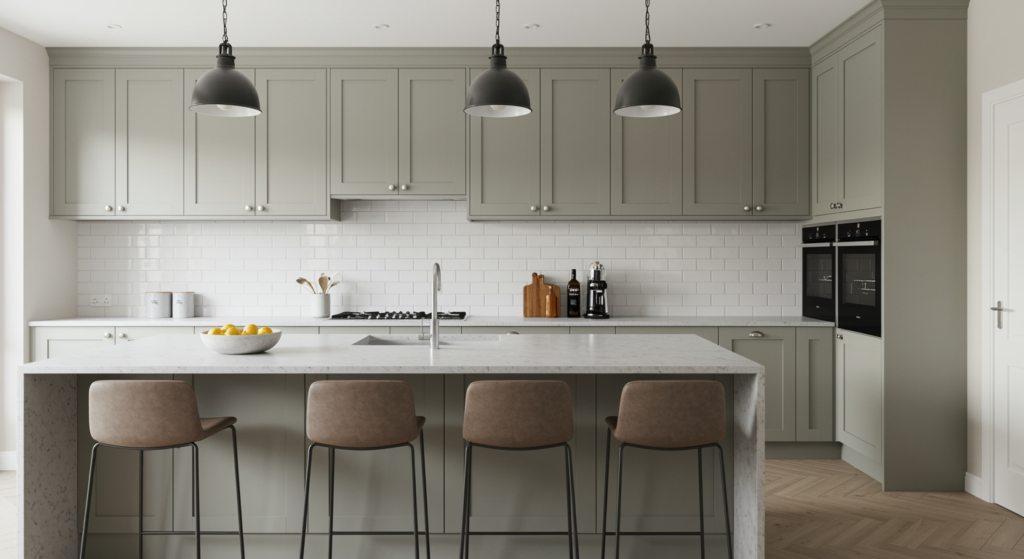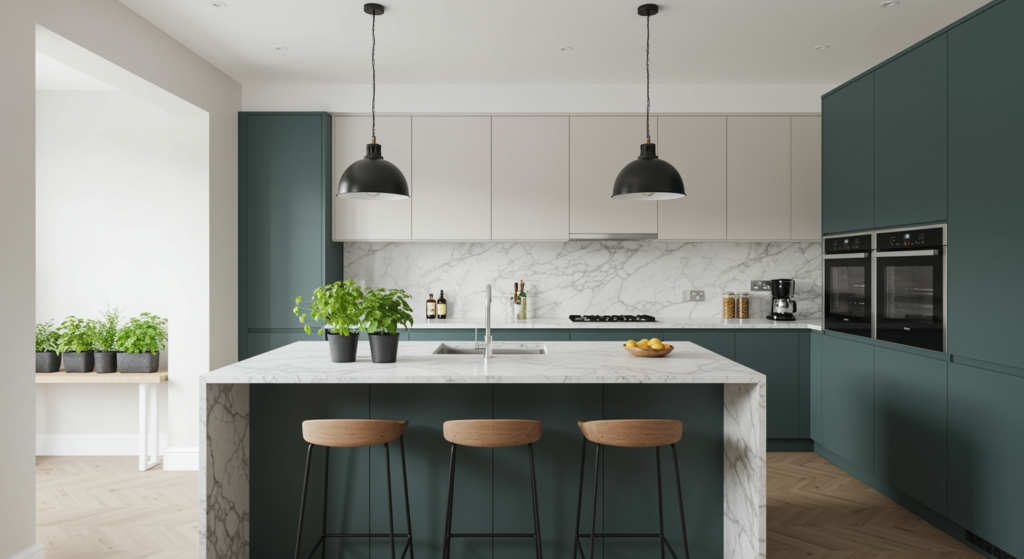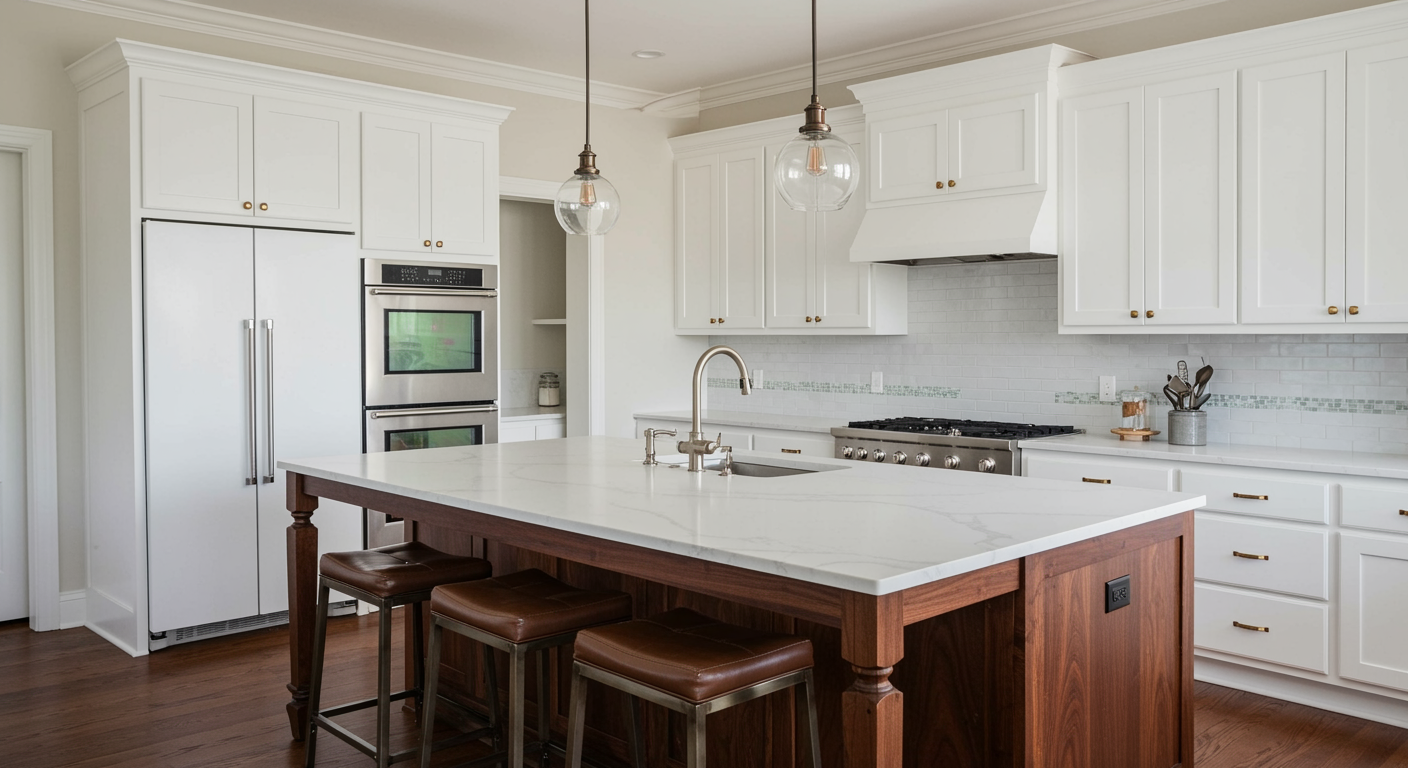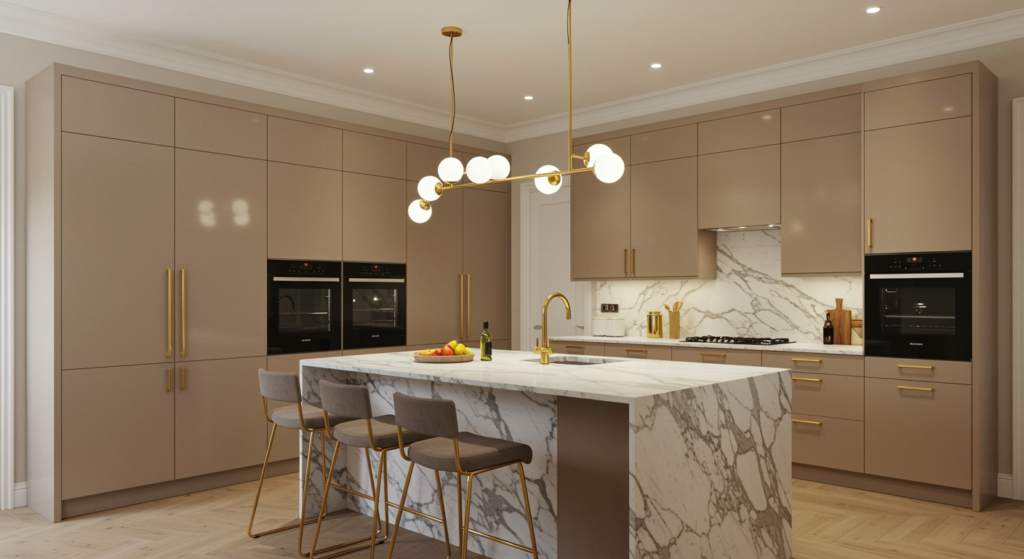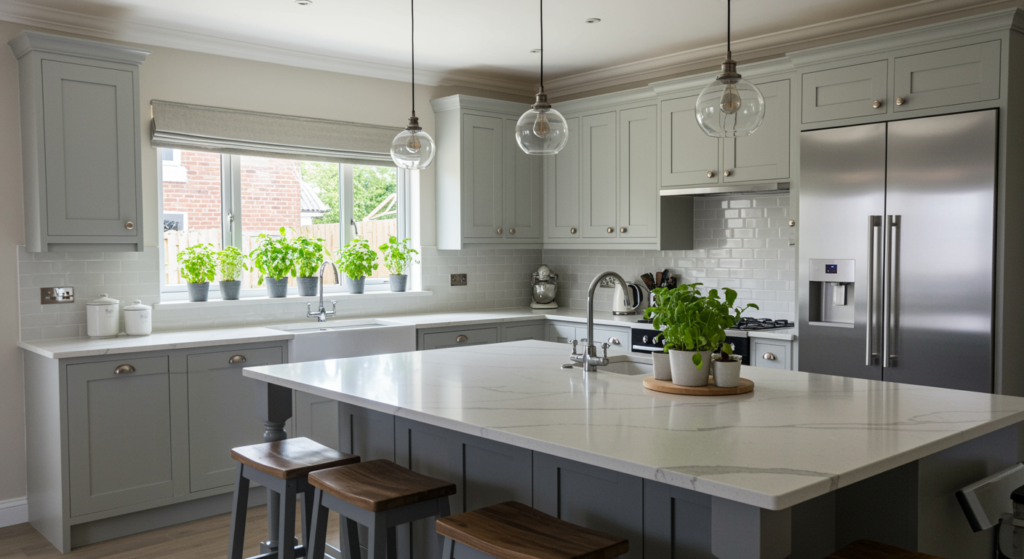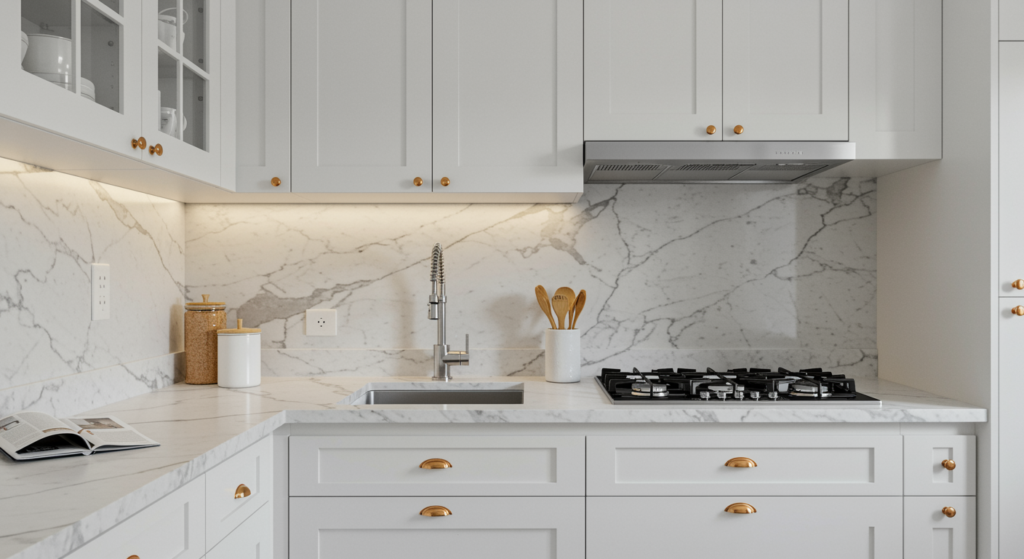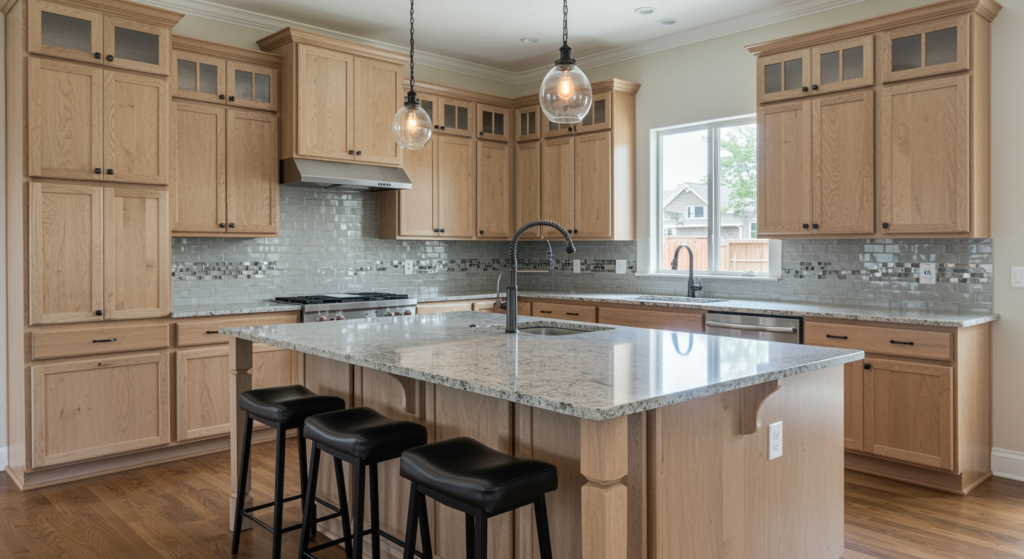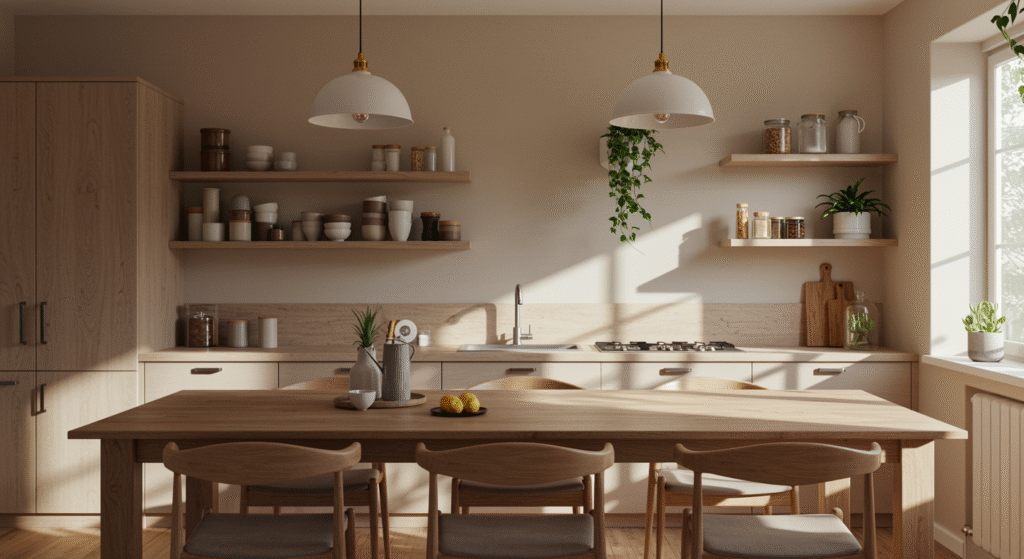
Mastering the kitchen flow is about planning a layout that makes simple cooking and housekeeping. Strategically positioning storage, computers, and appliances will help you to reduce pointless travel and keep everything within easy reach. A well-designed flow changes your kitchen into a smooth workstation where comfort coexists with effectiveness.
Mastering The Kitchen Flow 1: Zoning for Purpose
One of the most effective parts of learning kitchen flow is zoning for purpose, which turns your layout into a real secret weapon for comfort, efficiency, and smooth daily use. Instead of seeing the kitchen as one huge catch-all area, zoning divides it into specific spaces depending on your cooking, cleaning, storage, and presentation.
This deliberate partitioning clarifies everything, lowers back-and-forth movement, and enables every activity to seem organic. Cutting boards, knives, and mixing bowls close to the sink or main counter, for instance, in a well-planned prep area so components can be washed and prepared uninterruptedly. Pots, pans, spices, and silverware are kept close to the stovetop in the cooking zone so you never have to rummage for basics mid-recipe.
The cleaning zone also gathers the sink, dishwasher, garbage bins, and cleaning materials together to improve post-meal cleanup effectiveness. With its own zone, storage improves; dry products are kept near the prep area, dinnerware near to the serving space, and bulky goods in low, easily reachable drawers. For houses with kitchens that serve as social hubs, a serving or entertaining area lets visitors help themselves without disturbing the cook’s workflow.
Zoning helps to harmonise motions and activities by guaranteeing every square inch of the kitchen has a use. It turns tiny kitchens into highly working areas and saves bigger kitchens from unneeded movement. Each zone is meticulously considered so that the whole kitchen flows smoothly, therefore improving daily life, speeds up cleanup, and makes cooking more fun.
Mastering The Kitchen Flow 2: Streamlined Traffic Flow

Streamlined traffic flow is a part of being good at kitchen design as it directly affects how simply you may move, prepare meals, and work in the kitchen. Smooth, well-designed walkways enable every activity from picking ingredients to arranging plates to take place in a kitchen without contact or break.
Particularly in crowded dwellings when several people could be entering and departing concurrently, the aim is to avoid bottlenecks. Clear routes at least 36 to 42 inches wide help guarantee there is enough travel space and keep often used areas like the sink or refrigerator easily accessible without intruding into the main kitchen.
Strategic equipment placement is also quite important; for instance, positioning the oven door so that it does not swing into the main route or putting the dishwasher near to the sink but away from the main preparation area to avoid obstructing movement while it is open. By offering useful barriers that naturally direct motion instead of impede it, good peninsula and island design helps support it.
Small decisions like where garbage bins are placed or how cabinet doors open inward toward a workplace can dramatically affect simplicity of motion. Because every component promotes natural movement, a kitchen with great traffic flow seems more peaceful, secure, and effective. Your design lets for a natural rhythm of movement, so cooking is simpler, cleaning is faster, and the whole kitchen experience is more enjoyable and free of tension.
Mastering The Kitchen Flow 3: Safety Through Design
Safety is a crucial but sometimes disregarded factor when one masters kitchen flow that can turn a practical area into a really effective one. Strategic placement of appliances, work areas, and storage rooms helps to reduce the possibility of mishaps by means of careful layout design.
Keeping knives and other sharp instruments in dedicated drawers or magnetic strips, for example, lessens the chance of cuts, while placing the stove away from heavily used areas avoids unintentional contact with hot surfaces. Including child-proof cabinets, rounded countertop edges, and slip-resistant flooring guarantees the kitchen is safe for all members of the family, hence adding yet another degree of thought.
Even appliance location counts; dishwashers and ovens should have doors that do not impede paths; refrigerators should be readily accessible without creating traffic. Well-lit work areas prevent spills and accidents while meal preparation, whereas ambient lighting directs fluid movement across the room, therefore subtly yet effectively affecting safety as well. Heavy or often used objects are kept within easy reach thanks to storage options like pull-out cabinets and deep storage, therefore minimising stretching or climbing requirements.
Planning for ventilation close to cooking surfaces lowers heat and smoke accumulation, therefore producing a more pleasant and safe atmosphere. Including safety into every design decision, the kitchen not only becomes a hive of efficiency but also a room where everybody can move, prepare food, and have pleasure with certainty—showing that a well-planned layout is an invisible weapon for comfortable and continuous living.
Mastering The Kitchen Flow 4: Adaptability for Modern Living

Modern homes’ kitchen is now a multipurpose hub for eating, socialising, working, and even studying, thus design flexibility is absolutely critical in kitchen planning. A well-planned, flexible kitchen helps owners easily switch between events without disrupting the flow of contemporary life.
Open designs including islands or peninsulas, for example, offer versatile surfaces that may be homework desks for children, casual dining areas, or prep workstations. Smart positioning of equipment and storage systems ensures that everything necessary for numerous occasions is readily available, hence lowering unnecessary movement. Combining task, ambient, and accent layers, versatile lighting also enhances comfort by setting the right environment for cooking, leisure, or focused study.
By even traffic flow has to enable several persons simultaneously, careful appliance and work area positioning helps to prevent bottlenecks and preserves the room’s utility during events. Modern kitchens usually combine interior and outdoor spaces, like patios or breakfast nooks, hence stressing the necessity of flexible layouts allowing easy mobility and link.
By giving flexibility top priority in the design, homeowners may turn their kitchen into a lively space that meets evolving requirements from cooking to welcoming guests to supporting remote work — ultimately enhancing comfort, convenience, and overall daily life experience thereby showing that layout is actually a hidden weapon in practical design—thus improving comfort, convenience, and general daily life experience, thereby proving that design is actually a secret weapon in functional use.
Mastering The Kitchen Flow 5: The Power of the Work Triangle
Concerning becoming proficient at kitchen flow, little ideas are as fundamental and effective as the work triangle. This traditional design idea links the stove, sink, and refrigerator—the three most often used kitchen areas.
The idea is simple: by shortening the distance and barriers between these points, a natural and efficient path for cooking, cleaning, and food preparation is established. Elimination of unnecessary actions transforms a kitchen from a collection of tasks into a smooth, natural flow by means of the work triangle. A triangle with good proportions guarantees that no area is too far apart from another; hence, you can move uninterrupted from cooking vegetables at the sink to counter-chopping ingredients and lastly to stovetop grilling.
Especially in busy residences where several people could be navigating the kitchen concurrently, it also helps you prevent traffic. Aside from its efficacy, the work triangle gently improves safety by limiting cross-traffic close to hot surfaces or sharp implements, therefore reducing the possibility of incidents. Though still following its basic principle with purposeful placement of significant areas — contemporary interpretations of the triangle can suit islands, open-concept spaces, or numerous cooks.
Practical kitchen design starts from the work triangle, not just a layout guideline. Giving the link between these three main points top priority helps homeowners to create a simple to use kitchen that boosts productivity and improves the whole cooking experience. This shows that sometimes the most fundamental ideas are the most powerful.