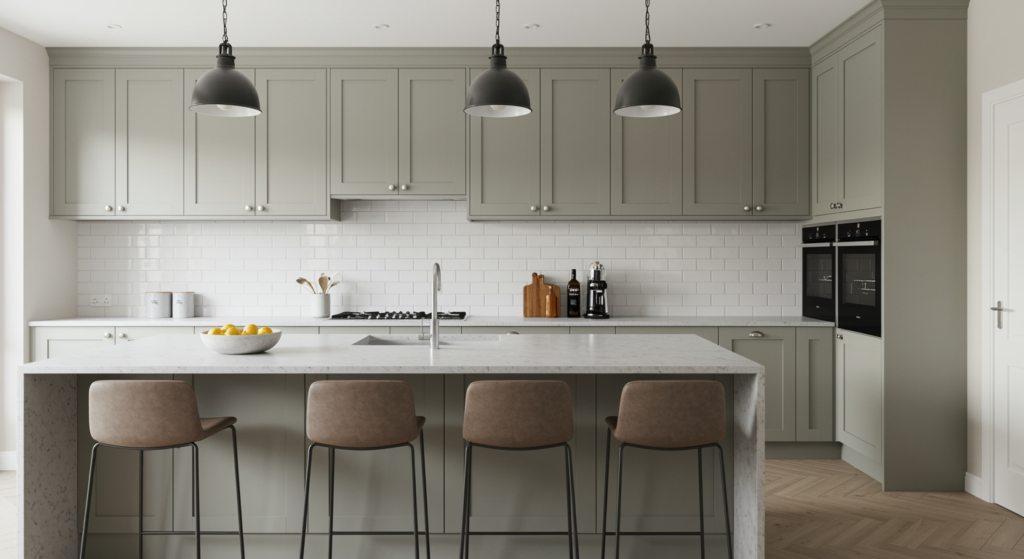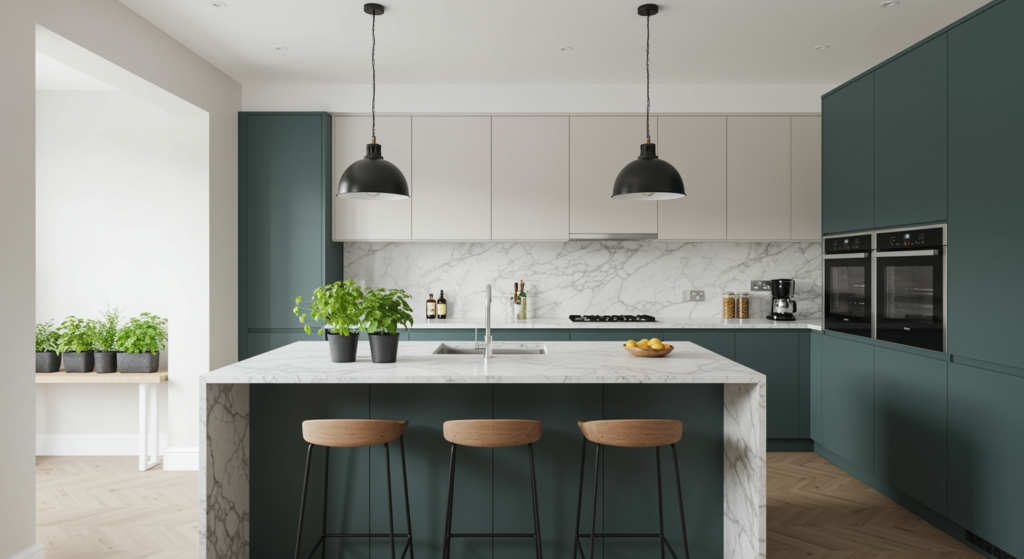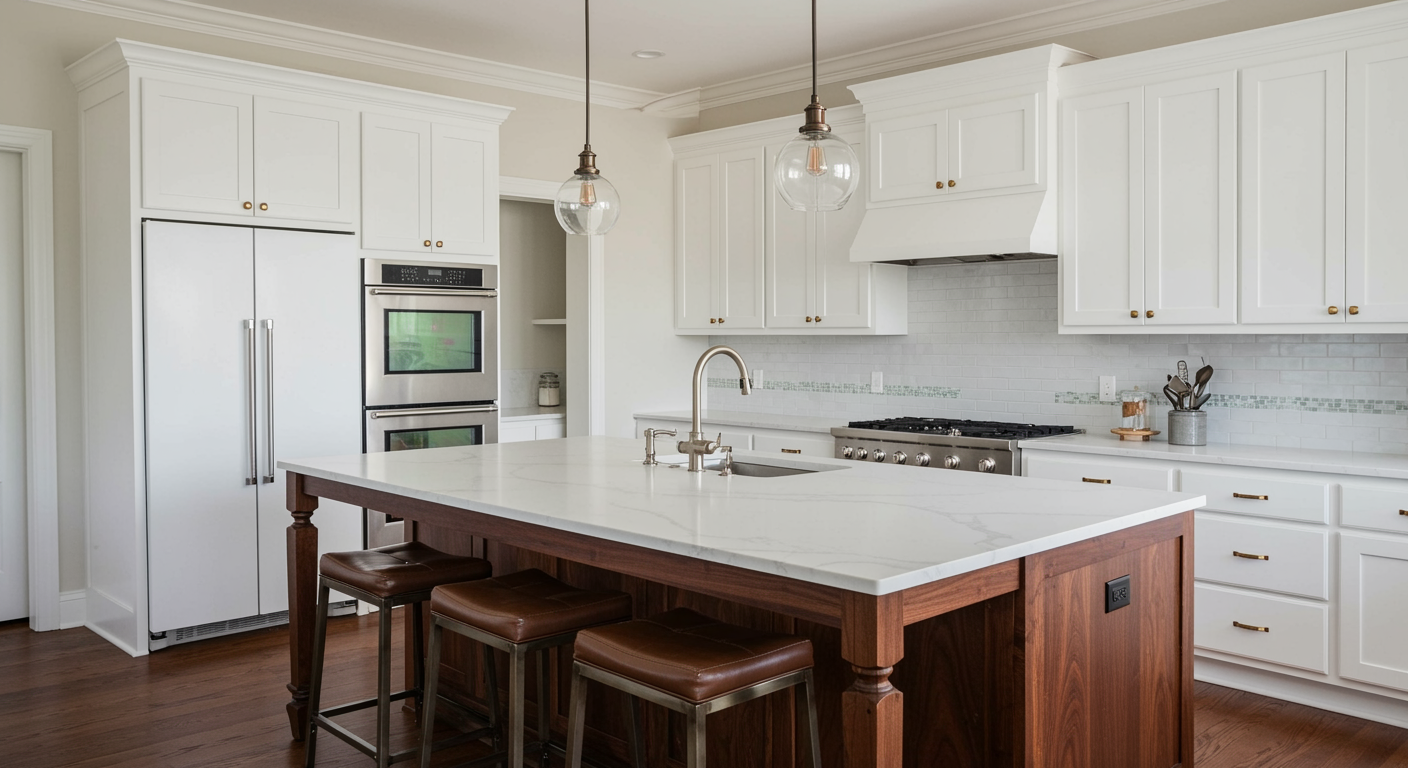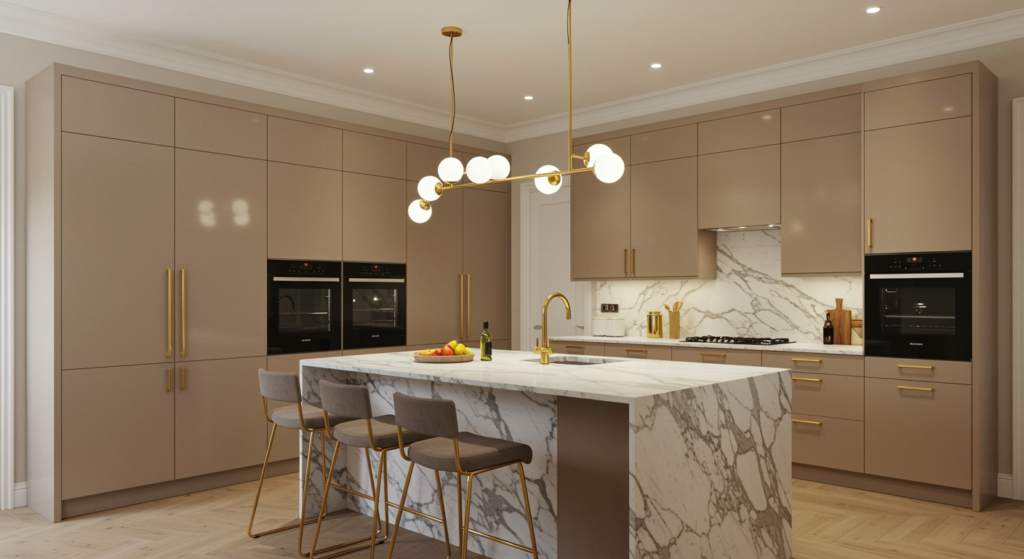
Higher home value starts with a faultless design narrative that moves naturally from the kitchen to the living room. Your home seems more purposeful and aesthetically consistent when colours, materials, and finishes are brought together. This feeling of unity not only improves daily life but also permanently affects prospective consumers.
Higher Home Value 1: Complementary Materials and Finishes
Mostly on the competence of supporting materials and finishes, building a refined home also increases market value. Customers see greater nuance and depth as the kitchen ideally integrates the living room. Choosing components that fit together is among the most successful approaches.
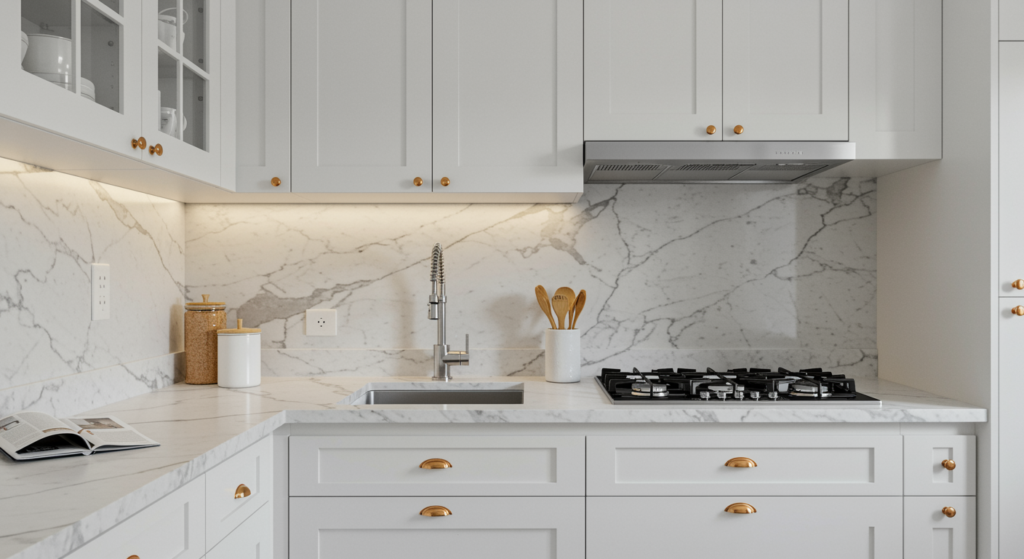
Visually consistent with a kitchen with natural stone counters, a living room with stone accents in coffee tables, fireplace surrounds, or shelves can be paired with one. Another soft material, wood, provides warmth and balance when rooms are ideally linked with complementary or connected wood tones across furniture, cabinets, and flooring. Additionally helping to coordinate the appearance of a home are metal coatings.
Black, brushed nickel, or gold hardware in the kitchen can be echoed in living room light fixtures, cabinet knobs, or decorative elements, hence reinforcing a constant design language. Glass and mirrored surfaces reflect and brighten natural light while also promoting openness especially when used strategically in both rooms. Glossy, matte, or smooth surfaces should be blended to guarantee a sensory and visual rhythm not taxing on the eyes, therefore equal importance is accorded to texture.
Homeowners can purposefully choose finishes and materials that harmonise across the main rooms to achieve harmony about their house. This carefully planned harmony helps to make the home appear elegant and valued to possible buyers in addition to improving daily life.
Higher Home Value 2: Consistent Design Style
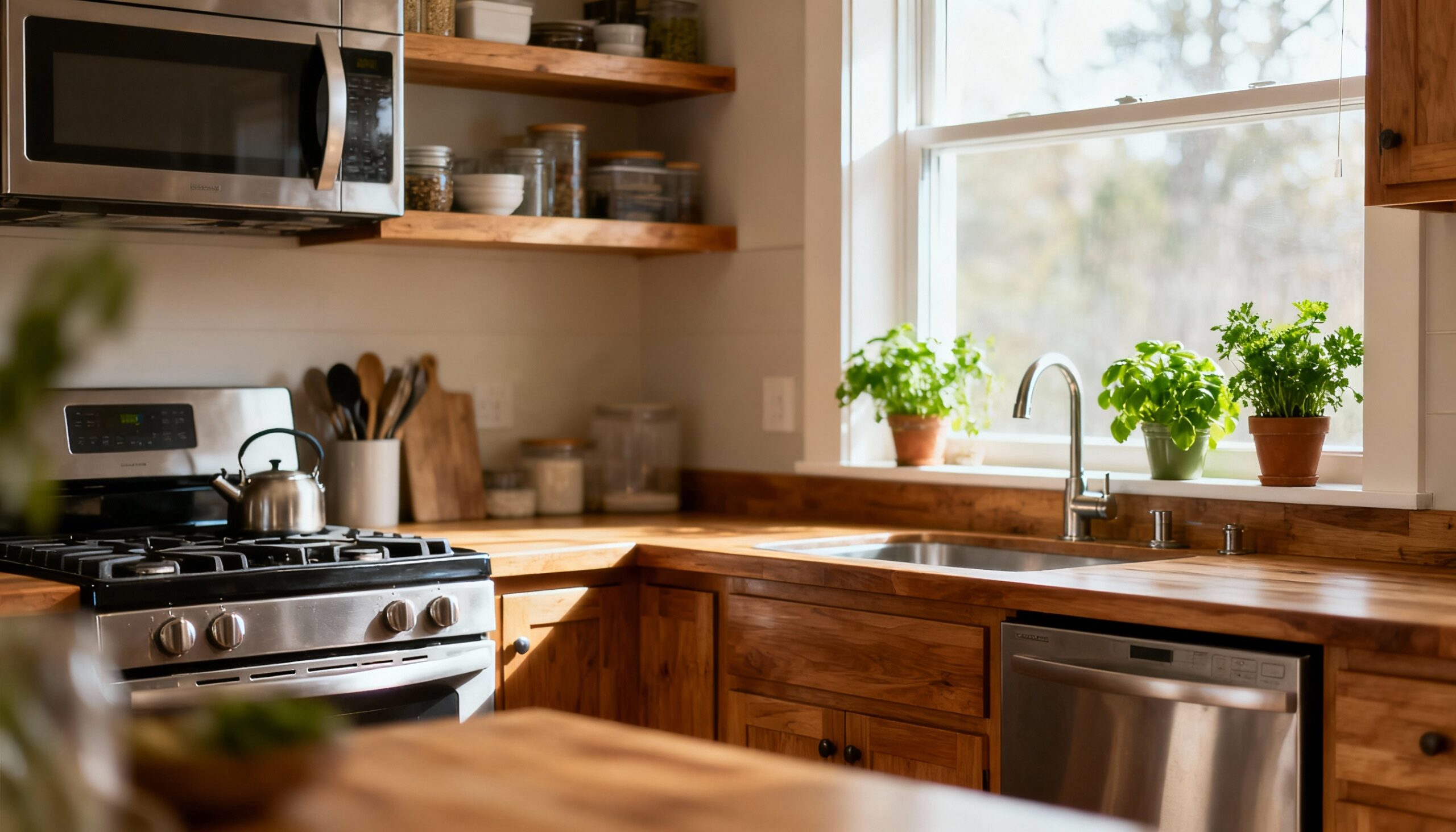
Among the most often ignored yet most efficient ways to raise the value of a house is a consistent design plan. The house transforms immediately into more intentionally elegant, opulent, and aesthetically roomy once the kitchen, living area, and next rooms follow the same design language.
Because they offer buyers a continuous experience instead of a collection of distinct rooms, properties where every room organically merges into the next draw interest. Selecting a certain design style — modern minimalist, Scandinavian, industrial, or classic elegance and repeating its distinctive features throughout the house is how one starts this. Practically speaking, this might involve echoing a certain colour scheme or material palette in both rooms or matching the straight lines of kitchen cabinets to the furniture forms in the living area.
Coordinating finishes like brushed metal handles in the kitchen and comparable features in the living room subtly improves stylistic harmony; this also depends much on fixtures, hardware, and illumination. Beyond appearance, a unified design style draws to potential customers and might affect their seen value since it shows meticulous planning and detail awareness.
Little details such as rearranging textures or reemphasising signature design elements can make a home look sophisticated and purposefully chosen. Maintaining a consistent design from the kitchen to the living room not only provides an aesthetically pleasing setting but also boosts the seen quality and flow of the whole house, therefore making it a property appropriate for a greater market value.
Higher Home Value 3: Thoughtful Furniture and Layout Choices
Consistent design from the kitchen to the living room increases a house’s value; so, intentional furniture and arrangement decisions are fairly vital. Selecting and positioning furniture with care increases visual harmony and usage, thereby attracting possible clients via consistency.
Beginning with scale and proportion, furniture should complement the room’s size as well as the aesthetic of the house. For instance, the clean lines of a low-profile sofa and coffee table in the living area can reflect the plain chairs around the smooth dining table in the kitchen, hence ensuring that motion across rooms seems natural and uninhibited. Apart from size, it’s very important to keep a uniform design language in material and colour choices.
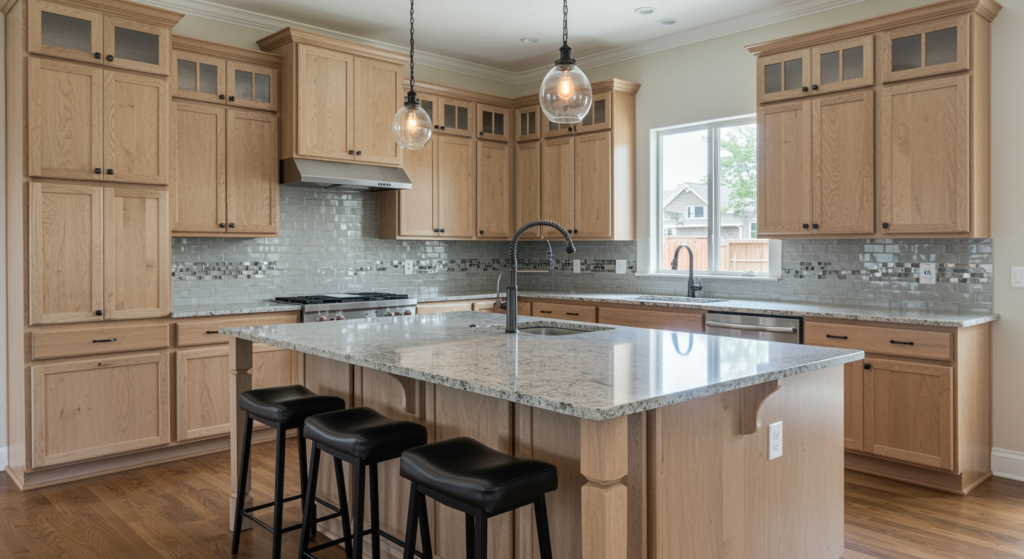
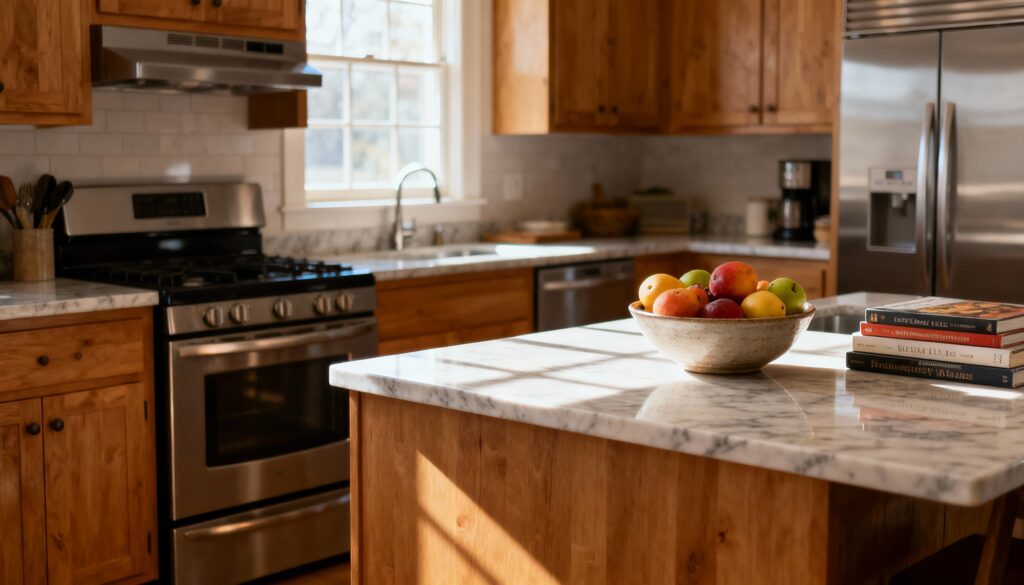
If the kitchen has warm wood tones and matte metal fittings, including related textures and finishes in living room shelves, tables, or media cabinets intentionally links the rooms. Design choices influence both regional impression and usefulness. Open-plan homes profit from smart zoning since it allows light and movement to roam freely while furniture placement gracefully separates regions without upsetting visual harmony. Modular seats or storage benches let usability without sacrificing aesthetic coherence.
Selecting furniture that complements the general décor of the home and rearranging it to maximise flow and utility can help homeowners at last create a space that appears elegantly selected, spacious, and welcoming — a design harmony that considerably boosts property value and enhances market attractiveness.
Higher Home Value 4: Harmonised Lighting
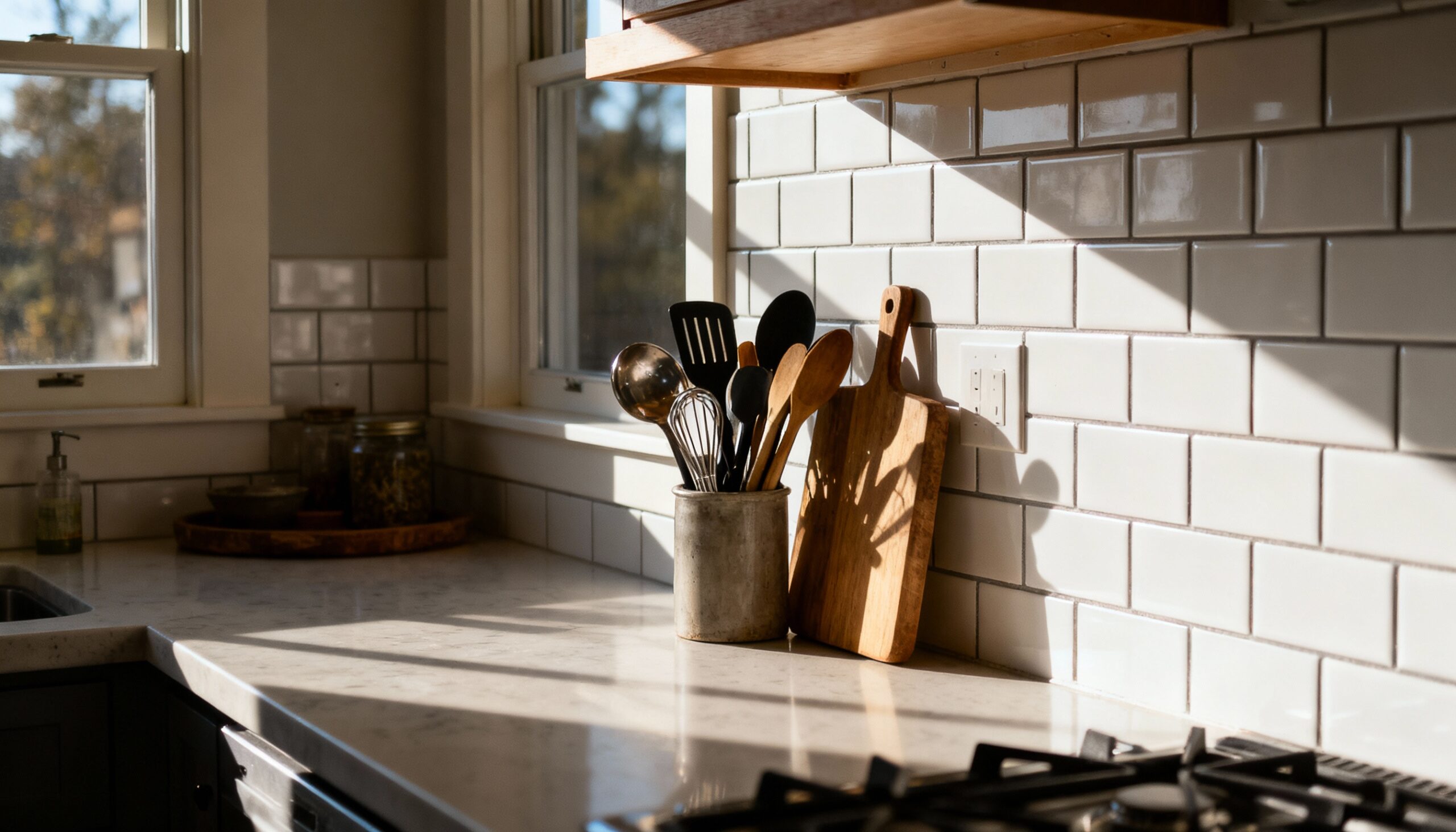
Harmonised lighting is a subtle but very powerful strategy to raise the value of a property by use of design consistency connecting rooms from the kitchen to the living area in a lovely and practical fashion. Aside from just brighten, lighting creates the mood, highlights architectural elements, and brings together many different rooms.
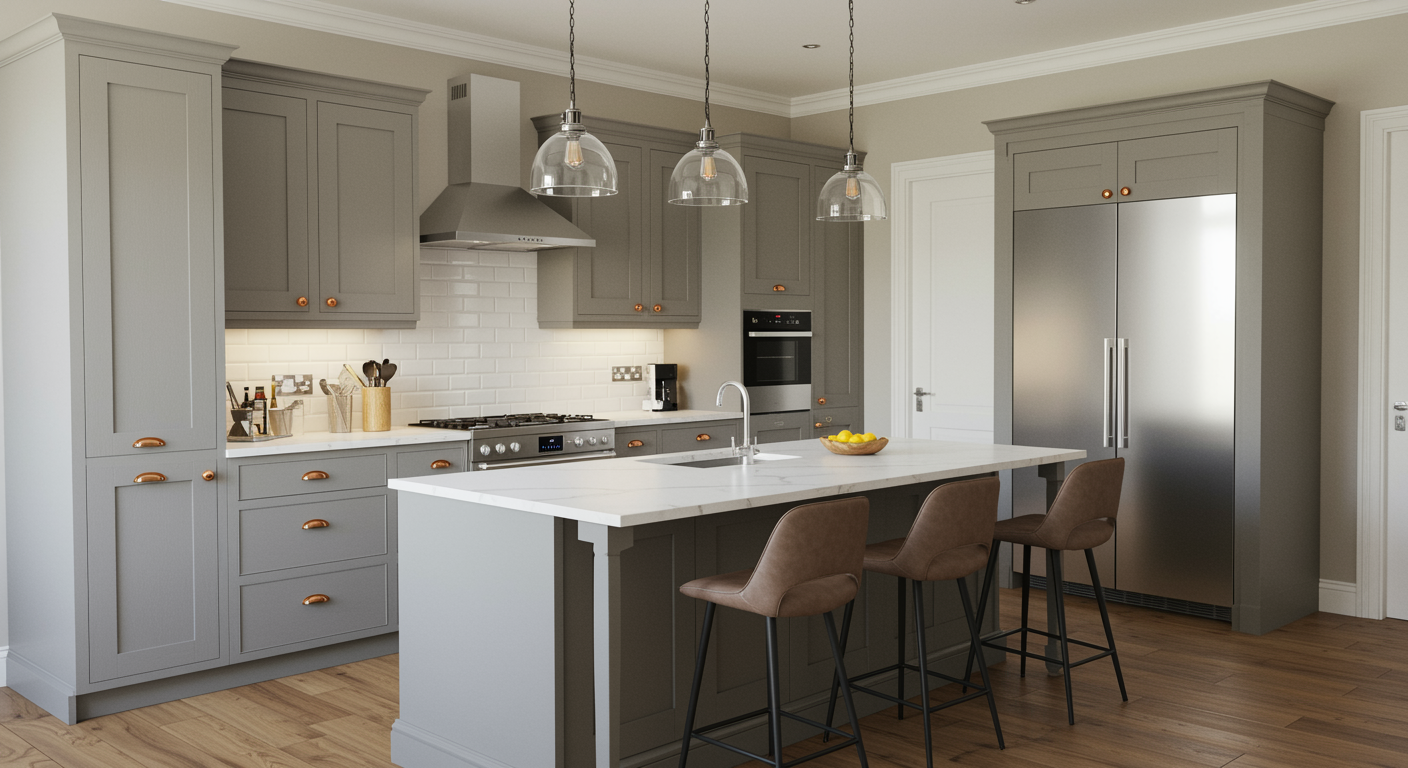
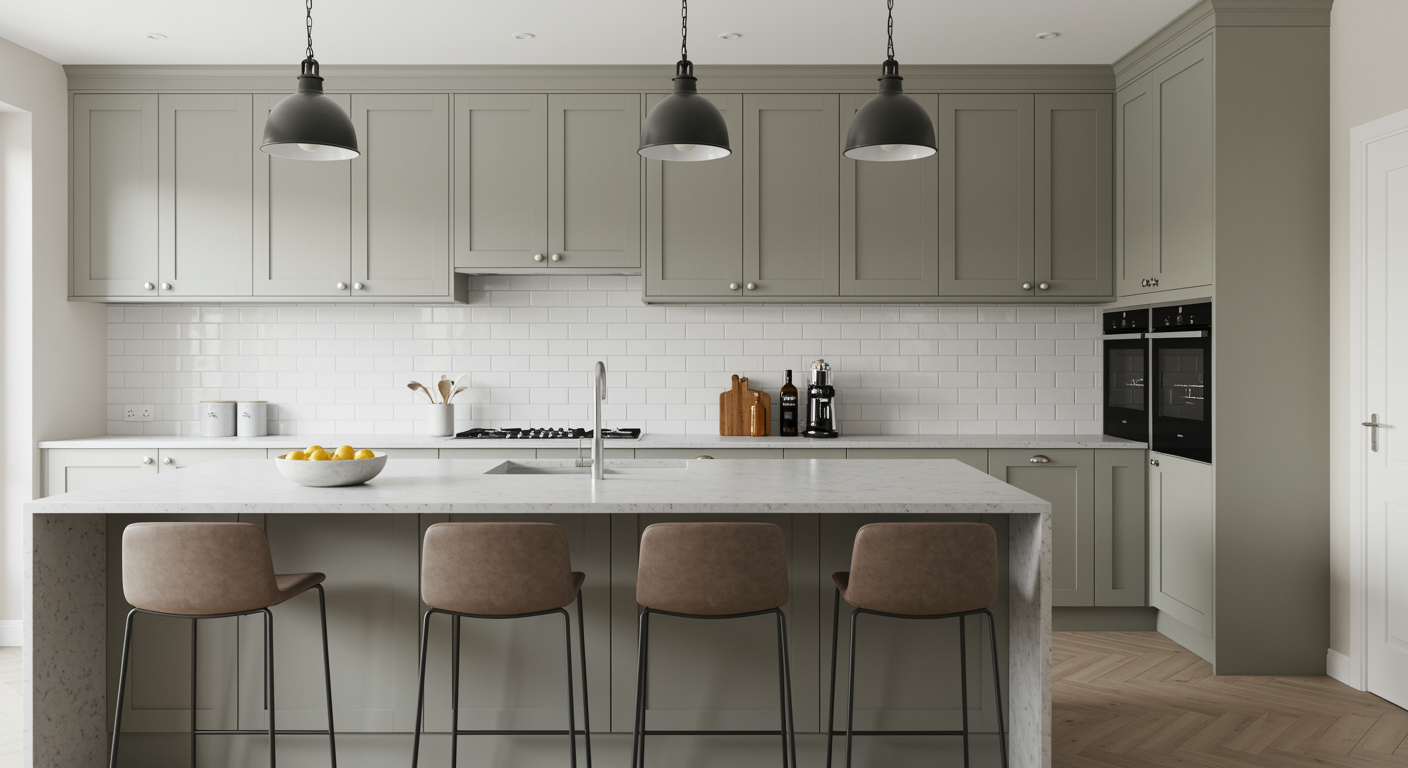
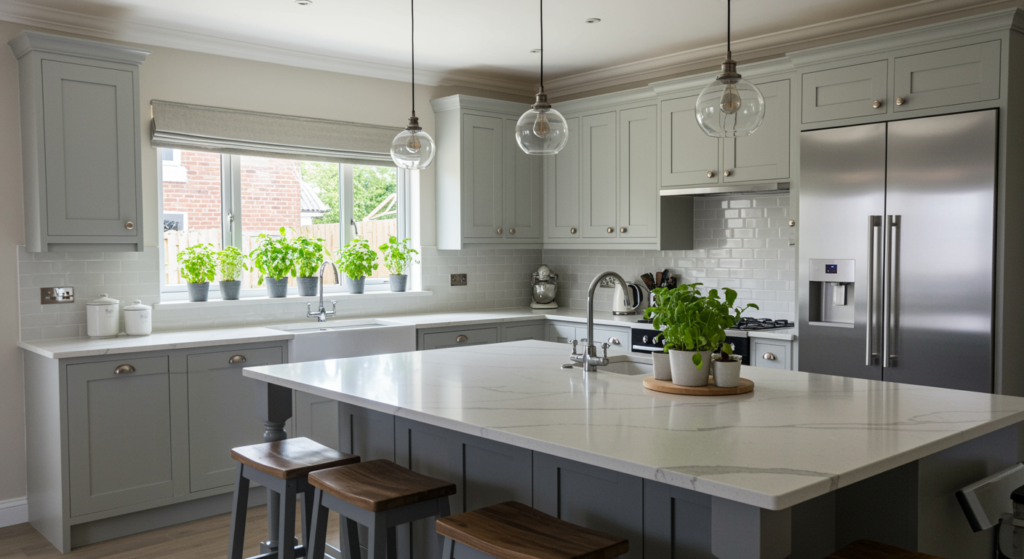
Layered lighting in a kitchen — recessed ceiling lights, under-cabinet strips, and pendant lights over an island ensures elegance and practicality. Using complementary tones, opposing fixture designs, and constant light temperatures, this approach when mirrored in the living area helps the change from one room to another feel fluid rather than fragmented. Warm white light can combine spaces and provide a cozy and welcome atmosphere; the employment of similar materials or finishes in furniture such matte black, brushed nickel, or brass strengthens visual harmony.
Beyond looks, harmonic illumination guarantees that important areas like work surfaces, dining tables, and sitting spaces are well-lit and visually linked therefore improving usability. Smart dimmers and layered lighting enable homeowners to alter intensity to fit the time of day or activity, hence increasing the perceived quality of their homes.
Homeowners not only improve daily living experience but also increase perceived value by focusing on harmonised lighting throughout the kitchen and living area, hence making the home more enticing in a saturated market—customers frequently automatically tend toward homes that seem well-designed. Consistent lighting gently communicates sophistication, detail, and care.
Higher Home Value 5: Unified Colour Palette
Among the most understated yet efficient ways to raise a home’s value by design consistency is via linking spaces like the kitchen and living room. Selecting a colour scheme of harmonics that flows naturally from one room to another helps homeowners to create a sense of cohesion and roominess that attracts prospective clients.
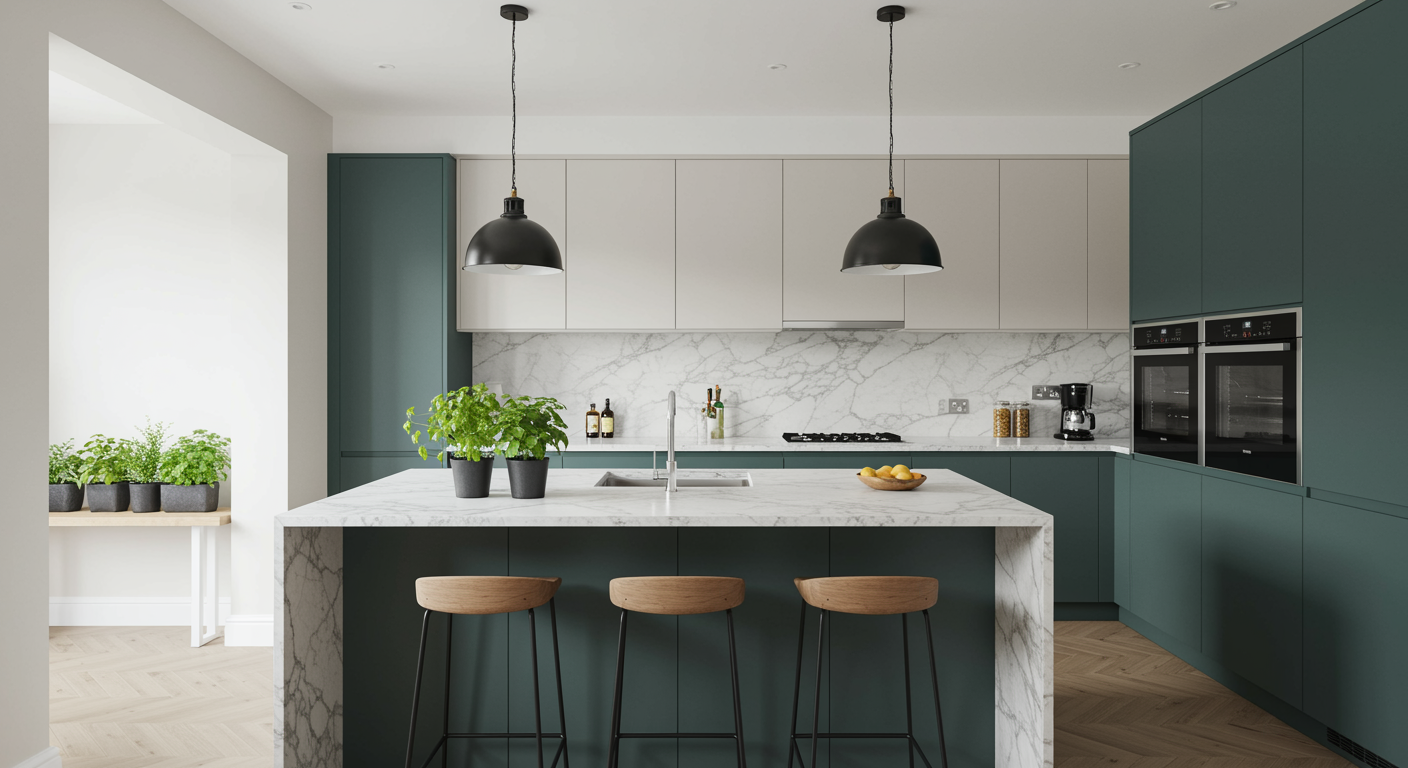
For instance, neutral tones such gentle beiges, greys, or off-whites on kitchen cabinets, counters, and walls may flow naturally into the living area, where furniture, rugs, and decoration items reflect the same tones. Including accent colours sparingly, say in pillows, artwork, or kitchen backsplash tiles adds personality without breaking the visual flow. A single colour scheme also evens natural light, therefore lightening rooms and making them more appealing — a significant influence in consumer perception.
Apart from looks, it conveys a feeling of care and premeditation, suggesting that the home has been meticulously designed and maintained, hence raising its expected value naturally. Moreover, maintaining colour harmony enables a home appear more roomy and light, qualities much prized in real estate markets where spatial optimisation is much emphasised.
This influence can be enhanced even by subdued contacts like matching the colours of wood finishes in the kitchen with shelves or coffee tables in the living room. A properly implemented, steady colour scheme is, in essence, a modest yet powerful means of creating a house that potential buyers find very appealing, uniform, and polished.